

Turkey quietly advanced its next-gen strike ecosystem with a Smart Guidance Ammunition and Systems (AGMOSS) demo that linked multiple unmanned ground vehicles (UGVs) for a coordinated missile attack.
Each platform fired a ROKETSAN KARAOK short-range anti-tank missile in a synchronized sequence, with all rounds reportedly hitting their targets.
The demo hints at early progress in coordinating precision fires across dispersed autonomous ground platforms.
Integrated Fire Control
The Tactical Missile Weapon System (KMC-U) plugs into UGVs as the fire-control layer that ties the shooters together, giving operators the ability to run multiple launchers through one control hub.
The setup enables faster, safer launch procedures and more precise timing, aided by AI-driven controls.
By unifying all firing elements, the system boosts coordinated strike capacity and sharpens response to shifting mission demands.
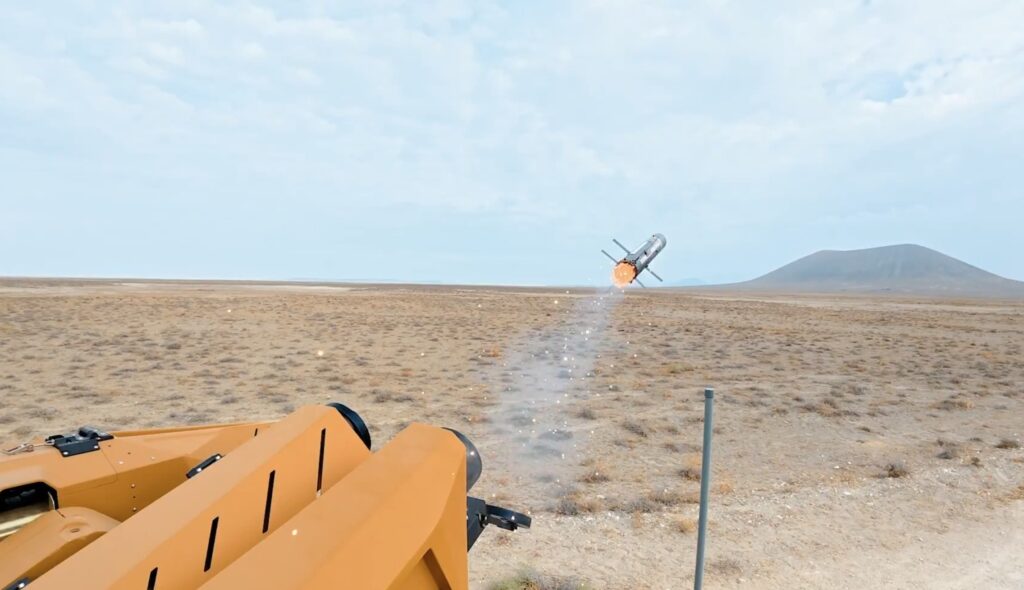
KARAOK: Small Missile, Big Penetration
KARAOK combines a 125mm diameter with a launch weight of 16 kilograms (35 pounds), giving dismounted teams a lightweight but potent anti-armor option.
It has a strike range of 2.5 kilometers (1.55 miles) and uses a tandem warhead to defeat modern armored defenses.
With direct and top‑attack modes and a fire‑and‑forget profile, the missile enables rapid launch-and-move tactics to stay ahead of counterfire.