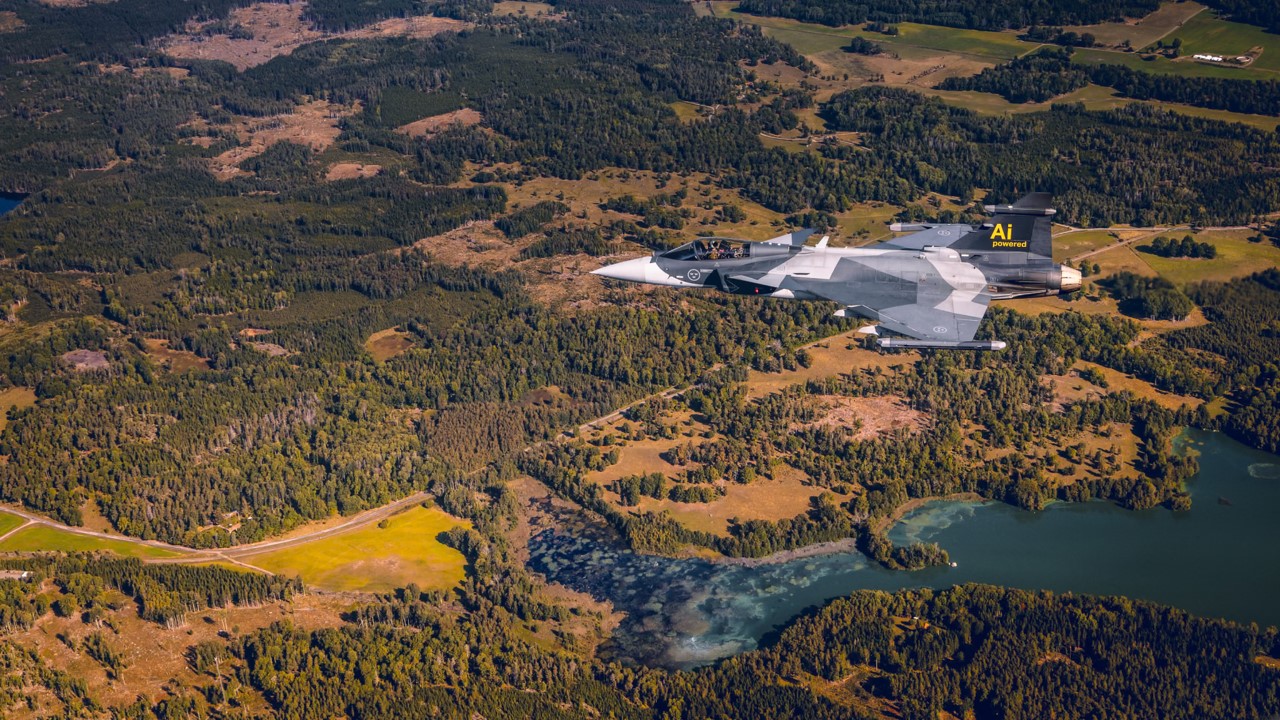
Making split-second decisions in air combat is no longer just a job for human pilots, as Saab develops AI agents capable of handling tactical tasks aboard fighter aircraft.
The Swedish defense company has already taken the tech into the air, testing the agents to autonomously control a Gripen E during beyond-visual-range (BVR) combat scenarios.
The AI agents are designed to support pilots in the cockpit or operate independently aboard unmanned aircraft, giving Saab another way to explore how crewed and uncrewed platforms can work together.
The company developed the systems, training environments, and supporting tools in-house, allowing it to control how the agents are trained, tested, and integrated into its aircraft.
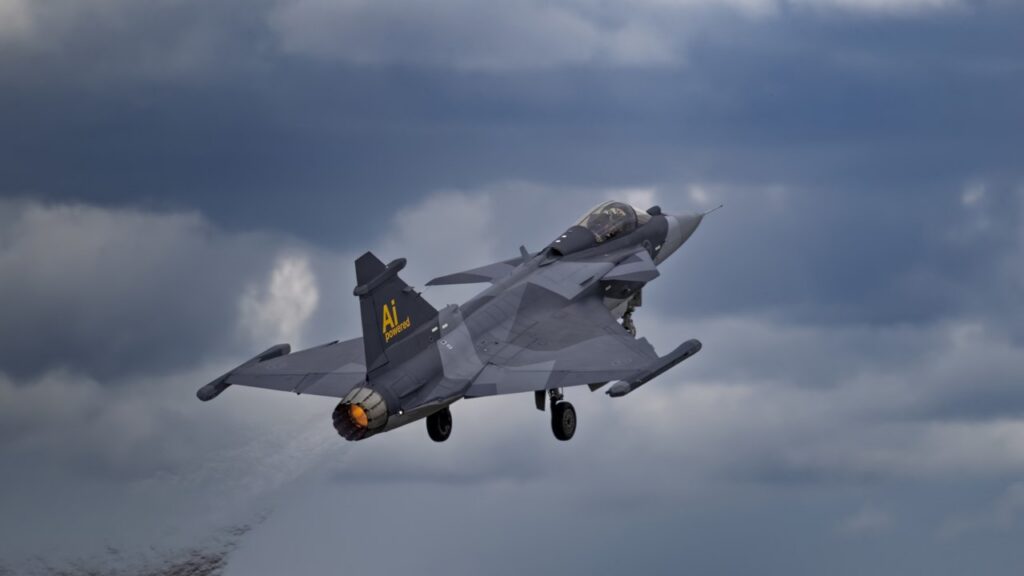
“We have not only built our own AI agents, but we have also flown them,” said Peter Nilsson, head of Advanced Programs at Saab’s Aeronautics business area.
“The future of air combat will not be defined by individual platforms acting alone, but by networks of crewed and uncrewed systems working together as a coordinated force.”
Training AI for Future Air Combat
The development takes place through Saab’s AI Fighter Pilot Academy, where agents train in simulated environments designed to test their responses to different air combat situations.
The agents have already logged millions of simulated flight hours, testing tactics across a wide range of air combat scenarios.
BVR combat is one of the capabilities developed through the program and has now been validated during flight trials aboard the Gripen E.
The fighter’s software-defined architecture allows Saab to integrate and test new AI software without needing dedicated experimental aircraft, making it easier to move systems from simulation into flight testing.
Saab is also a founding partner of Sferical AI, a Swedish sovereign AI initiative that provides secure, large-scale computing resources for advanced AI development.
The company plans to expand the agents’ capabilities and conduct further flight trials across additional scenarios, including applications for future unmanned aircraft.