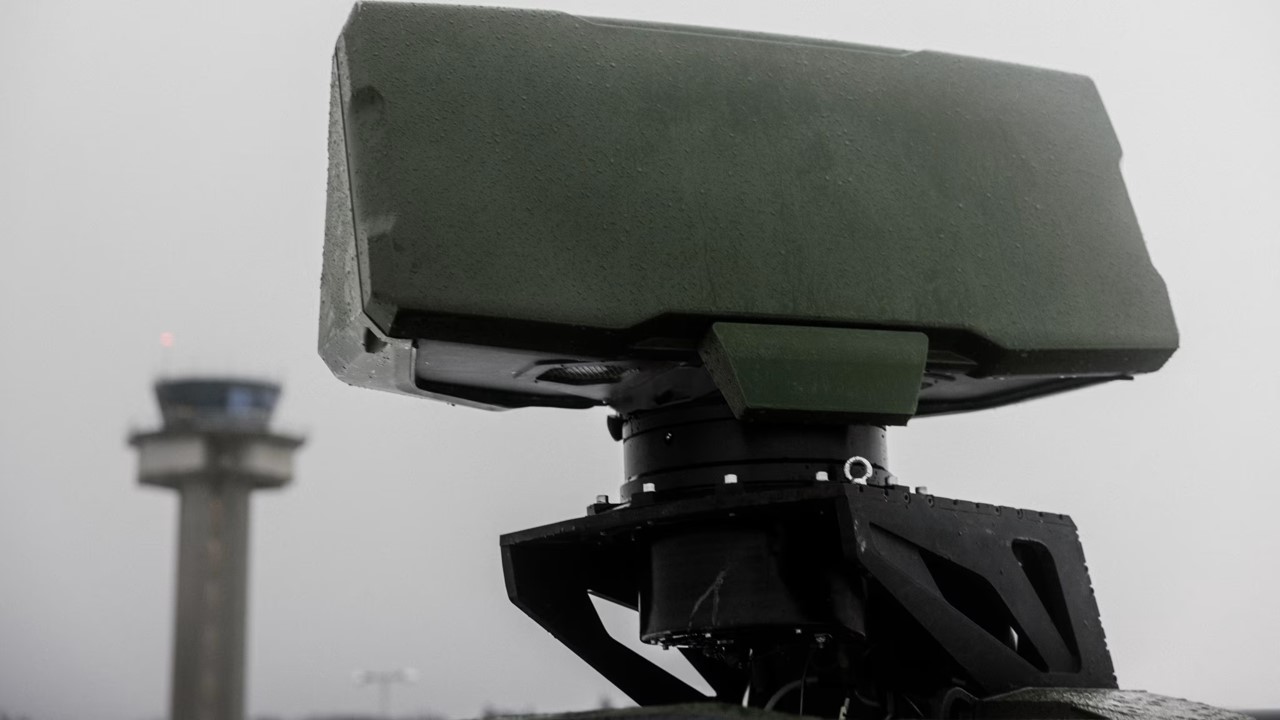

A UK demonstration has shown how military radars can continue working together without relying on GPS for synchronization, marking what Saab describes as a “world-first” capability.
The trial brought together Saab’s UK arm, Aquark Technologies, and the Royal Navy’s Disruptive Capabilities and Technologies Office to evaluate a distributed radar network under GPS-denied conditions.
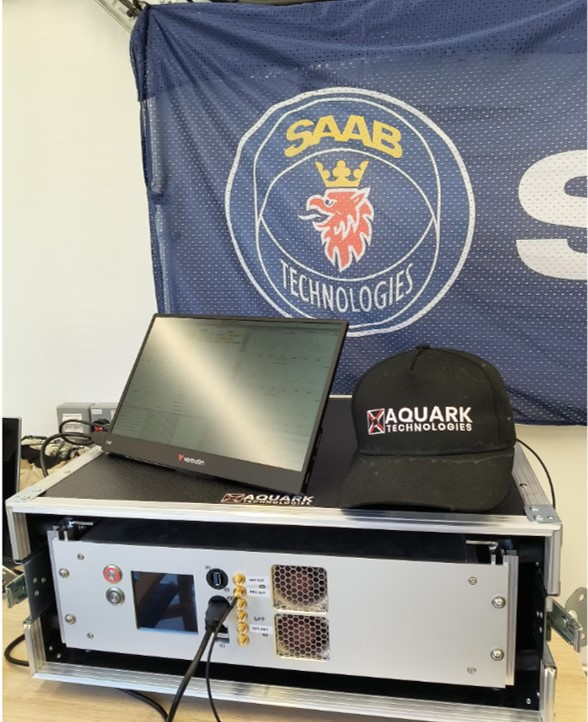
During the demo, Saab’s Giraffe 1X radar paired with Aquark’s AQlock quantum technology, allowing multiple radars deployed at separate locations to synchronize their operations and combine tracking data into a single airspace picture.
The network successfully detected and tracked live targets while merging data from the distributed radar nodes.
The team also deliberately disrupted the system’s timing synchronization, demonstrating a predictable drop in performance followed by rapid recovery once synchronization was restored.
The network then continued operating under simulated Global Navigation Satellite System (GNSS) denial and spoofing conditions, showing how quantum timing could help distributed sensors maintain coordination when satellite navigation signals are compromised.
“This trial is a great example of how collaboration can accelerate innovation,” said Andy Fraser, group managing director at Saab UK.
“By combining quantum timing technology with Saab’s advanced Giraffe 1X radar system, we have demonstrated a practical capability that could help customers continue to operate effectively when it matters most.”
The Tech Stack
Giraffe 1X is a compact 3D surveillance radar designed for ground-based air defense, very short-range air defense, and counter-unmanned aerial vehicle missions.
It weighs less than 150 kilograms (331 pounds) and is capable of detecting and tracking threats, ranging from aircraft and helicopters to missiles, rockets, artillery rounds, mortar projectiles, and small unmanned aerial vehicles.
Its compact design allows the system to be transported by pickup truck, airlifted by helicopter, or towed between locations on a trailer.
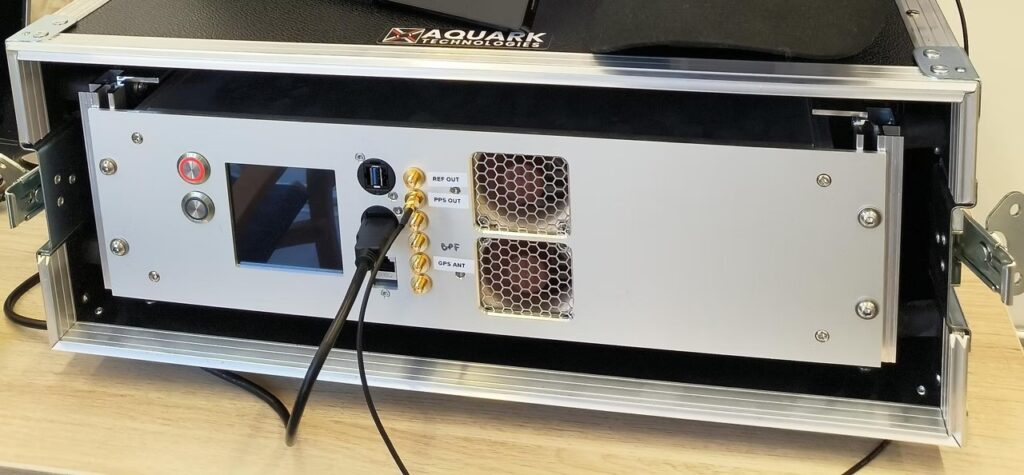
Aquark’s AQlock is a cold-atom clock designed to deliver highly precise timing while minimizing the long-term drift found in conventional oscillators.
It works by using atoms cooled to near absolute zero as a reference for the oscillator, enabling continuous, precise timing data.