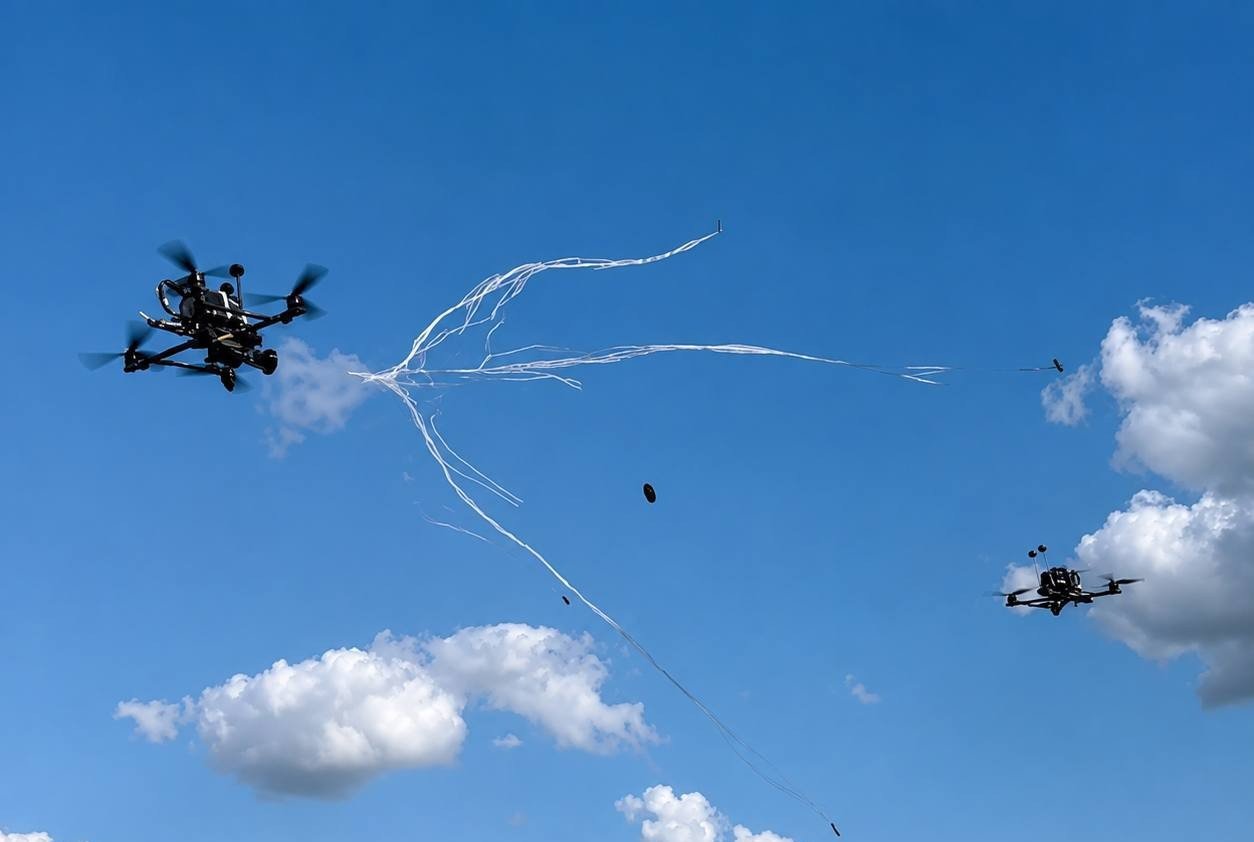
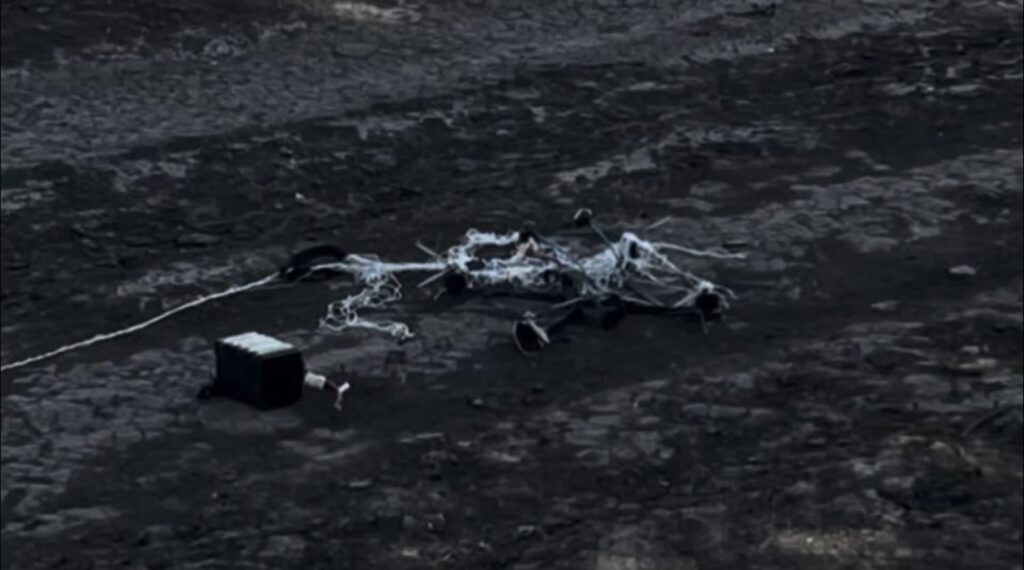
Ukrainian firm WINFLY is taking a non-kinetic approach to counter-unmanned aerial vehicle (C-UAS) missions, using speed and a net-based system to catch enemy drones in mid-air.
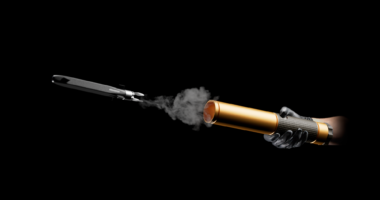
The WINFLY Spider uses the KARAKURT-K2, a 210-gram (7.4-ounce) aluminum net launcher connected to the aircraft through a USB Type-C port.
It can engage targets from up to 15 meters (49 feet) and deploys a 3-by-3-meter (9.8-by-9.8-foot) net when the interceptor closes to roughly 3 to 5 meters (10 to 16 feet) from its target.
Designed for harsh environments, the system can operate from -20 degrees Celsius to 50 degrees Celsius (-4 degrees Fahrenheit to 122 degrees Fahrenheit).
Each net deployment costs about 1,100 Ukrainian hryvnias ($26).
160 Km/h Interceptor
The WINFLY Spider can reach speeds of up to 160 kilometers (99 miles) per hour and operate at altitudes of up to 5,000 meters (16,404 feet).
Based on the WINFLY 10 Hunter platform, the interceptor can operate more than 18 kilometers (11 miles) from its launch point and detect targets at ranges of up to 500 meters (1,640 feet).
It is designed to engage several types of threats, including fixed-wing aircraft, Mavic-type quadcopters, first-person-view (FPV) drones, and fiber-optic-controlled models.
According to Militarnyi, the Spider is available in both daylight and night-vision variants.