
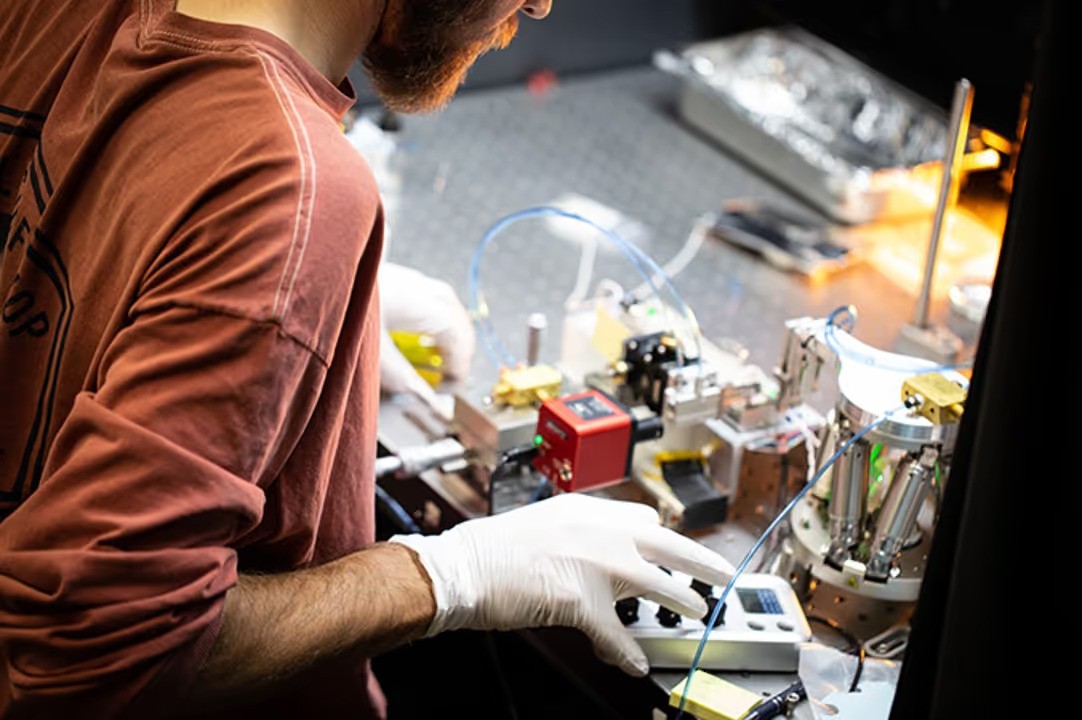

A new generation of optical atomic clocks could bring extreme timekeeping precision to military systems in a shoebox-sized package.
IonQ’s Evergreen-05 is designed to deliver 50 femtoseconds of timing stability at one second while maintaining nanosecond-level holdover for up to 10 days.
According to the company, the clock could maintain accuracy with less than one second of timing error over a 30-million-year period.
Despite its precision, Evergreen-05 occupies just 1/75th the volume of active hydrogen masers, opening the door to deployment across land, maritime, and airborne platforms.

That combination of size and precision could provide the timing needed for applications including radar, communications, and battlefield geolocation.
Backed by DARPA
The system is backed by a $28-million contract extension from the Defense Advanced Research Projects Agency (DARPA), along with an unexecuted $30 million option.
The extension covers the manufacturing, development, and delivery of 25 atomic clocks. If exercised, the option would add another 100 units.
The work falls under DARPA’s It’s About Time program, which aims to establish a scalable production process for optical clocks and demonstrate that quantum technologies can be manufactured at scale.
“We added Vector Atomic to the IonQ family because their clocks and sensors are the best in the world,” said Niccolo de Masi, chairman and chief executive officer of IonQ.
“DARPA’s investment under the It’s About Time program confirms that we made the right choice.”