A new echolocation system developed by researchers at the University of Michigan could help drones and robots “see” in darkness without cameras, laser-based sensors, or GPS.
Inspired by how bats and dolphins move in the dark, the AI-powered tech uses ultrasonic sound to detect and recognize objects, making it ideal for use in low-visibility environments.
It mimics natural echolocation by firing off high-frequency pulses and analyzing how they bounce off surrounding objects.
This lets machines create a spatial map of their environment, essentially “seeing” with sound when vision-based tools fail or are not available.
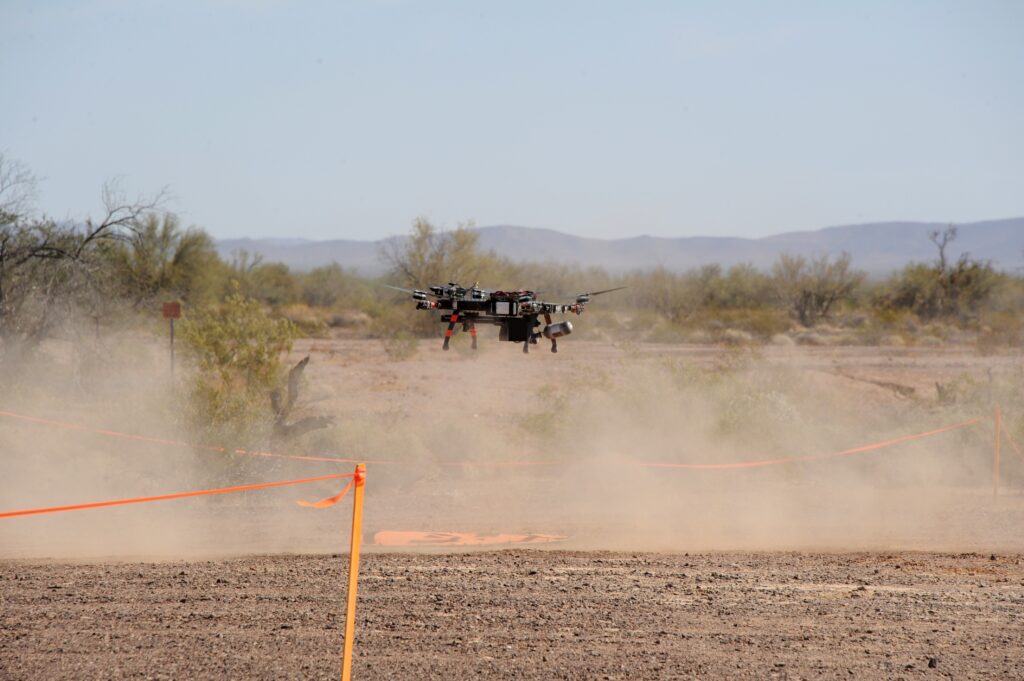
Unlike cameras or infrared sensors, sound-based systems can work through darkness, smoke, and dust, conditions that often blind traditional tech in combat or disaster zones.
“Drawing inspiration from the biological phenomenon of echolocation, ultrasound perception holds immense potential across various engineering domains, spanning from advanced imaging to precise navigation,” the researchers wrote.
Training AI to Hear
The AI model behind the system uses an ensemble of convolutional neural networks, each trained to identify specific object shapes from their unique echo patterns.
It also has a modular design that enables new shapes or objects to be added without retraining the entire system.
To cut costs, the team trained the echolocation tech in a 3D simulated environment, featuring distortions to reflect real-world noise.
This allowed the AI to learn how different objects reflect sound from various angles with no field tests required.
“Overall, our framework provides a platform for advancing ultrasound perception by drawing inspiration from the strategies employed by echolocating animals,” the researchers added. “This work contributes to narrowing the gap between engineered and biological perception.”
The project is funded by the US Army Research Office and Ground Vehicle Systems Center.