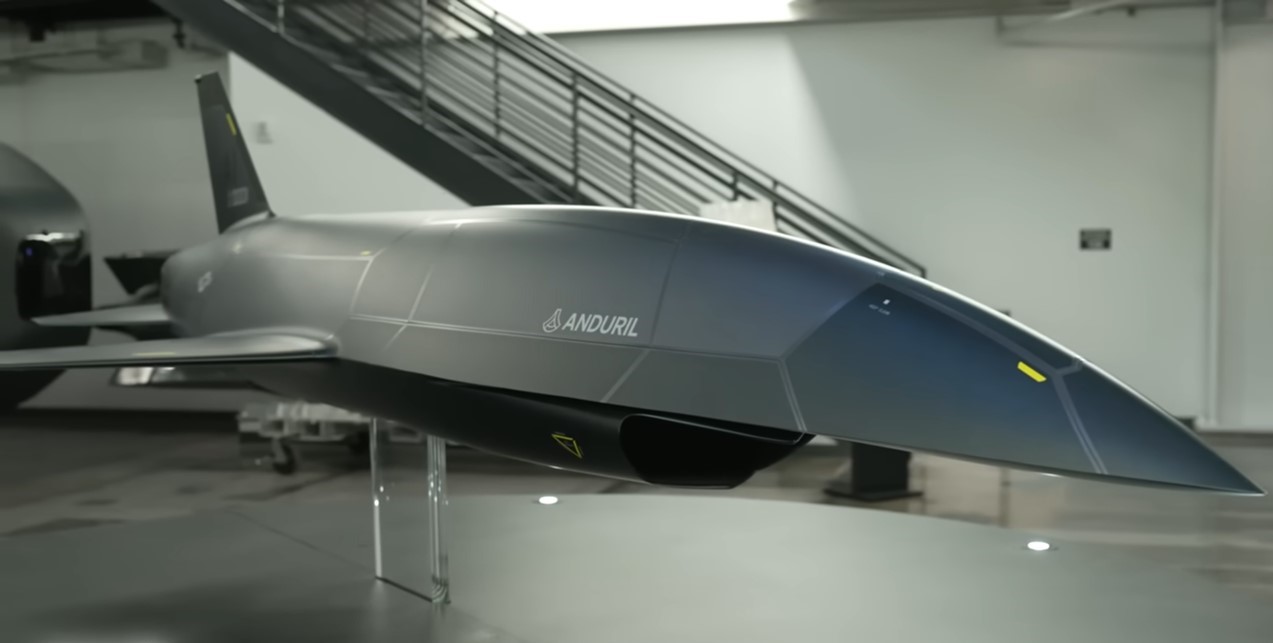
Anduril just gave the world a closer look at “Fury,” its next-generation uncrewed fighter jet built to team up with human pilots in the skies.
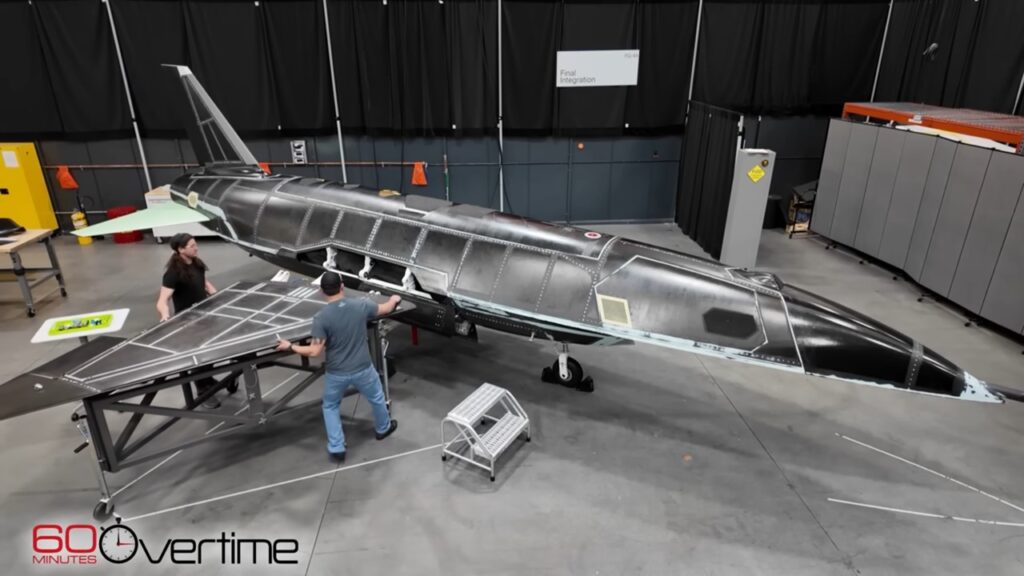
An episode of CBS’s 60 Minutes aired Sunday featured Anduril founder Palmer Luckey walking viewers through the aircraft’s development, offering a rare look inside the hangar where the drone is being pieced together.
In one scene, two engineers are seen bolting the wing into place, a small but telling sign that Fury is closing in on the final stages of assembly.
The footage also showed off the drone’s sleek and compact frame, with clear emphasis on stealth with its angular surfaces, streamlined shape, and advanced sensor pods.
A concept animation included in the broadcast imagined how it might perform in action: three Fury drones flying ahead of a crewed fighter, identifying and striking a target before it even gets close.
“These (Fury drones) fly out ahead of manned fighters, and they’re able to find the enemy first, able to engage the enemy well before a manned fighter has to be seen or is in range,” company CEO Brian Schimpf told CBS.
Collaborative Combat Aircraft
Fury is Anduril’s entry into the US Air Force’s Collaborative Combat Aircraft (CCA) program, an initiative to build AI-powered drone wingmen for future sixth-generation jets.
It made its international debut in March at the 2025 Avalon Air Show in Australia and has been officially classified as a Group 5 unmanned aerial system, weighing over 1,320 pounds.
Fury runs on a single Williams FJ44-4M turbofan engine and can reach speeds close to Mach 1 while climbing up to 50,000 feet (15,240 meters).
Under the hood, it is powered by Anduril’s Lattice software, an AI-driven system that enables advanced data processing by fusing data from onboard and external sensors.
The aircraft cleared critical design review in late 2024, bringing it closer to flight testing and official deployment.
Once it enters service, the drone is set to carry the official US military designation, “YFQ-44A.”