
Massive and complex datasets that once took weeks to analyze can now be processed in seconds with the Makau high-performance supercomputer from the US Space Force’s Maui High Performance Computing Center (MHPCC).
Powered by 74 graphics processing units, the device is a six-cabinet Hewlett Packard Enterprise (HPE) Cray XD2000 system equipped with liquid-cooled, rear-door heat exchangers.
Designed to handle rapidly growing data volumes, the supercomputer has 19.2 terabytes of usable memory and can reach a peak performance of 2.64 petaflops, or 2.64 quadrillion calculations per second.
That computing power will support MHPCC research into space domain awareness, cyber operations, and digital engineering, modeling, simulation, and analysis.
It will also give researchers the processing power to run more demanding AI and machine learning workloads across large datasets.
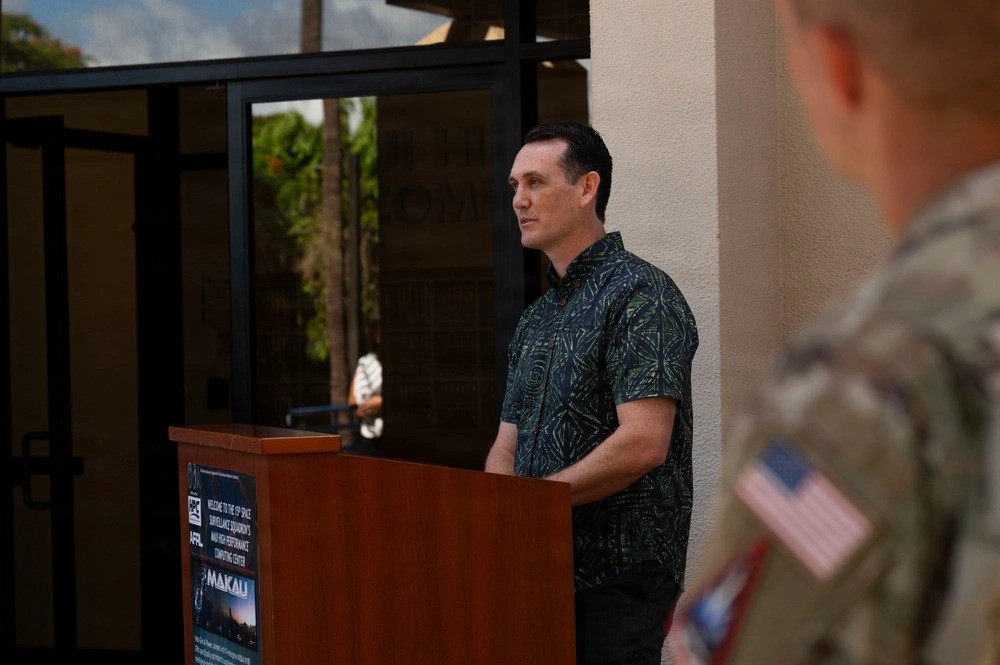
“Machine learning models can automate the fusing of multiple sources of data to build a timely and more cohesive operating picture,” MHPCC director Dr. Scott Pierce stressed.
Powering US Military Research
MHPCC officially showcased Makau during a ribbon-cutting ceremony in Maui, Hawaii, on August 7.
The supercomputer was developed for the US Department of Defense’s science and technology community, providing computing capacity for research and analysis across military applications.
Its arrival is also expected to support Hawaii’s technology workforce and strengthen partnerships with regional organizations and vendors.
“We are extremely proud of our local team’s collaboration and our partnership with local vendors and HPE to deliver this cutting-edge solution to our users,” Pierce stated.
“This requires the constant support of a highly technical staff to ensure these solutions are properly configured and maintained.”