
A Texas-based firm has figured out how to use the air coming out of an aircraft’s engine to spin its propellers, potentially simplifying the entire rotor system.
Portal Aircraft Company of TechFW recently trialed a unique powertrain concept that combines the simple design of electric propulsion with the endurance of a gas engine.
The concept takes exhaust from a turbine and directs it toward the rotor blades, allowing it to spin them directly while potentially eliminating the need for gearboxes and driveshafts.
With fewer moving parts and mechanical components, the approach could make aircraft easier to maintain and repair in the field.
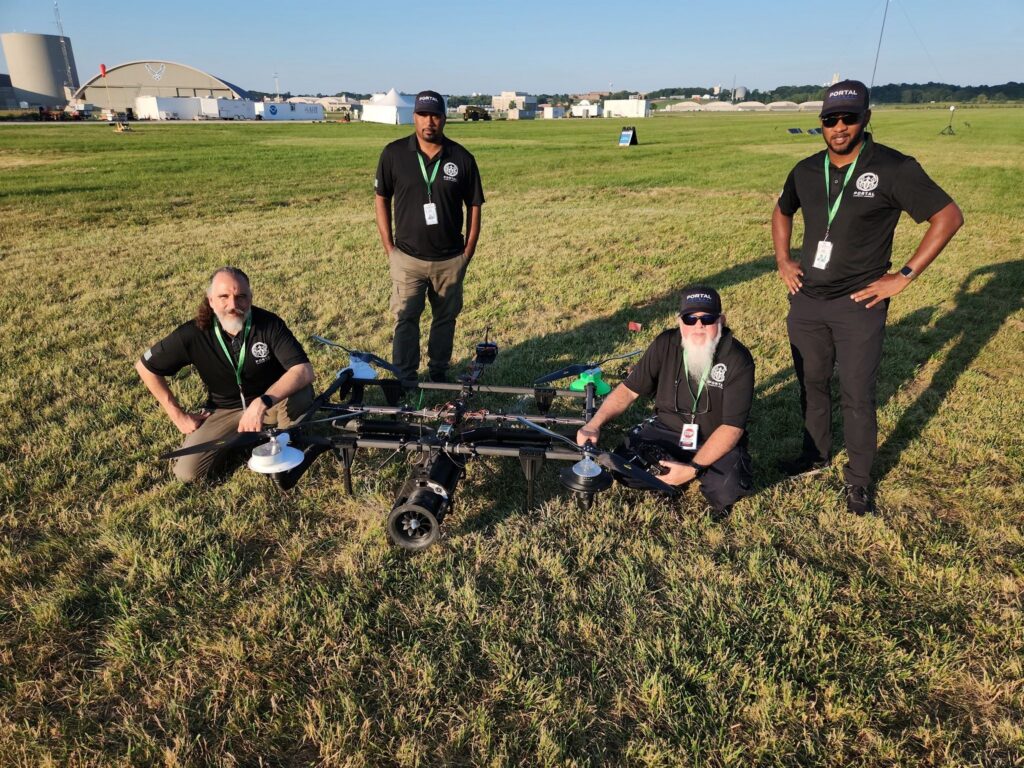
According to Portal Aircraft CEO James Thurman, it could also allow drones to fly hundreds of miles farther while carrying payloads nearly four times their weight.
“We’re not creating a hybrid system. We’re creating a system that’s just directly powered by gas,” Thurman told Daily News Network.
A New Class of VTOL Aircraft?
Traditional helicopters can combine long range and endurance with vertical takeoff and landing (VTOL), but their complex mechanical systems can make them expensive to build and maintain.
Smaller multirotor drones, meanwhile, are simpler and easier to maintain but typically face greater limitations in range and endurance.
Portal Aircraft is looking to bridge that gap with a new class of VTOL aircraft built around its exhaust-driven rotor system.
Getting DARPA’s Attention
The company recently won Most Revolutionary Powertrain Design award at the Defense Advanced Research Projects Agency’s (DARPA) Lift Challenge.
DARPA said Portal Aircraft’s powertrain concept could improve the reliability of US drone systems, awarding the company $500,000 in total prize money.
“The true value of this Challenge isn’t measured in dollars; it’s measured in the ideas that became prototypes, the prototypes that became aircraft, and the boundaries that you pushed every time you took to the flightline,” said Phillip Smith, Lift Challenge Program Manager.
“This competition was the catalyst, but the innovation it sparked is now yours to unleash,” Smith told Lift Challenge participants.