

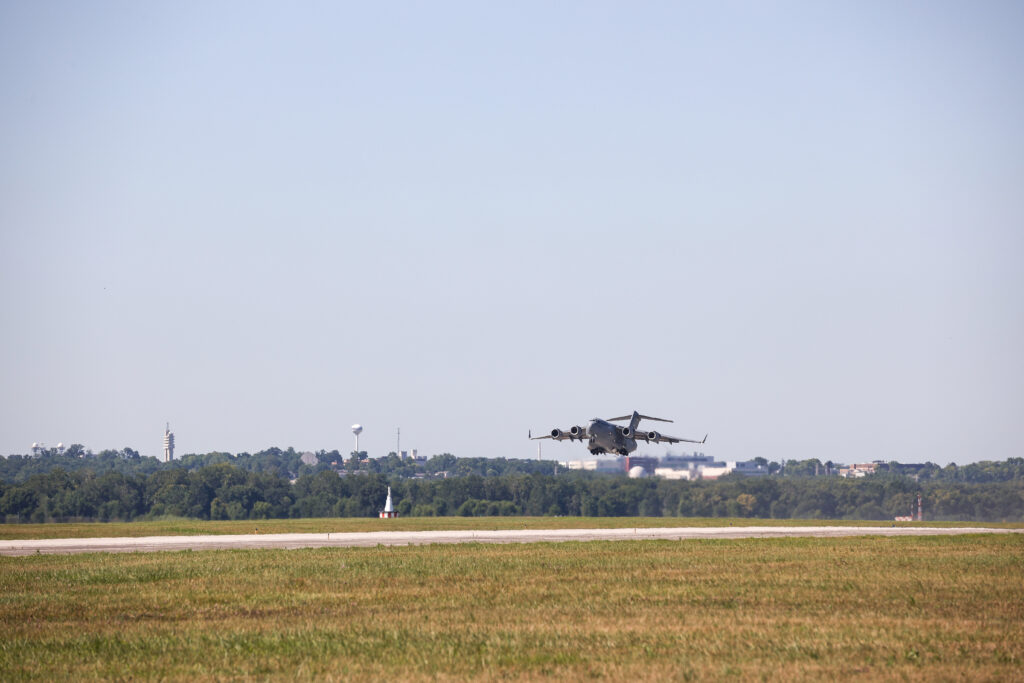
The US Air Force has used robotic manufacturing to produce a replacement part for a C-17 Globemaster III that Boeing could no longer source, giving the service a new way to keep aging aircraft in operation.
The Rapid Sustainment Office (RSO) solved the parts problem using Incremental Sheet Forming (ISF), a robotic process that shapes metal sheets directly into components.
Unlike conventional manufacturing, ISF does not require dedicated tooling, allowing the air force to produce unique or low-volume parts faster and without the need for specialized production lines.
The technology is also being explored for replacement parts for the KC-135 tanker and F-15 fighter.
“This is a tremendous win for our maintenance group,” said Col. Karen Gharst, commander of the 445th Maintenance Group.
“Using the ISF technology to rapidly produce an otherwise unobtainable part allowed us to avoid a prolonged work stoppage.”
From Damage to Repair
The technology was put to use after severe storms in the Dallas-Fort Worth, Texas, area sent two Bombardier Challenger jets crashing into a C-17 military transport aircraft.
The 445th Maintenance Group initially repaired the aircraft’s door and fuselage but found that its damaged left nose panel needed to be replaced.
Boeing could not find a vendor willing to produce the isolated component, leaving the C-17 facing at least a year in storage followed by another year of repair work.
Working with engineers from the University of Dayton Research Institute (UDRI), the US Air Force’s Automation and Robotics team began producing the replacement earlier this year.
The team formed the nose panel using ISF before conducting an initial fit check and testing to verify that it met flight requirements.
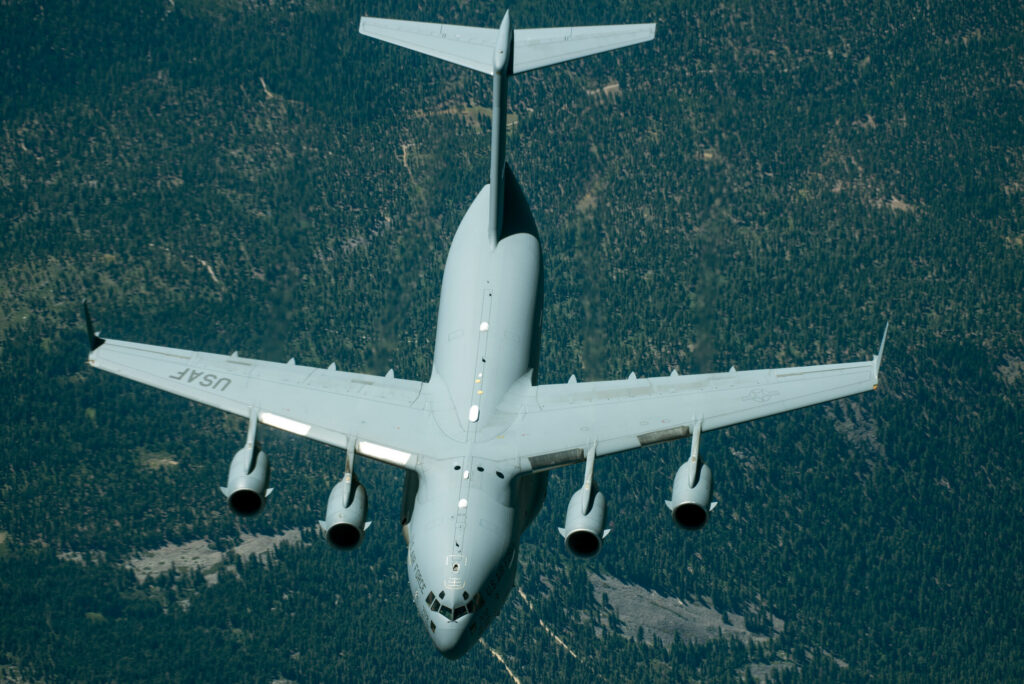
C-17 Globemaster III in Focus
Designed for strategic and tactical airlift missions, the C-17 Globemaster III measures 174 feet (53 meters) long and has a wingspan of 169 feet (51.5 meters).
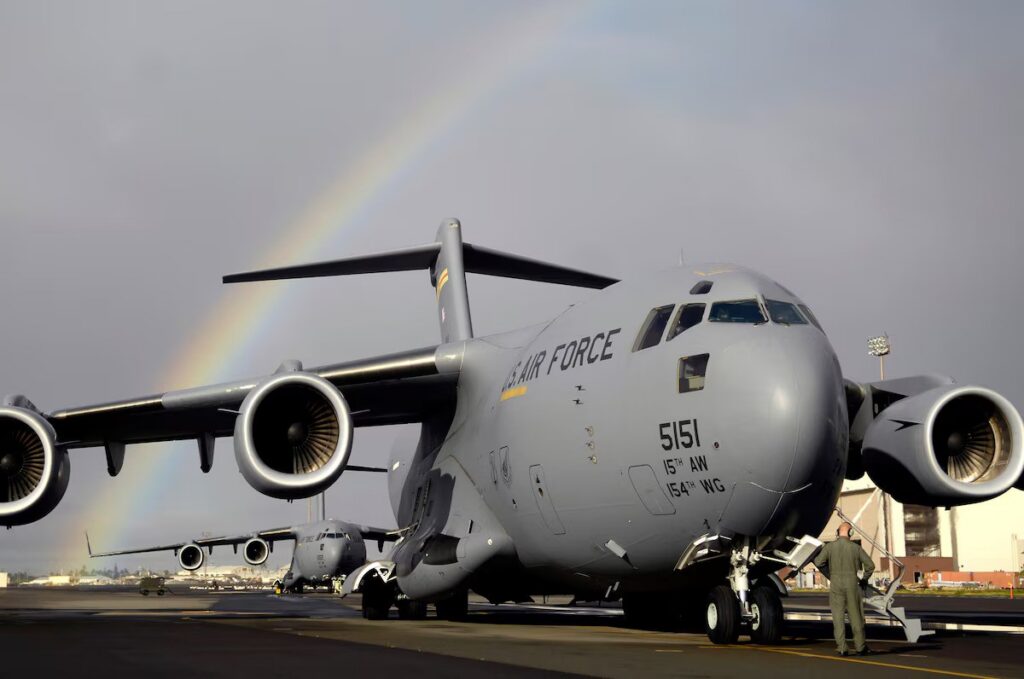
The airlifter weighs roughly 128,000 kilograms (282,200 pounds) empty, with a maximum takeoff weight exceeding 265,000 (584,200 pounds) kilograms.
It can carry up to 170,900 pounds (77,519 kilograms) of cargo and reach approximately Mach 0.74 (913 kilometers/567 miles per hour).
The aircraft is powered by four Pratt & Whitney F117-PW-100 turbofan engines, each producing 40,440 pounds (18,343 kilograms) of thrust.