
A flip of a switch is all it takes for an F-16 pilot to hand aircraft control to artificial intelligence.
The capability was recently demonstrated by the US Air Force, marking a major step toward autonomous air combat.
The test was conducted under the Viper Experimentation and Next-Generation Operations Model (VENOM) program, a collaborative effort involving the Defense Advanced Research Projects Agency (DARPA) to advance AI for future combat aircraft.
At the heart of the project is the VENOM Autonomy Kit, an upgrade that interfaces with the F-16’s flight controls and mission systems.
It allows pilots to seamlessly switch between human and AI control while remaining in the loop to oversee the mission.
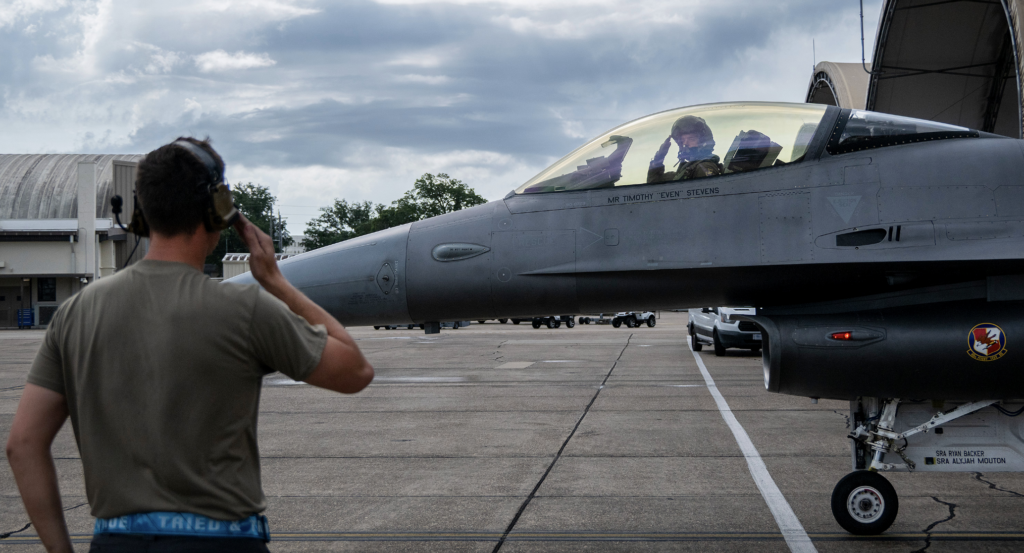
The latest flight builds on earlier demonstrations in which an AI agent flew the experimental X-62A VISTA during dogfight scenarios.
By successfully integrating the technology into a standard operational F-16, the air force is moving autonomous flight beyond experimental aircraft and closer to frontline fighter operations.
What’s Next
The modified VENOM aircraft will serve as the primary flight test platform for DARPA’s AI Reinforcements (AIR) program, which aims to mature autonomous capabilities through increasingly complex live-flight scenarios.
The US Air Force plans to evaluate multiple AI agents aboard the aircraft as it develops technologies for future missions where human pilots command teams of autonomous uncrewed aircraft.
The program is also expected to expand to include collaborative combat aircraft as they enter service.
“The emerging threat environment, especially as it relates to aerial combat, is growing increasingly complex,” said Brig. Gen. James Valpiani, program manager at DARPA.
“AI has tremendous potential to help humans manage this complexity in beyond-visual-range combat, but many hard questions remain concerning the performance and trustworthiness of combat AI in the extreme fog and friction of modern warfare.”