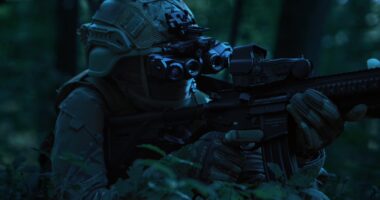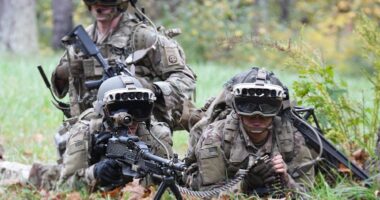


The UK is combining three technologies into one capability to give British troops a clearer view when smoke, dust, and other obscurants limit visibility.
In partnership with Amethyst Research and Lancaster University, the Defence Science and Technology Laboratory (Dstl) has advanced a new detector designed to improve how soldiers see through the “fog of war.”
The device uses a thin absorber layer to reduce unwanted heat interference, helping it pick up weaker infrared signals while maintaining precision.
A separate semiconductor mirror traps and reflects infrared light where it is needed, while a specially textured surface absorbs more incoming energy.
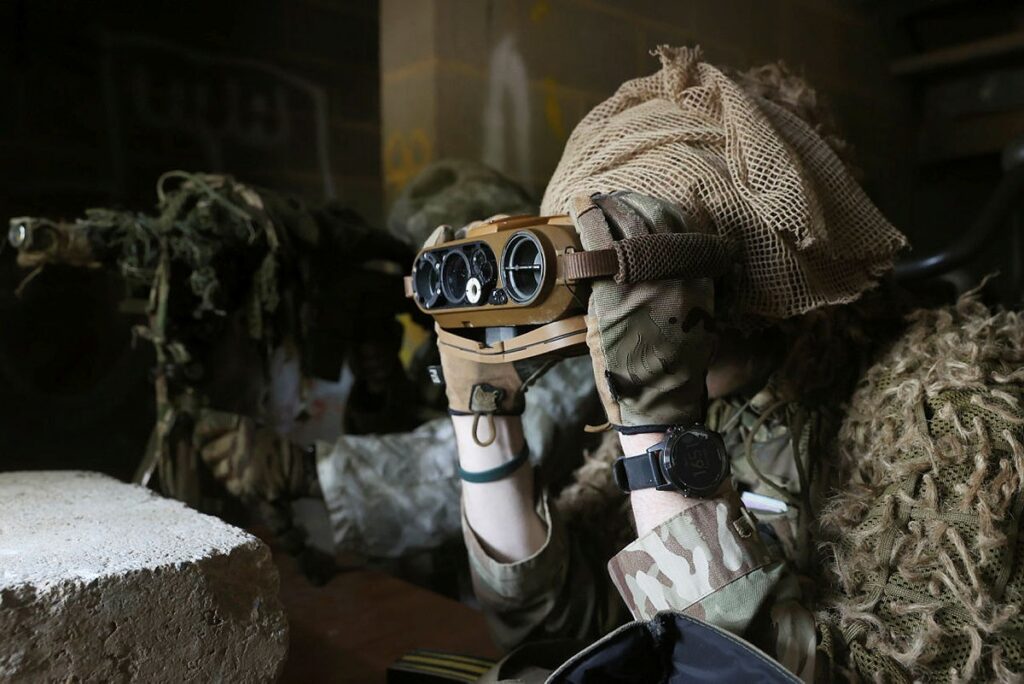
Dstl claims the combination of technologies improves the detector’s efficiency by more than 10 times compared with existing systems while reducing overall thermal noise.
The technology could allow thermal cameras to see through obscurants more effectively while operating at higher temperatures, potentially reducing their power and size requirements.
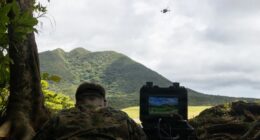
Dstl is currently developing an imaging demonstrator that could serve as the basis for future thermal imaging systems mounted on drones or carried by soldiers.
Lesser Cooling Needed
Thermal cameras help soldiers see through thick smoke and dust on the battlefield, but existing systems are limited by their need to operate at extremely low temperatures.
This typically requires bulky cooling systems that are difficult to carry, limiting where and how the technology can be deployed.
Dstl’s detector aims to directly address this limitation with its ability to function at temperatures up to -123 Celsius (-189.4 Fahrenheit).