


Researchers at Sandia National Laboratories have introduced a supercomputer that breaks from traditional data processing by analyzing code on the fly, deciding in real time which tasks need the most attention for critical national security simulations.
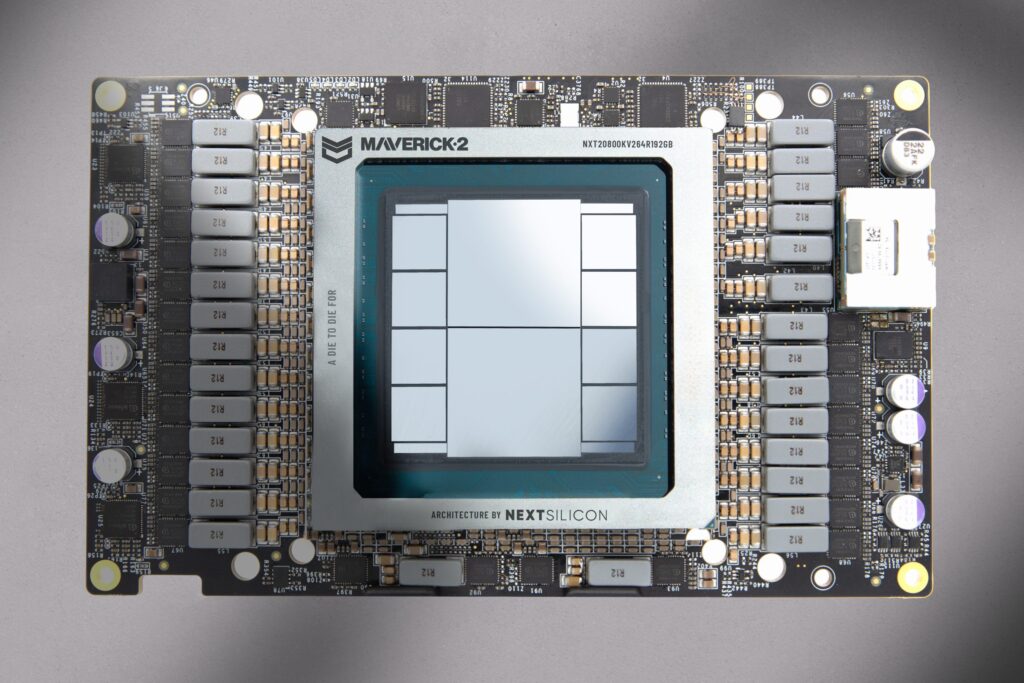
Dubbed Spectra, the device runs on 128 Maverick-2 specialized chips from Israeli-based firm NextSilicon.
Unlike conventional CPUs that treat all lines of code equally, Maverick-2 prioritizes tasks dynamically, potentially eliminating the “months to years” researchers typically spend optimizing workflows.
“This is a first-of-its-kind capability,” said Sandia senior scientist James Laros, highlighting the “tremendous” collaboration between national labs and industry.
Spectra will undergo evaluation by the National Nuclear Security Administration, assessing how it could transform high-stakes nuclear deterrence simulations.
Streamlined Processing
According to NextSilicon Chief Executive Officer Elad Raz, the Maverick-2 delivers improved performance with half the power required on conventional chips.
Laros added that the chip has successfully passed standard benchmark tests on its first day of operations.
But even with early success, the team still needs to assess how existing software will run on the new architecture without needing significant changes.
“Breakthrough scientific discoveries require breakthrough computing architectures,” Raz noted. “We built Maverick-2 because when researchers wait hours for simulations that could unlock major breakthroughs, the bottleneck isn’t human imagination — it’s computing efficiency.”