

Rheinmetall is presenting a lineup of networking technologies that together form a new concept for linking frontline troops, support units, and distributed sensors, enabling faster, more coordinated battlefield response.
The concept is built around a suite of interconnected technologies. At the center is the Gladius Light soldier system, which combines a headset, radio, ballistic protection, and a battle management system into a single setup for frontline personnel.
For reconnaissance, the Smart Mobile Observation Kit provides a mobile observation system with an electro-optical sensor mounted on a pan-tilt tripod and a situation display through TacNet.
It is designed to work alongside other elements in the network and can be integrated with uncrewed aerial systems (UAS) for target identification and impact assessment.

Connectivity between soldiers and sensors is provided by a backpack-compatible broadband communication system, allowing individual personnel to maintain links across the network.
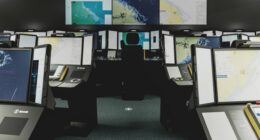
The network also extends to unmanned platforms through Autonomous UxV Control, a software suite that functions as a central command node for coordinating multiple uncrewed systems.
Sensors and Software
Rheinmetall’s networking concept is reinforced by a range of sensors and software designed to support troops and other ground personnel.
The AI Classification Assistant accelerates image recognition, potentially reducing the sensor-to-shooter response gap.
For vehicles, the SCM 300 electro-optical sensor provides 360-degree situational awareness, offering what the company describes as “maximum visibility” for crews.

The ASN 100 acoustic sensor continuously relays tactical data during border and infrastructure missions. Designed as a compact, low-cost solution, it aims to speed up decision-making in the field.
Completing the lineup is the RCWS 320, a remotely controlled weapon station built specifically for counter-UAS operations.
Supporting the Force
Together, these components form a networked suite intended to help military forces respond effectively across different units, from high command to frontline personnel.
Rheinmetall demonstrated the full concept at Enforce Tac 2026 in Nuremberg.
“In times of hybrid warfare, it’s not just combat units on the frontlines that are at risk. Forces and critical infrastructure in the rear also face numerous threats — from reconnaissance to attacks using various weapons,” the company stated.