

A Texas-based firm is advancing a “satellite sweeper” capable of chasing and deorbiting aging spacecraft of different sizes across three orbital zones.
Firefly Aerospace’s Elytra is positioned as a cost-conscious answer to the Pentagon’s growing orbital debris problem, where defunct spacecraft and other objects can threaten critical space infrastructure.
The spacecraft can rendezvous with a target in orbit, inspect it, and then use its thrusters to push the spacecraft into Earth’s atmosphere, where it can burn up during reentry.
Its proprietary design allows Elytra to operate in low Earth orbit (LEO), medium Earth orbit (MEO), and geostationary orbit (GEO), giving it the reach to pursue different classes of spacecraft across a wide range of orbital environments.
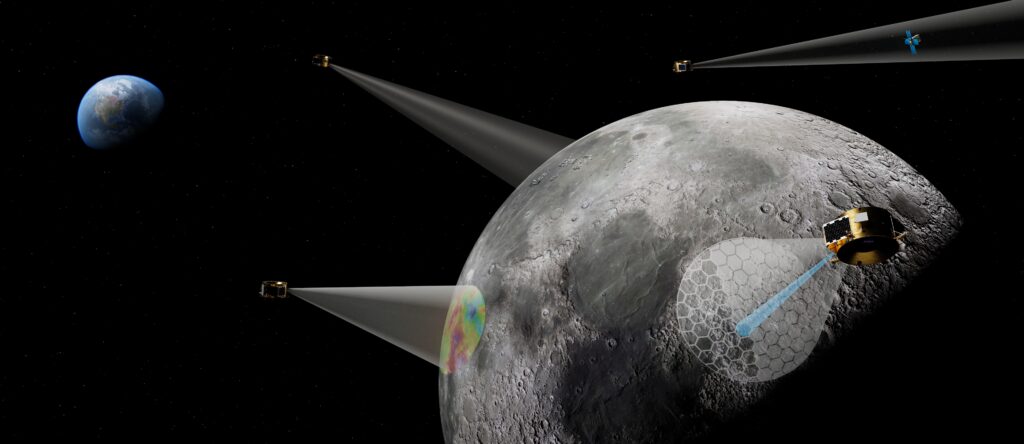
The company said the spacecraft is highly maneuverable and carries substantial fuel reserves. Its payload capacity also supports a range of missions, including spacecraft delivery, deorbit services, communications, and lunar imaging.
It also incorporates flight-proven components from Firefly’s launch vehicles and lunar landers, including core systems used on the company’s Blue Ghost lunar lander.
Working With the Government
Firefly is set to complete a preliminary design review for the US Defense Innovation Unit (DIU) and Space Development Agency to demonstrate that Elytra’s core technologies can perform as intended.
The company is then expected to compete for the next phase of the program, which would cover the spacecraft’s launch and operations.
Separately, Firefly holds a DIU contract for a space domain awareness mission using Elytra, with launch planned no earlier than 2027. The company is currently integrating and testing the spacecraft for the mission.
“Firefly is known for performing some of the hardest missions in space, and this mission is no exception,” said Firefly Aerospace CEO Jason Kim.
“This dialable system can deorbit satellites of vastly different sizes and configurations to help mitigate the growing space debris challenge our industry is up against.”