

The US Space Force is strengthening its space warfare capabilities with a ground-based system built to detect, deny, disrupt, and degrade enemy satellites without physically destroying them.
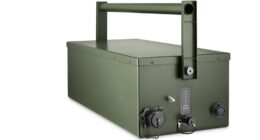
Built by L3Harris, “Meadowlands” features multi-band, dual-polarization satellite communication antennas integrated with low-noise amplifiers, high-power amplifiers, and an antenna photonics unit.
Designed for mobility, it employs a wheeled trailer configuration that supports both road transport and airlift aboard cargo aircraft such as the C-130 Hercules.
The system works by beaming electromagnetic energy to create “reversible effects,” degrading hostile satellites through signal interference without causing physical damage.
Meadowlands achieves this by transmitting a high-power counter-signal toward an adversary satellite’s antenna to disrupt uplink communications.

As a result, the targeted satellite may lose the capability to receive commands, process telemetry, or manage the data links required for operations.
Serving as a lighter, more compact, and more easily transportable upgrade to the Counter Communications System 10.2, Meadowlands is planned to grow into a fleet of 32 systems.
“We’re continuously pursuing capability modifications to modernize our fleet and better enable our Guardians as they execute missions on behalf of the combatant command and in support of US objectives,” said Col. Angelo Fernandez, commander of the US Space Force’s Mission Delta 3.
“Continued US Space Force investment in electromagnetic warfare systems, software, and advanced training is essential to modern warfare.”
Bolstering US Space Ops
US Space Force Combat Forces Command formally accepted Meadowlands for operational use on June 8, marking a significant upgrade to its electromagnetic warfare arsenal.

The effort is tied to nearly $460 million in funding requested in the Space Force’s Fiscal Year 2027 budget to develop the system and provide the training and support needed for deployment.
Guardians from the Combat Forces Command’s Mission Delta 3 for Space Electromagnetic Warfare will operate the weapon.
“We have exceptionally trained and skilled electromagnetic warfare professionals who are highly motivated and excited about integrating this new Meadowlands capability,” said Lt. Col. Ryan Skilling, commander of the US Space Force’s 4th Electromagnetic Warfare Squadron.
“This upgraded system enables us to more effectively and efficiently support the joint scheme of maneuver across the continuum of conflict.”