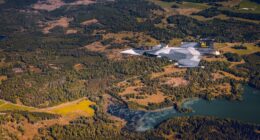


Northrop Grumman moves further into the hybrid future of uncrewed aircraft with the first flight of its XRQ-73 experimental stealth drone.
The test took place at Edwards Air Force Base in California, where the aircraft’s hybrid-electric propulsion system was evaluated for fuel efficiency, reduced emissions, and improved mission flexibility.
The milestone suggests new operational possibilities for the platform, with the company also noting it could support the “evolution of new aircraft designs.”
XRQ-73 is being developed for the Defense Advanced Research Projects Agency under the four-year SHEPARD (Series Hybrid Electric Propulsion AiRcraft Demonstration) program.

With the successful flight test, Northrop has surpassed over 500,000 autonomous flight hours across 70 years of work in autonomy.
Meet the XRQ-73
The XRQ-73 is expected to fly at speeds of up to 250 knots (463 kilometers/288 miles per hour) and operate at altitudes just below 18,000 feet (5,486 meters).
As a rapidly fieldable Group 3 drone, it is projected to weigh around 1,250 pounds (567 kilograms).
Visually, the aircraft features a low-observable, blended-wing profile that resembles the silhouette of the US Air Force’s B-21 stealth bomber, though no formal connection has been confirmed between the two designs.
During development, the company drew on hybrid propulsion technologies and tactical components from its earlier Great Horned Owl project, which aimed for a reconnaissance platform with a low acoustic signature and modern endurance capabilities.
While further details remain limited, the XRQ-73 concept reflects an effort to demonstrate how hybrid propulsion could enable uncrewed aircraft to stay airborne longer while remaining undetected.