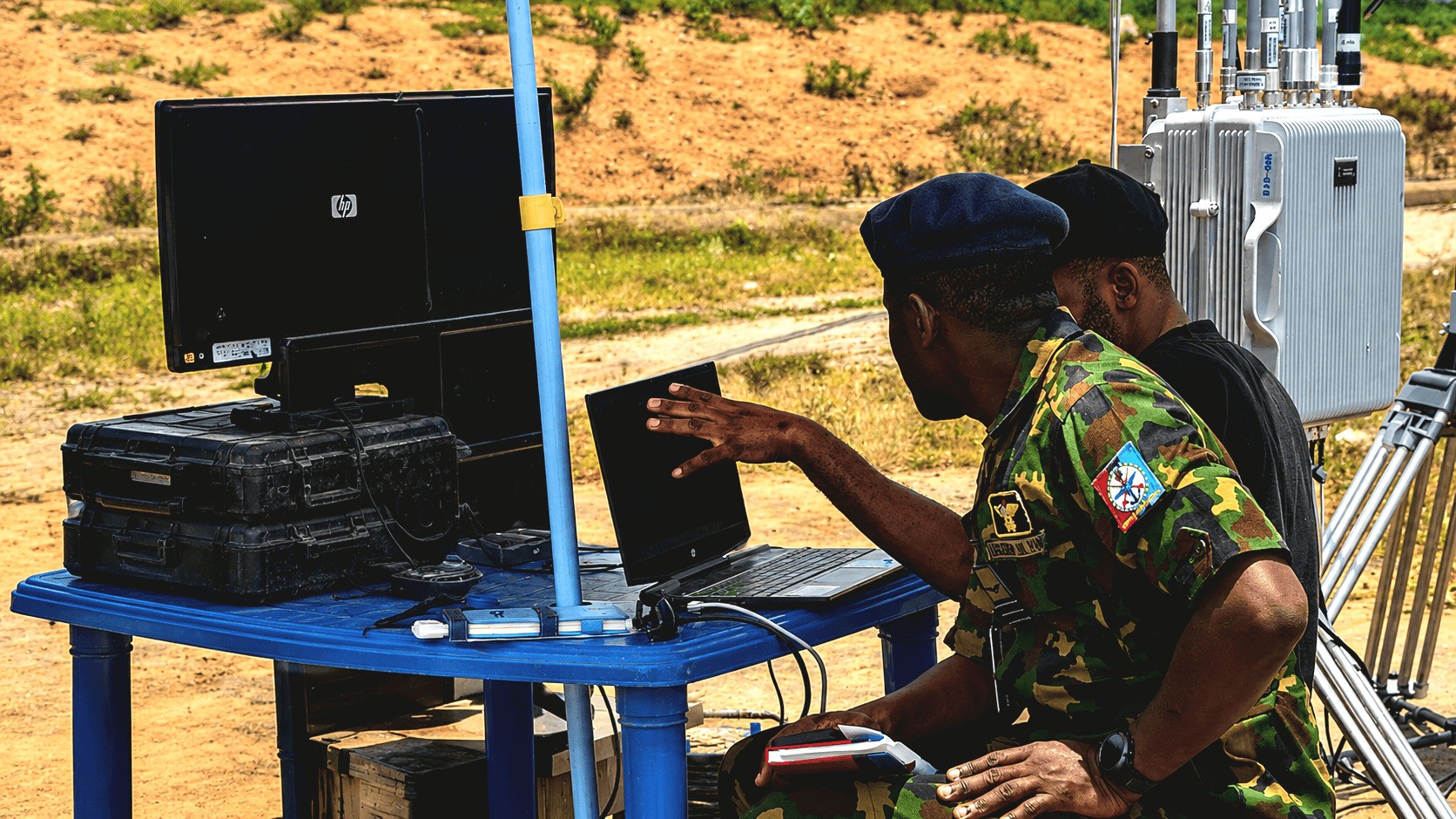

Nigeria is testing whether one system can handle the full fight against rogue drones, from spotting them in the sky to disrupting their control links.
Developed by Nigerian firm Babasky Technologies, the “all-in-one” electronic warfare (EW) capability recently underwent a demonstration involving Nigerian military and intelligence officials.
During the exercise, the system detected small and medium multi-rotor unmanned aerial vehicles (UAVs) at ranges of up to 8 kilometers (5 miles).
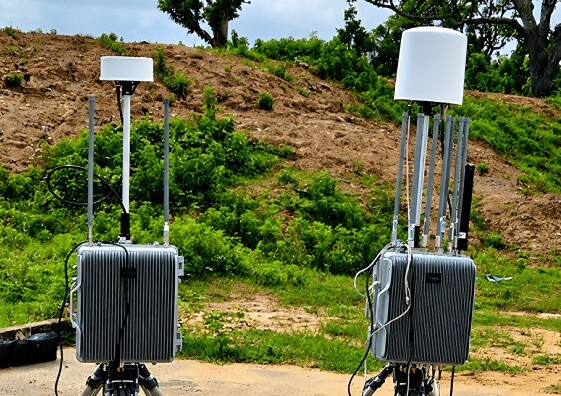
It also reportedly pinpointed the locations of their operators on the ground, enabling real-time targeting or follow-on action.
Onboard software dynamically mapped protected airspace around sensitive sites and installations, creating digital no-fly zones for unauthorized drones.
When a drone entered a restricted area, the counter-unmanned aerial system (C-UAS) solution used directional radio-frequency jamming to disrupt its control and telemetry links, potentially forcing it to land or enter landing mode.
Cutting Reliance on Costly C-UAS
The demonstration comes as autonomous systems become more prevalent among non-state groups across West Africa, including in counter-insurgency operations in the region.
Babasky said African forces have largely relied on imported anti-drone hardware, which can be costly and may not always be suited to local operating conditions.
The company is positioning its locally developed C-UAS as an alternative, while seeking to expand Nigeria’s role in indigenous military technology development.
“While standalone jammers are common, true battlefield superiority requires an end-to-end, integrated kill chain,” the company stated.
“As a full-throttled defense technology company, we remain relentless in our mission: proving that world-class, sovereign EW technology can be engineered, built, and deployed right here in Africa.”