Scientists in the Netherlands have found a way to make drones lift heavy loads together, turning solo flyers into coordinated teams.
By linking drones to a payload with cables, the new algorithm lets them carry much more than any single drone could manage.
The algorithm also allows drones to adjust their positions in real time, controlling orientation and compensating for wind and other disturbances.
“A single drone can only carry a very limited load,” said Sihao Sun, robotics researcher at Delft University of Technology (TU Delft). “This makes it hard to use drones for tasks like delivering heavy building materials to remote areas … or assisting in rescue missions.”
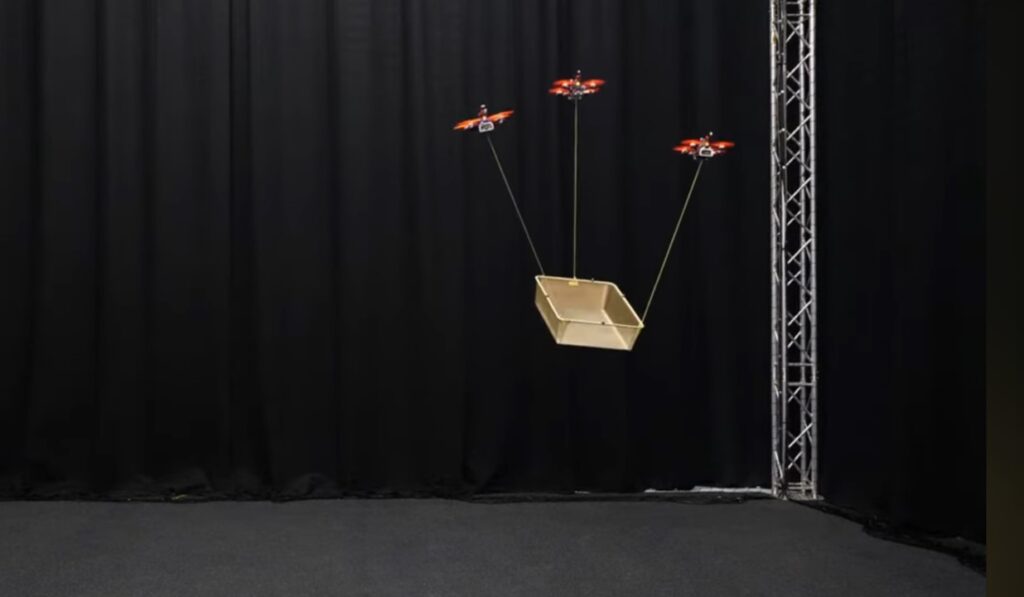
In lab tests, up to four drones reportedly navigated obstacles, wind, and moving payloads autonomously, demonstrating that the algorithm can handle complex, dynamic conditions.
Potential on the Frontlines
This coordinated drone swarm could change how forces operate in hard-to-reach or contested areas, from rugged mountains to disaster-struck zones.
The algorithm removes the need for sensors on the payload itself, letting drones adapt quickly to shifting weights and unpredictable conditions.
Possible applications include delivering heavy supplies, moving equipment across difficult terrain, and supporting rescue operations where conventional vehicles can’t reach.
TU Delft aims to bring the system outdoors, testing wind, weather, and terrain to prove it can handle real operational challenges.
“You just tell them where to go, and they figure out the rest,” Sun added.