

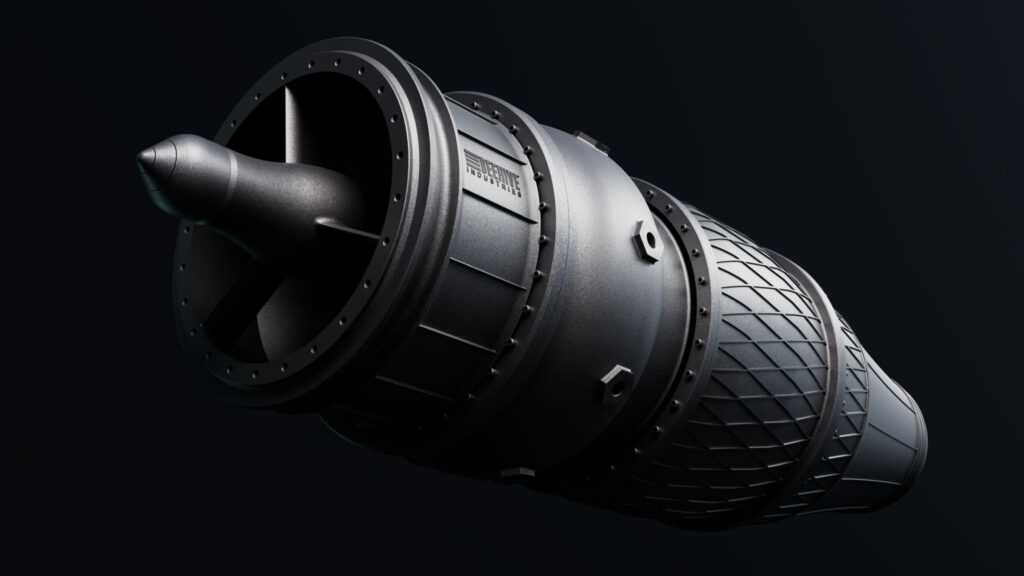
A Colorado-based firm is looking to power uncrewed fighters with a unique 3D-printed turbofan capable of producing 1,000 pounds (453 kilograms) of thrust.
Beehive Industries’ Rampart engine is built around an adaptable design that allows it to be reconfigured for combat, reconnaissance, and decoy missions, offering flexibility across uncrewed fleet operations.
It is engineered to support tactical aircraft payloads and withstand damage, with a focus on operating in contested logistics environments.

By using parts sourced through an integrated supply chain, Beehive said Rampart can be rapidly assembled as a system built entirely in the US.
“Rampart delivers the endurance and performance needed to operate where it matters most — without the delays of traditional manufacturing,” the company stated on social media.
Keeping Up With Competition
The US Air Force has already awarded contracts to defense firms such as Honeywell and Kratos to develop similar propulsion systems for uncrewed fighter platforms.
The demand has also drawn responses from larger players across the defense industry, with companies working on lighter and more cost-efficient engine designs.
However, some experts have reportedly questioned Beehive’s ability to match or exceed these systems, pointing to its status as a “startup” as a potential challenge in a highly competitive market.
Despite this, the company is moving to accelerate development of its engine portfolio.
Beehive is preparing to flight-test its 200-pound (91-kilogram) thrust system, “Frenzy 6,” developed under a $30-million US Air Force contract.
Part of the funding will also support prototype development of a smaller 100-pound (45-kilogram) thrust engine, “Frenzy 8.”