
Militaries may not need to build a new robot every time they want to add autonomous capabilities to a ground vehicle.
Textron Systems has introduced a control package designed to help turn both new and existing vehicles into robotic platforms.
Called “CoreMotion,” the package acts as a link between autonomy software and vehicle hardware, translating commands into actions such as steering, braking, and power distribution.
It also coordinates onboard subsystems, robotic controls, navigation systems, and mission payloads.
CoreMotion is designed to work with different hardware and software configurations, allowing military customers to integrate their preferred autonomy systems rather than rebuild a vehicle around a proprietary solution.
“Our CoreMotion technology has been proven over more than 8,000 miles of UGV operation,” said Ryan Schaffernocker, senior vice president of Air, Land & Sea Systems at Textron Systems.
“By bringing this same field-proven robotic control capability to both new and existing vehicle platforms, CoreMotion provides customers with a low-risk path to autonomy adoption while preserving the flexibility to integrate the autonomy stack of their choice.”
The company debuted the system at the 2026 AUSA Annual Meeting & Exposition in Washington, D.C., on October 12.
Turning Existing Vehicles Into Robots
CoreMotion combines software with ruggedized hardware, including computers, actuators, wiring, and electronics.
These components are packaged as a modular kit intended for installation in the field, offering a potential route to robotic operation for vehicles already in military service.
Rather than developing an entirely new uncrewed platform for every mission, militaries could use the package to add autonomous functions to existing vehicles.
This could help expand robotic fleets while reducing the technical challenges and integration risks associated with retrofitting different platforms.
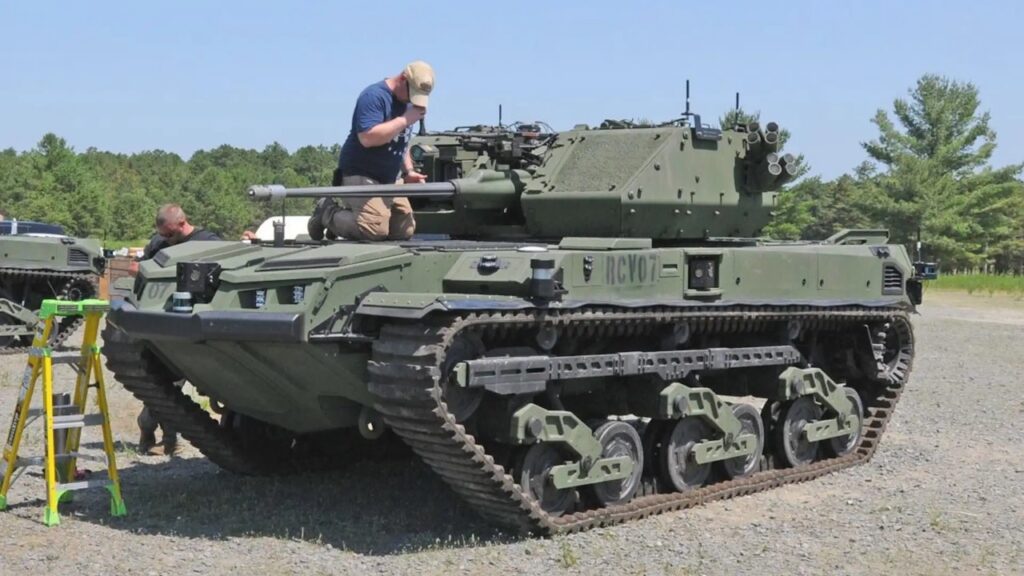
Textron Systems said CoreMotion has already been deployed across its RIPSAW family of uncrewed ground vehicles, where the tech has accumulated more than 8,000 operational miles.
A Flexible Route to Military Autonomy
The package targets a key challenge in military robotics: making autonomy software work reliably with the physical systems of different vehicles.
Autonomous navigation software may determine where a vehicle should move, but the vehicle still needs a control system capable of translating those instructions into physical actions.
CoreMotion is designed to handle that execution layer while coordinating the vehicle’s critical functions.
Textron said the approach can help customers move from autonomy experimentation toward operational use more quickly.
The package’s hardware- and software-agnostic design also gives military customers the flexibility to adopt or update autonomy software as technology evolves without necessarily replacing the underlying robotic control system.