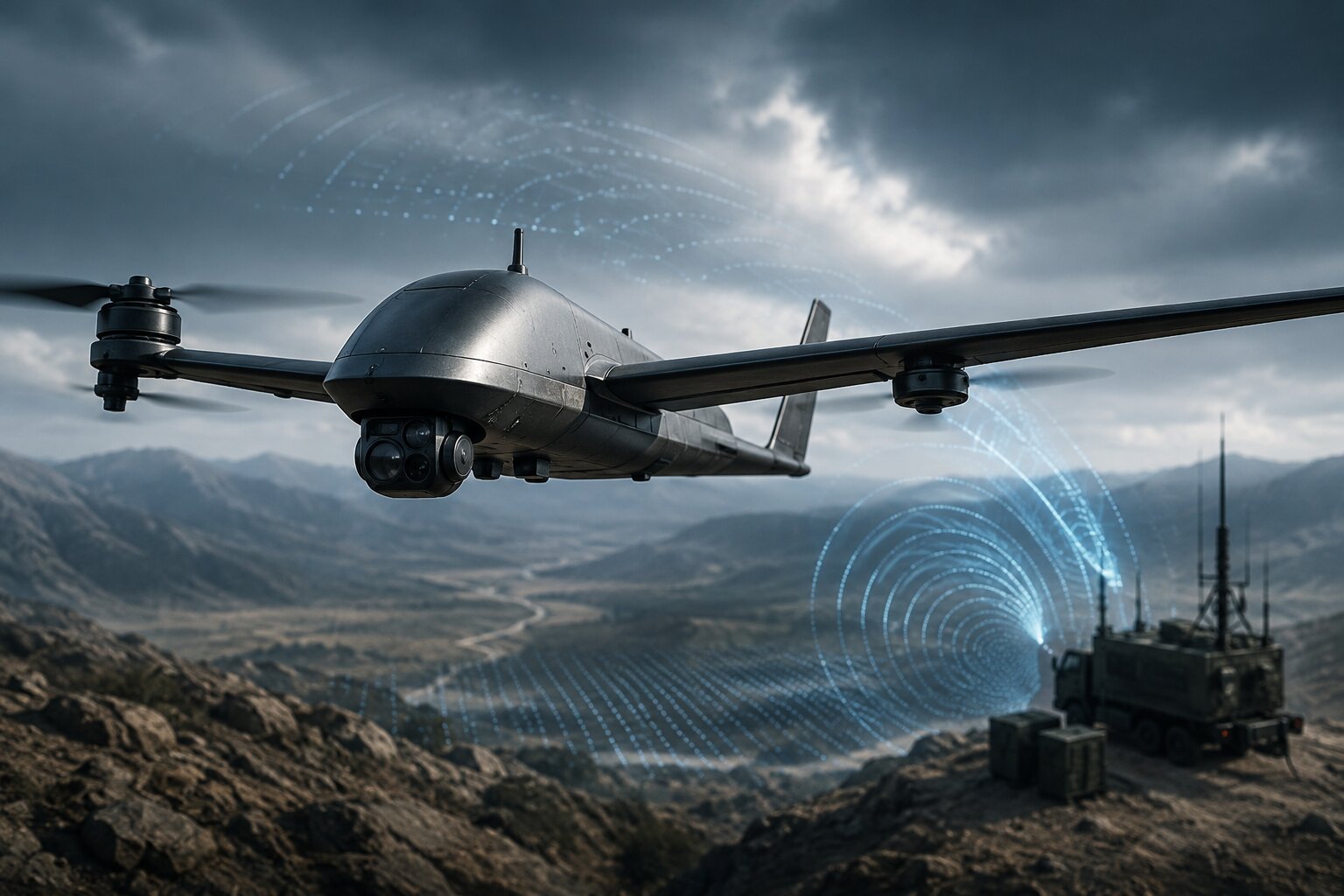
US firm Eva Defense is advancing a low-noise autonomous drone designed for remote piloting and, in future versions, coordination with other aircraft through an AI-enabled platform.
Unlike conventional unmanned aerial vehicles (UAVs), the prototype is built to have a smaller acoustic signature, making it harder to detect by enemy radars during operations.
Potential missions include intelligence, surveillance, and reconnaissance (ISR), perimeter monitoring, infrastructure protection, and communications relay.
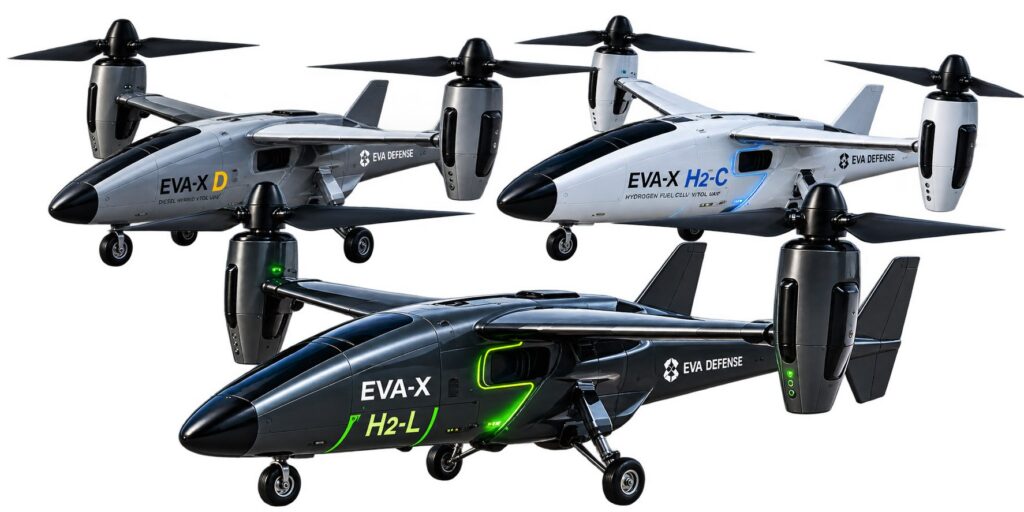
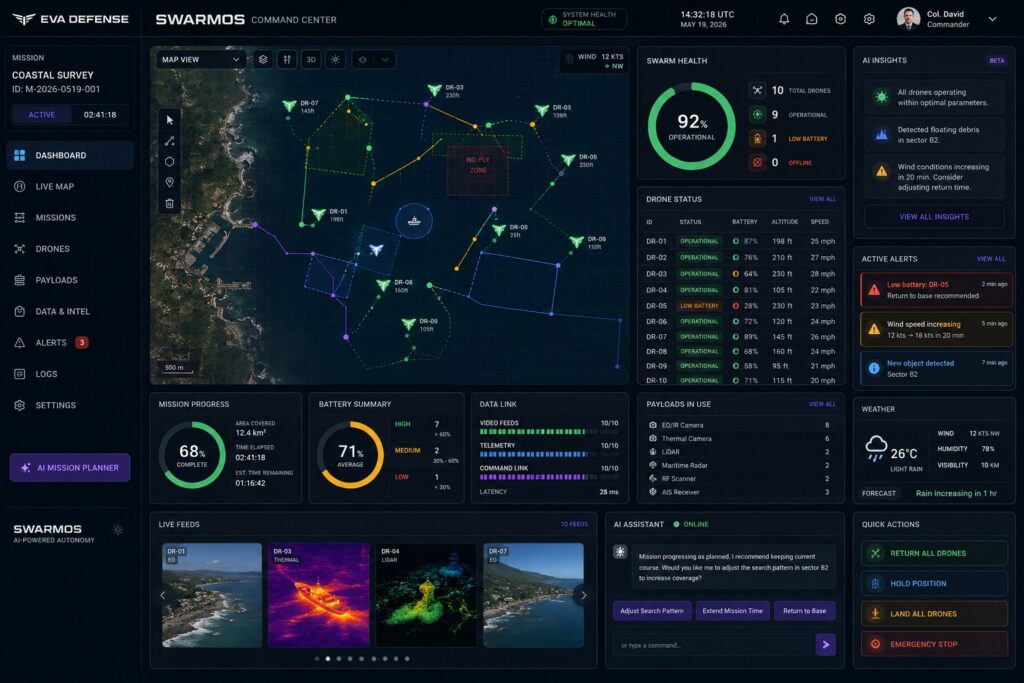
To expand those capabilities, Eva Defense plans to connect future models to SwarmOS, its AI-powered command-and-control system.
The AI will support mission planning, navigation, sensor data processing, fleet coordination, and management of multiple aircraft through a unified interface.
The prototype is part of Eva Defense’s broader technology effort, which also includes communications systems and SwarmOS.
Shaped by Military Experts
Eva Defense is drawing on a Defense Advisory Board that includes retired US Army General Robert Brooks Brown.
The company said its members help guide development and testing toward the practical needs of government and defense users.
“We don’t want to build another conventional drone. Our objective is to build an intelligent aircraft that can operate autonomously, operate quietly, and ultimately work cooperatively with other autonomous systems,” said David Boulette, chief executive officer of Eva Live.
“Having experienced military leaders… gives our engineering team something incredibly valuable — direct input from people who understand how these technologies could actually be used in the field.”
What’s Next?
Eva Defense will continue evaluating the prototype’s flight characteristics, noise levels, autonomous navigation, endurance, payload integration, and communications.
Those tests will inform the company’s goal of developing a drone that can operate with minimal human input, coordinate with other aircraft, and provide real-time intelligence.
“The drone itself is only the beginning. Our larger vision is an autonomous defense network where AI can coordinate aircraft, sensors, and communications systems together,” Boulette added.
“We believe the combination of low-noise aircraft, autonomous intelligence, and resilient communications can create an entirely new class of unmanned defense platform.”