
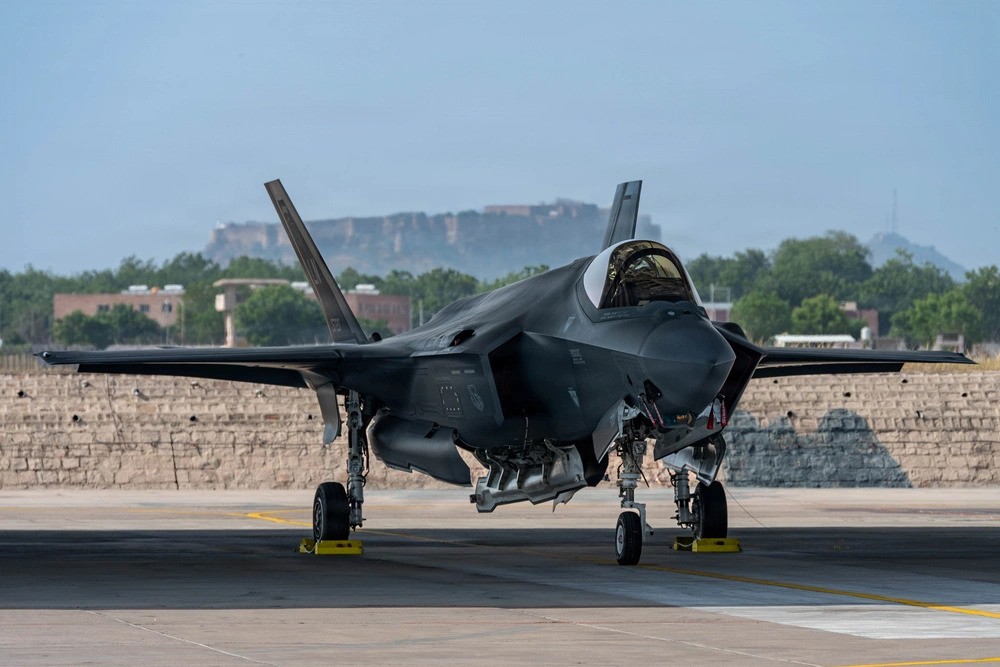

US Air Force high-value aircraft could soon get a new set of eyes for spotting long-range missile threats, thanks to a sensor upgrade being developed by US firm SRC.
Called Ghost Mantis Gen 3, the multi-function aperture is designed to detect, track, and identify missiles at extended ranges, generating data that onboard processors can use to help aircraft respond to incoming threats.
The system uses a single aperture to perform multiple sensing missions across the electromagnetic spectrum, while its broad radio frequency (RF) coverage allows it to adapt to evolving requirements without major changes to the aircraft.
The technology will be paired with SRC’s Agile Condor high-performance airborne processor to provide onboard processing capabilities.
SRC said the combination enables advanced sensing and electromagnetic spectrum operations (EMSO) while reducing size, weight, and power requirements.
“Aircraft survivability increasingly depends on the ability to detect, identify, and respond to threats at extended ranges,” said Kevin Hair, president and chief executive officer of SRC.
“Ghost Mantis Gen 3 was designed to … be integrated across a variety of platforms. We are proud to support the US Air Force’s vision for next-generation airborne survivability and mission effectiveness.”

Part of a $37M Deal
SRC secured a $37-million Other Transactional Agreement contract from the US Air Force Life Cycle Management Center (AFLCMC) to develop and integrate the system.
Once developed, Ghost Mantis Gen 3 will be integrated into the Large Aircraft Survivability System prototype, an advanced airborne threat-detection capability for the US Air Force’s Mobility Air Force.
The award builds on SRC’s existing airborne sensing portfolio, which includes multi-intelligence capabilities and the Ghost Mantis family of systems.