
Electronic warfare, kamikaze drones, and robotic ground vehicles are coming together in Unwave’s latest battlefield lineup, with the Ukrainian firm unveiling three new systems designed for modern combat.
The new portfolio includes the Vikha electronic warfare (EW) platform, the fixed-wing Steppe Wind kamikaze drone, and the Terrikon-X unmanned ground vehicle (UGV), each built to support a different role on the battlefield.
Vikha Directional EW
Built to counter hostile drones several kilometers away, Vikha is a directional EW platform equipped with a rotary mechanism and a reconfigurable antenna that tracks and jams targets until they are neutralized.
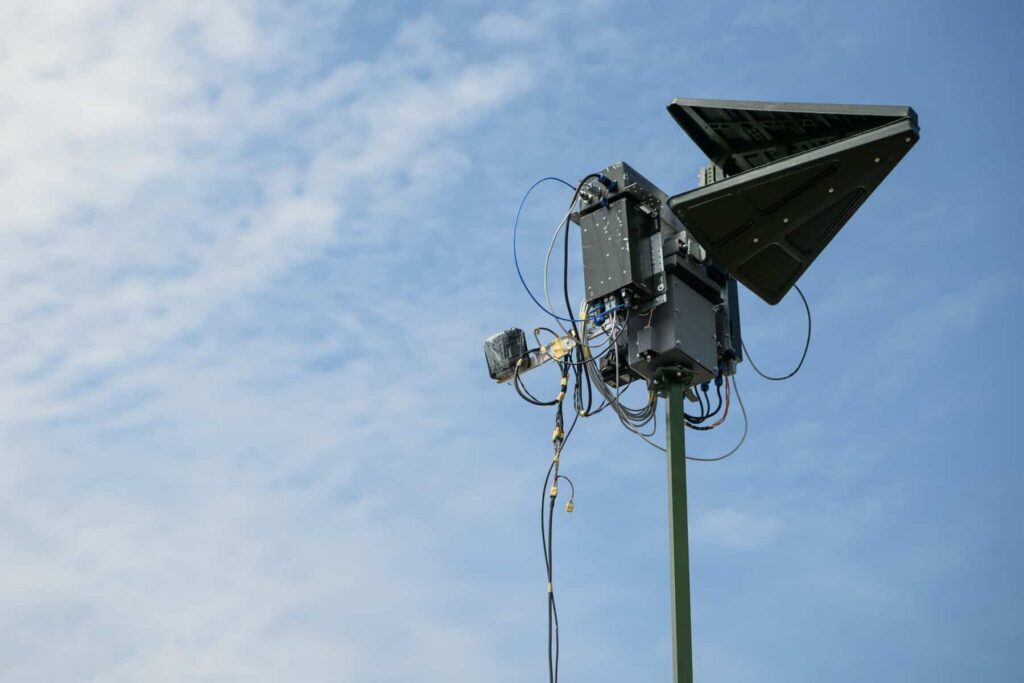
It incorporates the company’s Pastka management software, enabling remote operation, centralized control, and compatibility with third-party solutions.
Operators can designate targets through a digital interface, allowing the platform to automatically orient its antenna and maintain jamming throughout the engagement.
To speed operator readiness, Unwave also offers training simulators that replicate the system’s functions without requiring access to the physical platform.
Steppe Wind UAV
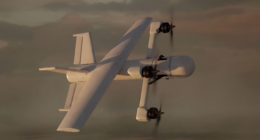
The Steppe Wind loitering munition can strike targets up to 90 kilometers (56 miles) away with a 5-kilogram (11-pound) warhead while reaching speeds of 170 kilometers (106 miles) per hour.
Developed with Sky Composite Engineering, it features a composite airframe and supports either satellite or digital communications depending on mission requirements.
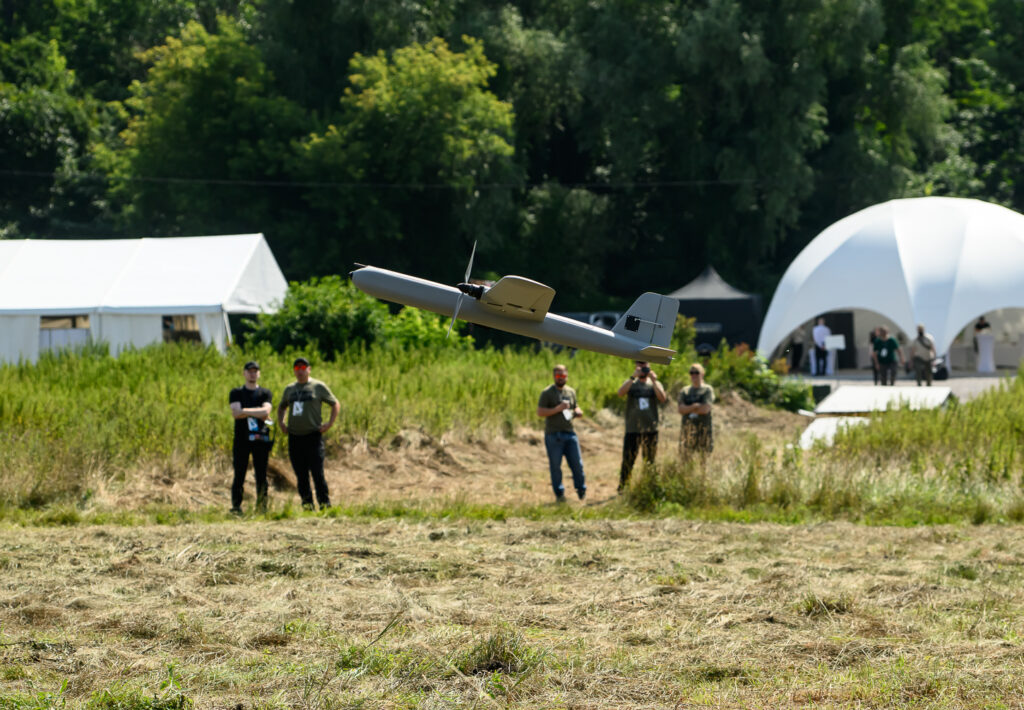
The drone uses optical guidance during the terminal phase and can fly in automatic, semi-automatic, or manual modes.
Powered by twin engines, Steppe Wind can be launched in about two minutes without a catapult or lengthy pre-flight setup.
The company said the drone has completed combat testing and entered serial production.
Terrikon-X Multi-Role UGV
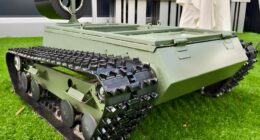
Completing the lineup is the Terrikon-X, a modular UGV designed for logistics, engineering, cargo transport, and unmanned recovery missions.
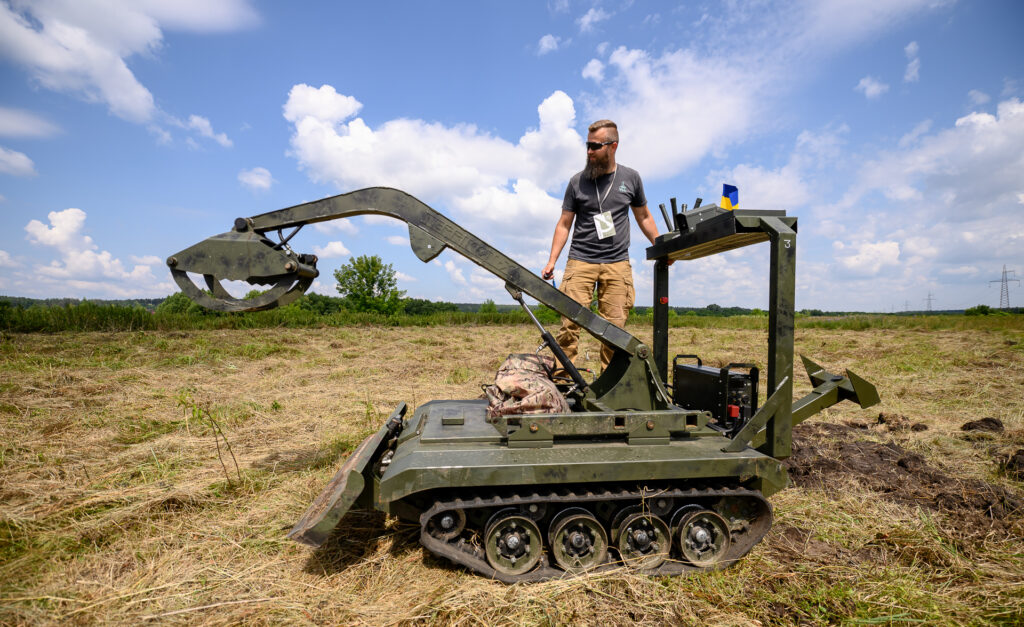
Its hydraulic architecture enables operators to quickly swap mission modules, while a 40-kilometer (25-mile) operating range can be extended with additional batteries or an internal combustion engine.
The platform can also carry EW payloads, allowing it to protect nearby assets and support other systems operating on the battlefield.