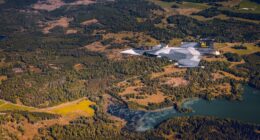
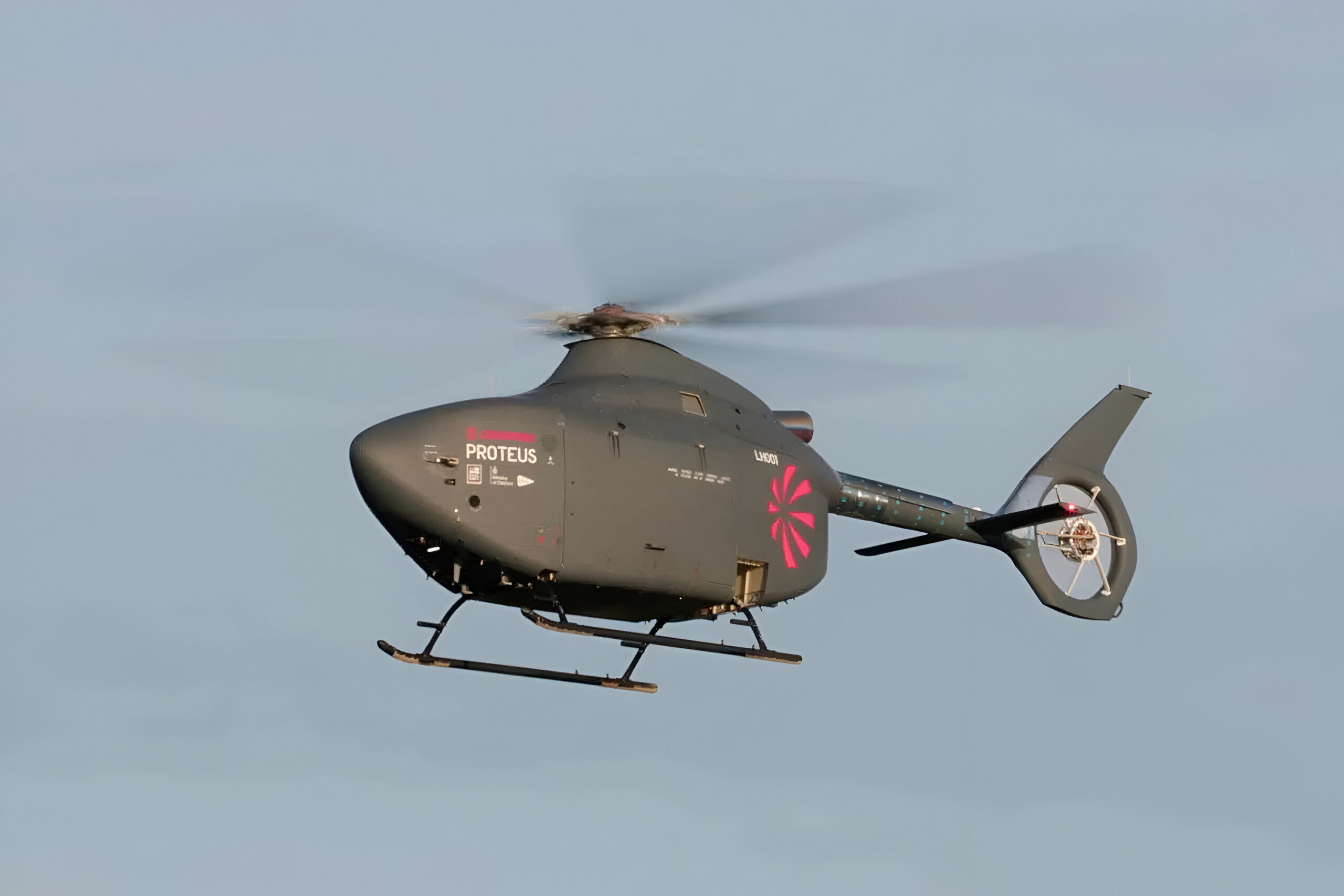
For the first time in the UK, a full-size autonomous helicopter has taken flight, joining manned aircraft in the air in a major milestone for British aviation.
The aircraft, called Proteus, completed a brief autonomous flight without human controls while ground personnel monitored its systems.
The flight was witnessed by government officials and company representatives as Proteus demonstrated its ability to operate safely in shared airspace.
Italian giant Leonardo designed the helicopter for the Royal Navy as part of a next-generation “hybrid air wing” concept that mixes crewed and uncrewed systems during missions.
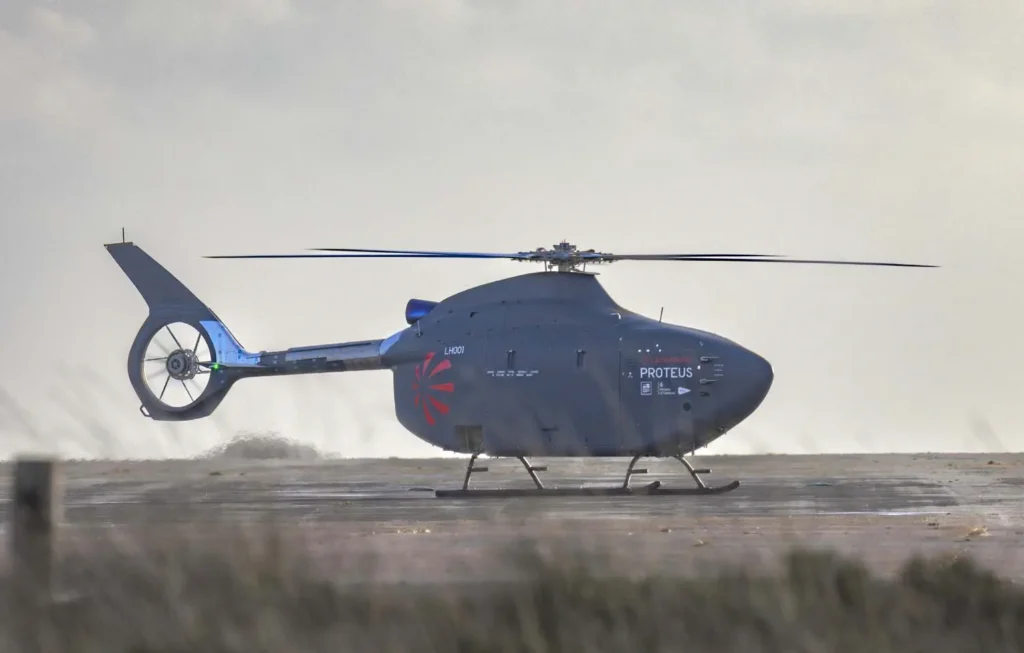
Proteus is expected to take on a range of naval roles, including anti-submarine operations, maritime patrol, and airborne surveillance.
Royal Navy Deputy Director of Aviation Future Programmes Commodore Steve Bolton said the successful first flight is a key step in the service’s planned maritime aviation transformation.
“This milestone signals our intent to lead technological innovation, to enhance the fighting effectiveness of the Royal Navy in an increasingly complex operating environment, and to maintain operational advantage against evolving maritime threats,” he stressed.
Behind the Rotor
Leonardo is still refining Proteus under a 60-million-pound ($80-million) contract, with the Royal Navy calling it “one of the world’s first full-sized autonomous helicopters.”
A suite of sensors and advanced computing systems in the cockpit enables real-time analysis of the environment and fast decision-making.
The helicopter can carry up to 1 metric ton (2,204 pounds) of payload through harsh conditions, potentially freeing up other piloted aircraft for high-priority tasks.
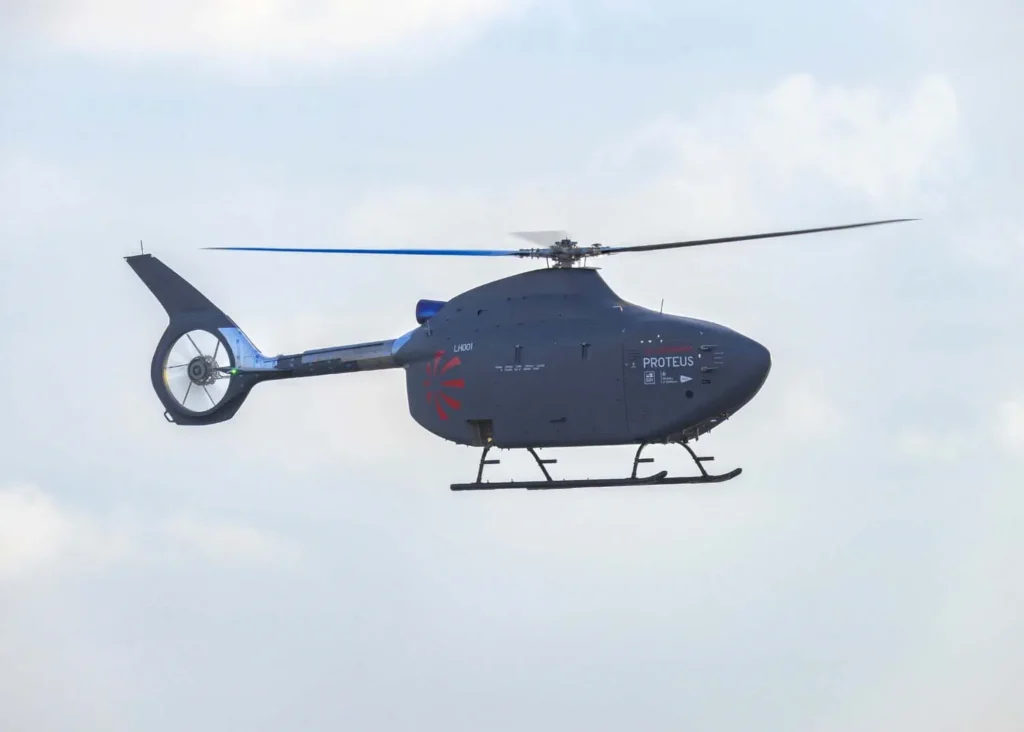
“Proteus represents a step-change in how maritime aviation can deliver persistence, adaptability and reach — conducting the dull, dirty, and dangerous missions in challenging environments without putting human operators at risk,” Leonardo UK Managing Director Nigel Colman said.
“As the UK’s only end-to-end rotary wing manufacturer, it has been a pleasure working with the Royal Navy and seeing Proteus take off for the first time after being designed, developed, and manufactured at Leonardo’s Yeovil site is a fantastic milestone.”