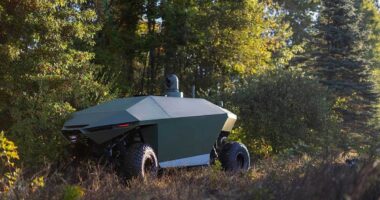

US firm VisionWave is developing a new family of autonomous ground systems built around a simple idea: one vehicle architecture can take on different missions by swapping its mission module.
Known as STRATUM, the portfolio includes four platforms: VARAN, RANGER, SCOUT, and RECON. The systems share a common architecture while using interchangeable modules tailored to different roles.
The approach is intended to let operators use a common platform across multiple missions without requiring a separate vehicle for each one.
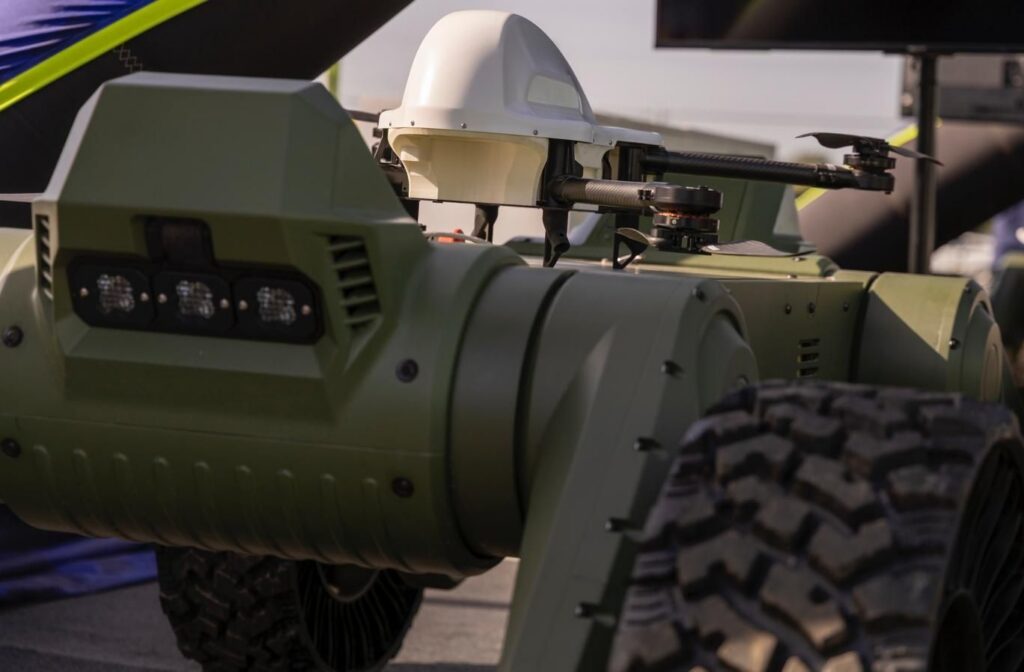
“The important concept behind STRATUM is modularity,” said Douglas Davis, chief executive officer and executive chairman of VisionWave.
“Instead of designing a new vehicle around every mission, our architecture is intended to allow the mission package to change while maintaining a common platform, logistics structure and command environment.”
VisionWave said none of the STRATUM platforms has completed qualification testing, entered serial production, secured a sale, or generated profit.
VARAN Takes the Lead
The company has provided detailed specifications for VARAN, a multi-role unmanned ground vehicle (UGV) designed to carry up to 500 kilograms (1,102 pounds) and tow more than 1,000 kilograms (2,205 pounds).
It has a maximum speed of 70 kilometers (45 miles) per hour and an endurance of four hours, extendable to 28 hours depending on operating conditions.
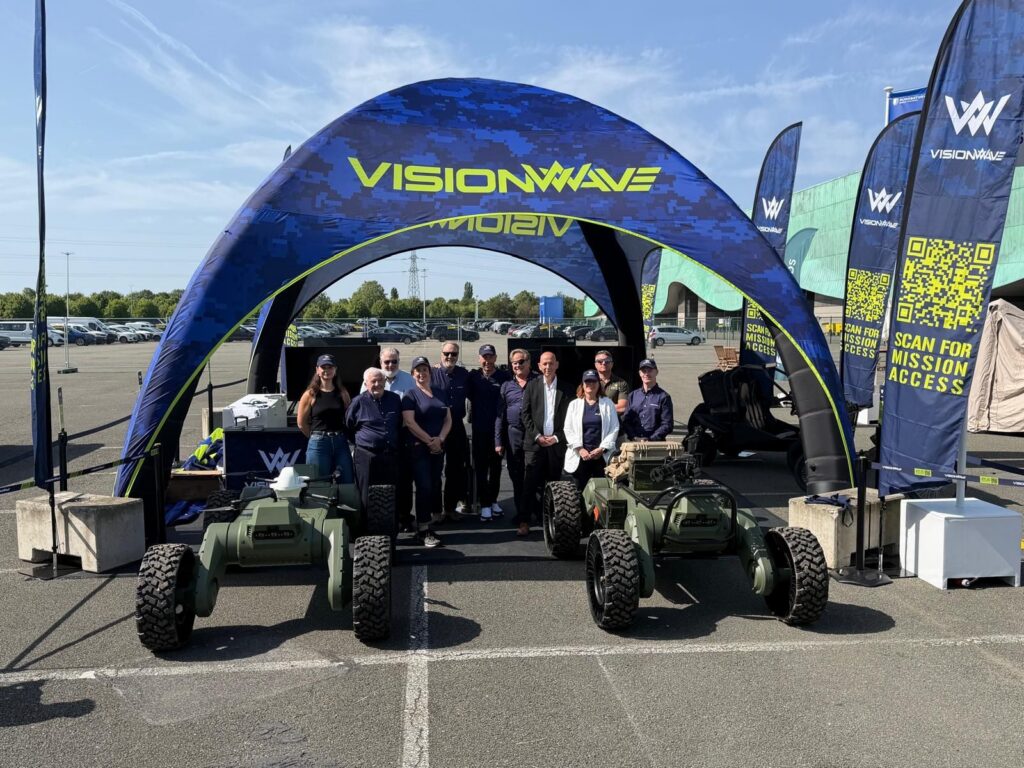
Its equipment options include drone launch-and-recovery canisters, remote weapon stations, radio-frequency and radar sensors, and optical mast systems.
VARAN is designed for missions including intelligence, surveillance and reconnaissance, counter-unmanned aircraft systems, casualty evacuation, and logistics.
Linking Ground and Air
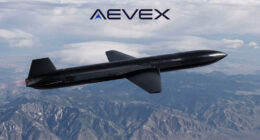
VisionWave also envisions its ground platforms operating alongside tactical aerial assets.
Within the same ecosystem, aerial systems are intended to launch from ground elements, share a common operational picture, and receive tasking through the STRATUM command system.
The setup is designed to connect UGVs, aerial systems, sensors, and mission intelligence within a single operating architecture.
“Our objective is not simply autonomous mobility,” Davis added. “It is autonomous mission execution — connecting mobility, sensing, aerial assets, and intelligence into one operational architecture.”