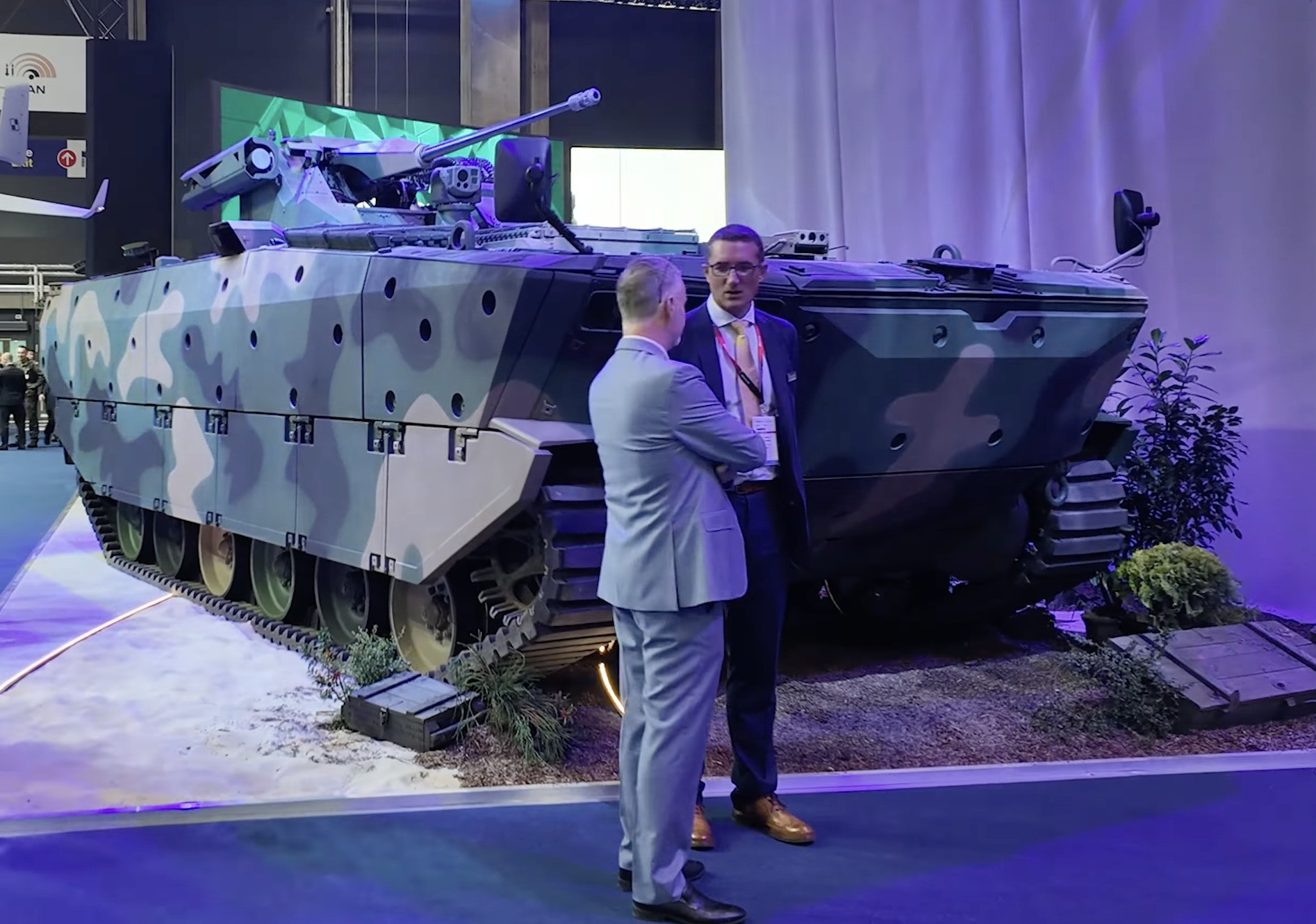
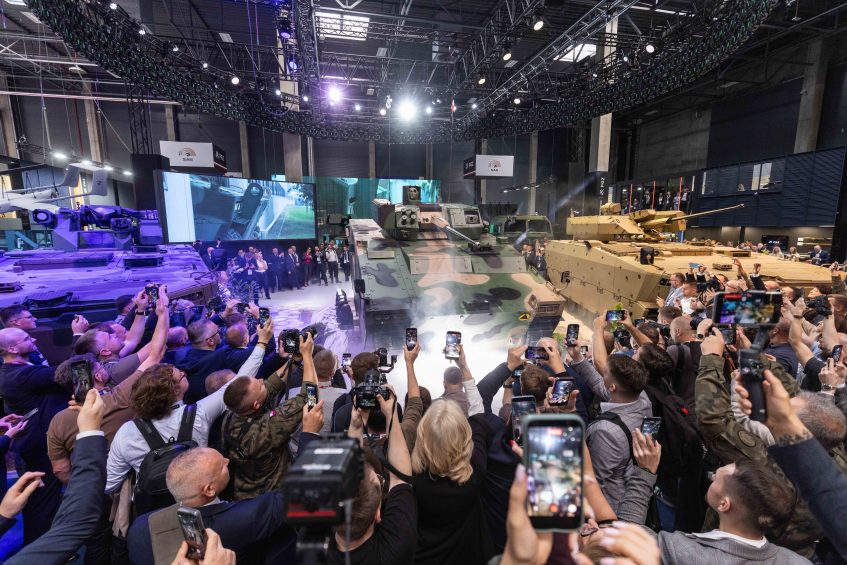
Poland has taken the wraps off a 40-ton Heavy Infantry Fighting Vehicle (IFV) built to carry troops into high-intensity combat under heavy armor.
Developed by Polska Grupa Zbrojeniowa (PGZ) and Huta Stalowa Wola, the vehicle combines heavy protection with a remotely controlled turret and advanced observation and targeting systems.
It is being designed for demanding combat operations across difficult terrain and extreme weather, with crew and troop survivability at the core of its development.
Although it is not amphibious, the Heavy IFV can ford water obstacles while its heavier design provides greater ballistic and mine protection.
An extended tracked chassis and modern powertrain are intended to provide the mobility needed to operate alongside main battle tanks.
PGZ said the vehicle will transport and protect mechanized infantry while providing direct fire support on the battlefield.
“The premiere of the Heavy IFV is an important moment for both PGZ and the entire Polish defense industry,” said Adam Leszkiewicz, president of the management board of PGZ.
“The demonstrator presented today confirms that Polish companies have the expertise to design and develop advanced combat platforms that meet the demands of the modern battlefield.”
Combat Punch
The IFV carries a remotely controlled ZSSW-30 turret armed with a 30mm cannon and a twin launcher for SPIKE anti-tank guided missiles.
Programmable air-burst ammunition allows it to engage aerial threats and groups of personnel more effectively.
Advanced day-and-night observation systems support precise targeting in low-light and limited-visibility conditions.
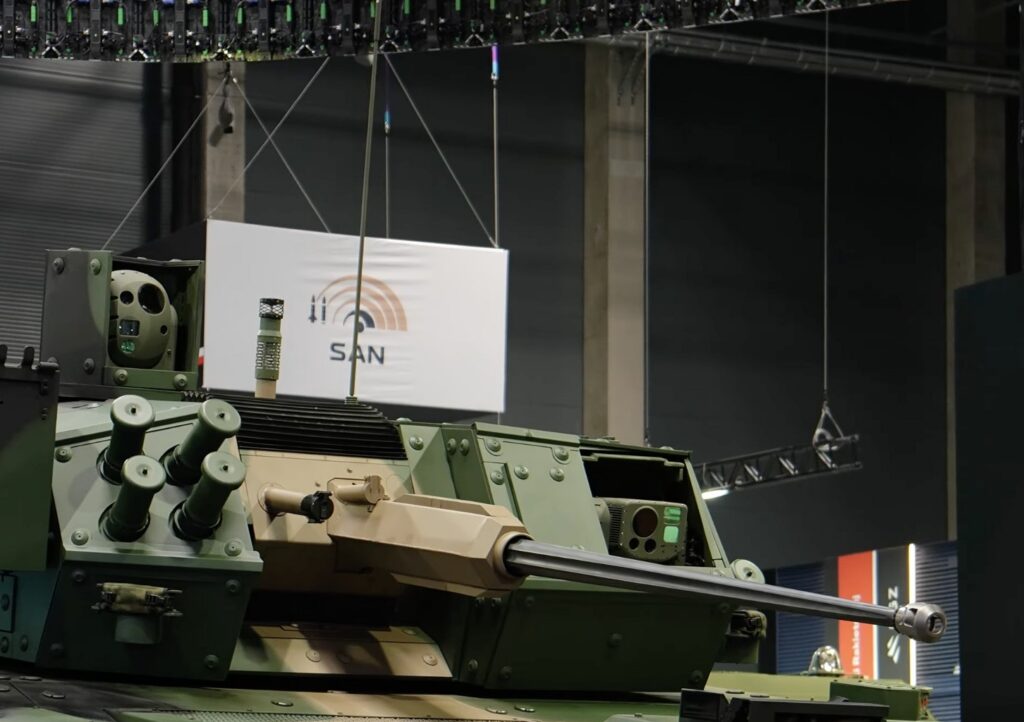
PGZ is also considering variants with alternative turrets, along with specialized configurations for other combat and land-force support missions.
Road to Production
The vehicle is entering its next development phase, with further analysis and engineering work planned to turn the demonstrator into a finished prototype.
Prototype construction, research, and qualification testing are scheduled for 2027. The manufacturer aims to achieve readiness for serial production in 2029.
Upcoming work will include full powertrain integration and trials under realistic operating conditions.
Testing will focus heavily on ballistic resistance, mine protection, mobility, and reliability before the final vehicle enters production.