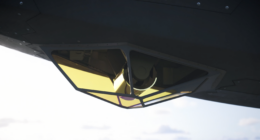


India’s unmanned aerial vehicle (UAV) fleet could soon receive a firepower boost as the country develops a lightweight air-to-ground (A2G) missile for future drone missions.
The weapon is expected to weigh between 10 and 15 kilograms (22 to 33 pounds), measure up to 2 meters (6.6 feet) long, and carry a warhead weighing up to 2 kilograms (4.4 pounds).
At its core, the missile combines an Inertial Navigation System with a Selective Availability Anti-Spoofing Module, allowing it to maintain navigation in GPS-denied environments.
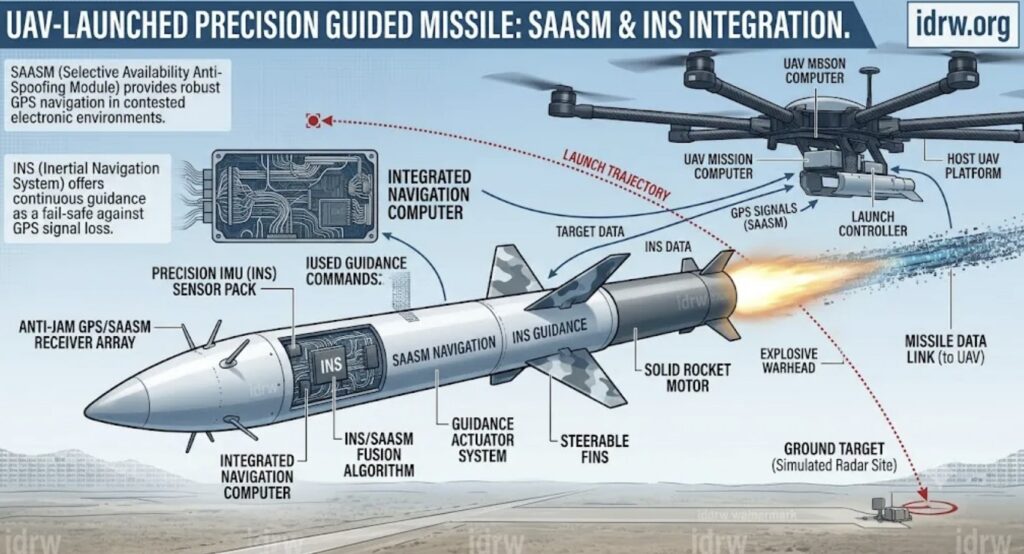
According to the Defence Research and Development Organisation (DRDO), its modular architecture supports multiple warhead configurations, including thermobaric, pre-fragmented, and blast variants.
Once developed, the weapon is expected to engage a range of targets, including radar installations, infantry fighting vehicles, communications infrastructure, logistics assets, and stationary drones.
It could also be used against main battle tanks through top-attack profiles designed to strike weaker points such as turret roofs and engine decks.
Supporting High-Volume Drone Attacks
The missile will arm India’s Medium Altitude Long Endurance (MALE), High Altitude Long Endurance (HALE), and future Unmanned Combat Aerial Vehicles (UCAVs).
Thanks to its lightweight design, platforms such as TAPAS, Archer-NG, and the Ghatak UCAV could carry multiple missiles on a single mission.

This would increase the number of targets a single drone could engage, supporting higher-volume strike operations against multiple objectives.
The development forms part of India’s Unmanned Aerial Vehicle-Launched Precision Guided Missile program, which seeks to provide future unmanned platforms with a wider range of locally developed strike capabilities.