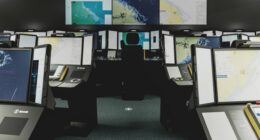
A new command-and-control (C2) system from Thales aims to help commanders track and respond to developments across any military domain.
Called HexaForce, the AI-enhanced platform is designed to connect operations across land, air, sea, cyber, space, the electromagnetic spectrum, and information operations.
To bring those domains together, the platform uses a distributed architecture designed to coordinate existing systems across national forces and allied coalitions.
Thales said it can connect assets from strategic headquarters down to tactical units, even when communications are severely degraded.

HexaForce is also designed to work with systems from other suppliers while letting each nation control the data it shares.
Its open architecture was tested during NATO’s 2026 CWIX exercise. Thales said feedback from military users, including frontline personnel, helped shape the system throughout development.
AI to Sort and Prioritize Data
HexaForce draws on cortAIx, Thales’ AI development program, which brings together more than 800 engineers and data scientists working with defense specialists.
Using large language models and agentic AI, the system is designed to shorten planning cycles and give commanders a clearer picture of an operation.
It also analyzes, connects, and prioritizes data from military, civilian, and open sources.
HexaForce is undergoing live trials aimed at increasing processing capacity from 100 to 1,000 targets per day.