A new remote-pilot autonomy system aims to give a single surface vessel the flexibility to take on multiple missions without taking humans out of the decision-making process.
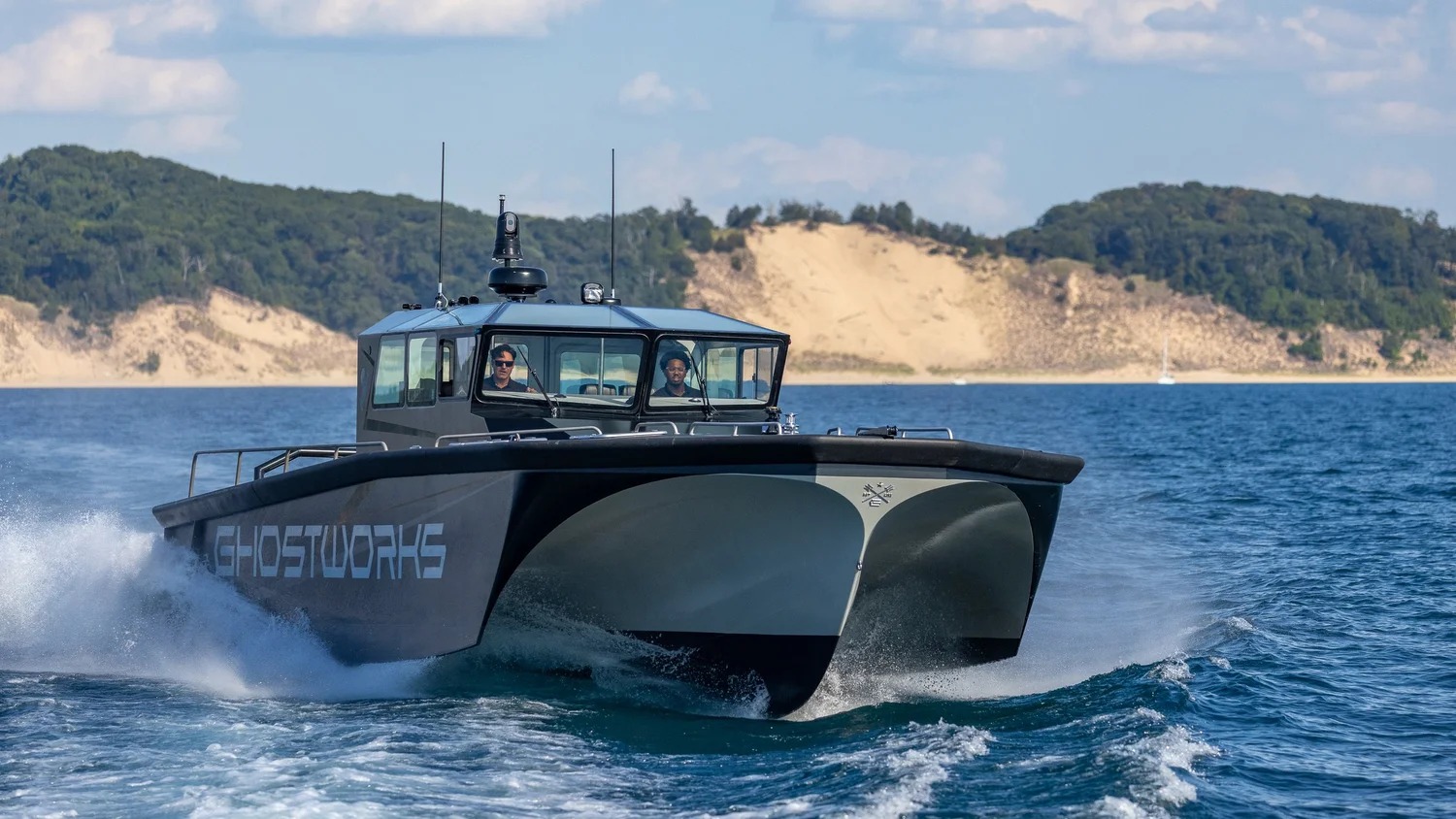
Developed by Michigan-based Ghostworks, the Multirole Remote Logistics Node (MRLN) adds a mission systems layer that transforms the company’s M-Hull and powercat vessels into configurable multi-mission platforms.
The system allows vessels to support combat logistics in contested waters, operate as communications relays that extend connectivity across dispersed forces, or conduct mine countermeasure missions by detecting and neutralizing explosives without exposing personnel to danger.
MRLN also supports littoral resupply by autonomously delivering equipment to deployed troops and enables persistent intelligence, surveillance, and reconnaissance (ISR) operations while reducing the vessel’s radar signature.
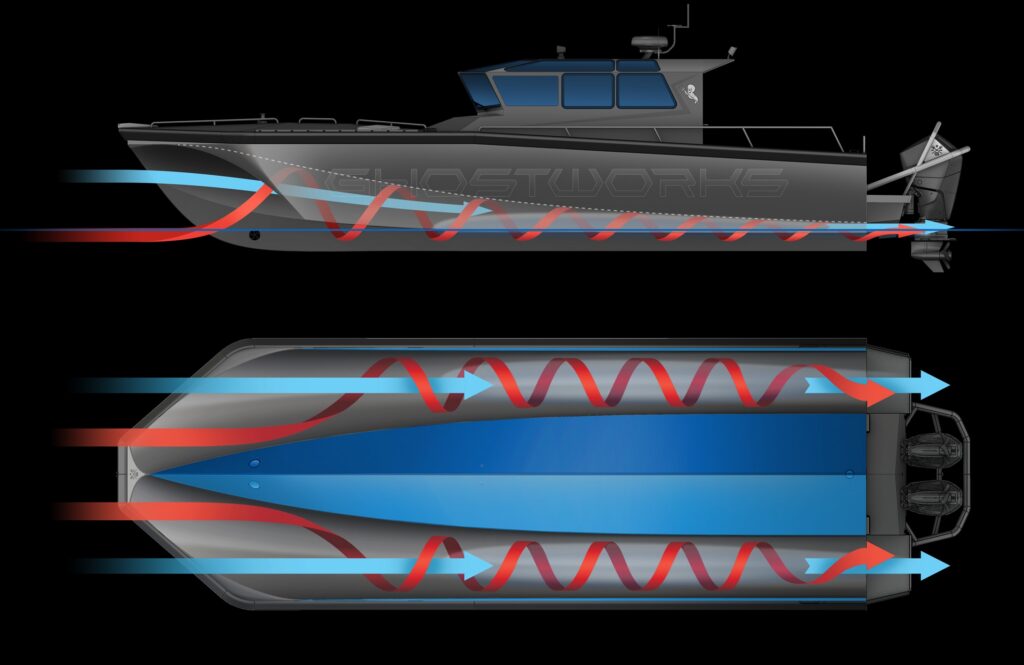
Although the platform can operate autonomously, a human operator remains in the loop, with full visibility into the vessel’s actions and the ability to take control at any time.
According to Ghostworks, operators can switch mission profiles in the field without changing platforms, allowing a single vessel to adapt to evolving operational requirements.
Breaking Usual Constraints
Ghostworks developed MRLN in partnership with two companies.
General Atomics Aeronautical Systems contributed its autonomy and sensor expertise, while Wisconsin-based Mercury Marine supplied its drive-by-wire propulsion technology to support extended operations in contested environments.
The technologies will be integrated into Ghostworks’ Minerva-class vessel, which can carry up to 17,500 pounds (7,938 kilograms) while cruising at 30 knots (56 kilometers/35 miles per hour) in Sea State 4 conditions.
“For decades, naval planners have had to accept that speed, range, and payload pull against each other. Optimize for one and you sacrifice the others,” said Ghostworks CEO Brooke Kerschbaumer.
“Our vessels were architected to break that constraint. MRLN gives operators human-in-the-loop command and control over that tradeoff space, mission to mission, without changing platforms.”