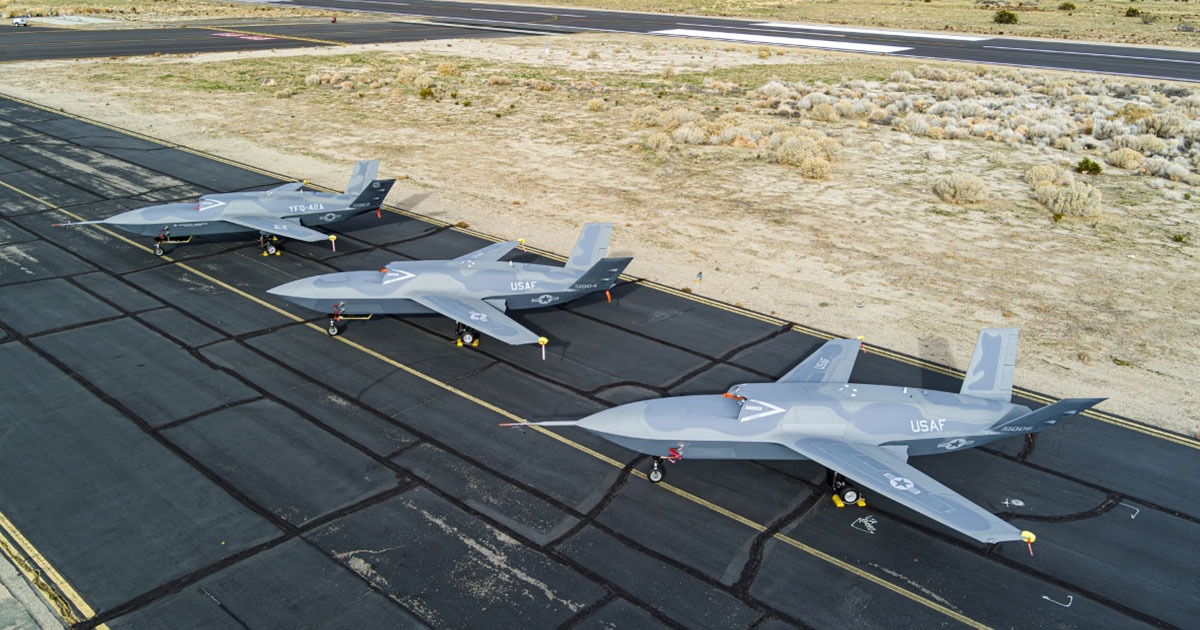
The YFQ-42A collaborative combat aircraft (CCA) has taken another step toward operational maturity, completing a semi-autonomous flight test with an integrated mission autonomy system.
General Atomics Aeronautical Systems, Inc. (GA-ASI) partnered with RTX’s Collins Aerospace to equip the drone with the Sidekick Collaborative Mission Autonomy software.
The integration enabled seamless communication between the CCA’s mission systems and the autonomy tech, ensuring commands were executed with precision.
During the test, a ground control station activated autonomy mode, allowing a human operator to send a series of tasks directly to the drone, which executed them with notable accuracy for over four hours.

GA-ASI said the trial validated both the effectiveness of the Sidekick in delivering mission autonomy and the versatility of the YFQ-42A’s flight control system in supporting a wide range of operational scenarios.
“The integration of Sidekick with our YFQ-42A demonstrates our commitment to innovation and operational excellence in unmanned aircraft technology,” GA-ASI President David R. Alexander said.
“We are excited to collaborate with Collins to deliver enhanced autonomous mission solutions.”
‘New Benchmark’ for Combat Autonomy
GA-ASI described the YFQ-42A–Sidekick integration as a step toward next-gen autonomous systems for defense, calling it a move that “sets new benchmarks” for combat autonomy.
Ryan Bunge, vice president of Strategic Defense Solutions at Collins Aerospace, echoed the sentiment, noting that Sidekick demonstrates the company’s ongoing commitment to advancing collaborative mission autonomy.
“The rapid integration of Sidekick onto this General Atomics platform and its immediate ability to support a broad spectrum of combat-relevant behaviors underscores the strength and flexibility of our open systems approach,” he stated.
GA-AS plans additional autonomy flight tests for the YFQ-42A, continuing a development schedule that began with push-button autonomous takeoffs and landings.