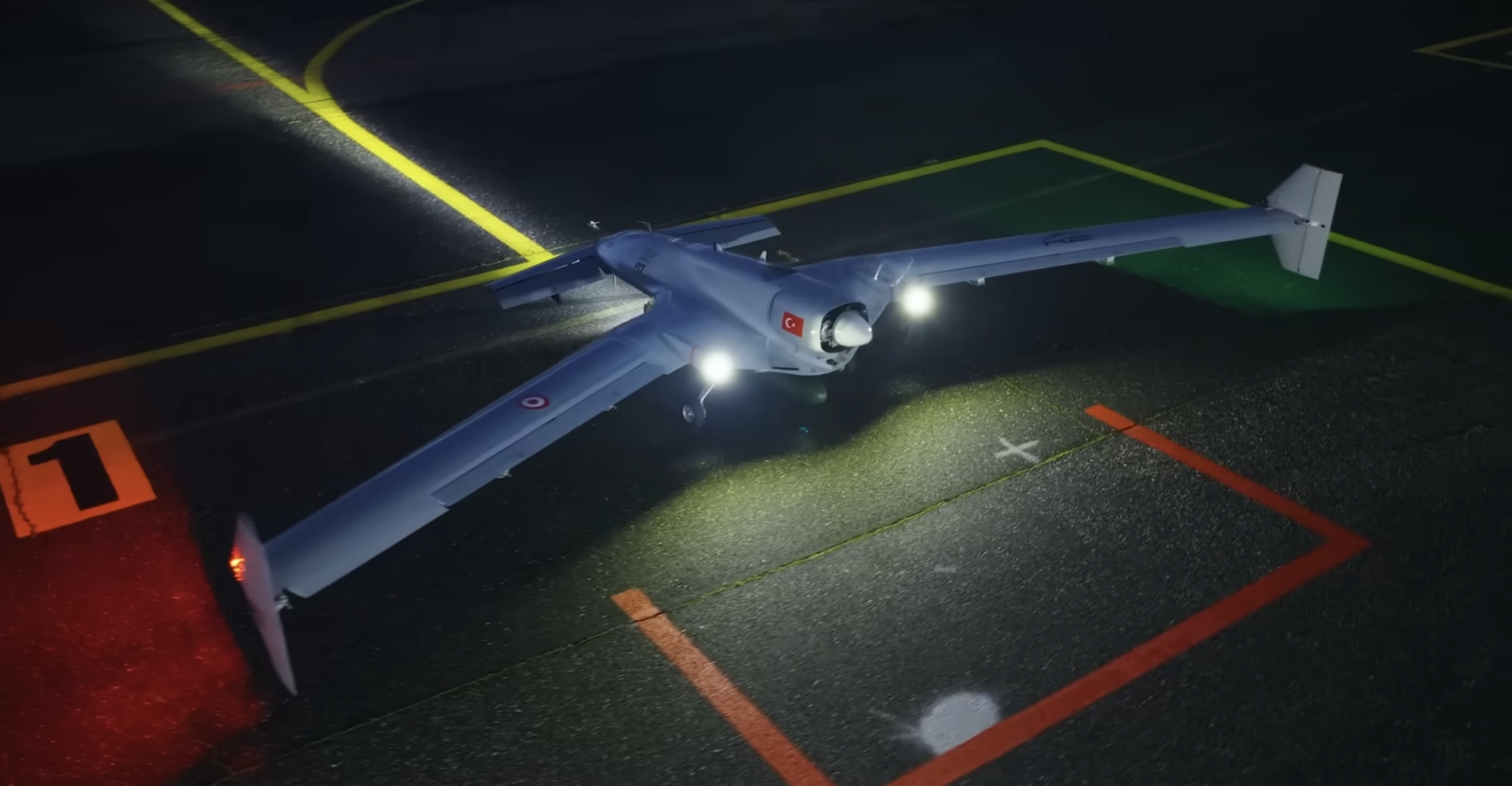
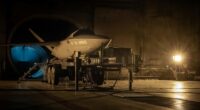
Turkey’s drone warfare capabilities have entered new territory with the debut of an AI-powered kamikaze drone designed to operate in coordinated formations.
Baykar’s new K2 unmanned aerial vehicle (UAV) completed a series of flight tests over the Gulf of Saros, demonstrating swarm-style operations alongside four additional units.
The drones flew in line, V, and right echelon formations, utilizing onboard sensors and autonomy software to maintain precise positioning and perform coordinated maneuvers.

Baykar said the K2 completed all test objectives without errors, adding that the system can also support additional formations, including Turan and wall patterns.
The company positions the system as a low-cost, mass-producible strike platform intended to expand operational options while reducing reliance on more expensive weapon systems.
How It Sees, How It Survives
K2 is equipped with an electro-optical and infrared gimbal camera system that enables it to perform reconnaissance and surveillance missions in addition to its strike role.
The sensor suite supports target identification and lock-on functions, allowing the UAV to maintain contact with operators beyond visual range.

In electronic warfare environments, the system can estimate its position by visually referencing terrain through its onboard cameras, supporting navigation in GPS-denied conditions.
‘Largest in Its Class’
Baykar describes the K2 to be the largest kamikaze platform in its category, capable of taking off at a maximum weight of 800 kilograms (1,764 pounds).
It can also carry warheads weighing up to 200 kilograms (441 pounds) and operate at ranges exceeding 2,000 kilometers (1,242 miles).
The drone can reach speeds above 200 kilometers (124 miles) per hour and sustain missions for up to 13 hours.
Baykar is working on enhancements that could enable future versions of the loitering munition to return to base after completing their missions, potentially expanding its role beyond one-way strike operations.