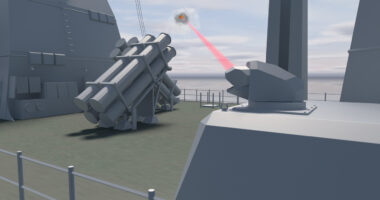


Australia and Japan are taking their laser defense ambitions from the lab to the field, with the Boobook prototype completing its first field trials in South Australia.
The event brought together Canberra’s Defence Science and Technology Group (DSTG), Mitsubishi Electric Australia (MEA), and Mitsubishi Electric Corporation.
Held at the Cultana Training Area, the testing generated data on Boobook’s design and technical requirements that will inform its further development and commercialization.
It also demonstrated Australia and Tokyo’s ability to jointly develop and test advanced defense technologies, paving the way for further cooperation on future capabilities.
“This project demonstrates close collaboration with Japan to develop cutting-edge technologies that address real capability needs for the Australian Defence Force,” said Australian Defence Industry Minister Pat Conroy.
“Boobook is more than a technology project. It is a practical example of the growing defense industrial partnership between Australia and Japan.”

The two countries did not disclose the laser’s power output or specific applications, but Australian Defence Minister Richard Marles mentioned at a press conference that the system can improve troop protection and situational awareness by “optically detecting incoming threats.”
He also explained that the laser can be deployed on land combat and littoral platforms.
Supported by $49 Million Investment
Named after an Australian owl known for its ability to see in low light, the Boobook project forms part of broader Australia-Japan defense cooperation.
It builds on more than two decades of research and development by DSTG and is intended to enhance surveillance capabilities.
MEA is investing 70 million Australian dollars ($49.5 million) to establish new facilities in Rydalmere, New South Wales, to support large-scale production of the laser system.
“The establishment of MEA’s new defense facilities in Rydalmere is a strong vote of confidence in Australia’s defense industrial future and will support new opportunities for advanced manufacturing, technology transfer and workforce growth,” Conroy added.