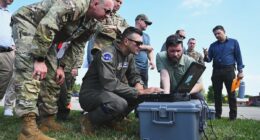

At the German Air Force’s 2026 Timber Express exercise, Airbus has offered a glimpse of its vision for next-generation air combat training through the System Development Lab (SDL).
At its core, the system relied on the Live, Virtual, Constructive (LVC) testing framework, in which crews operating real aircraft were complemented by ground-based operators in simulators.
Within this approach, the SDL served as the constructive engine, injecting computer-generated synthetic allies and threats into the training environment for German Eurofighter and Tornado jets.
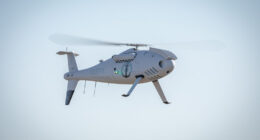
Using the SDL, operators can also simulate next-generation combat capabilities, including uncrewed collaborative combat aircraft (CCA).
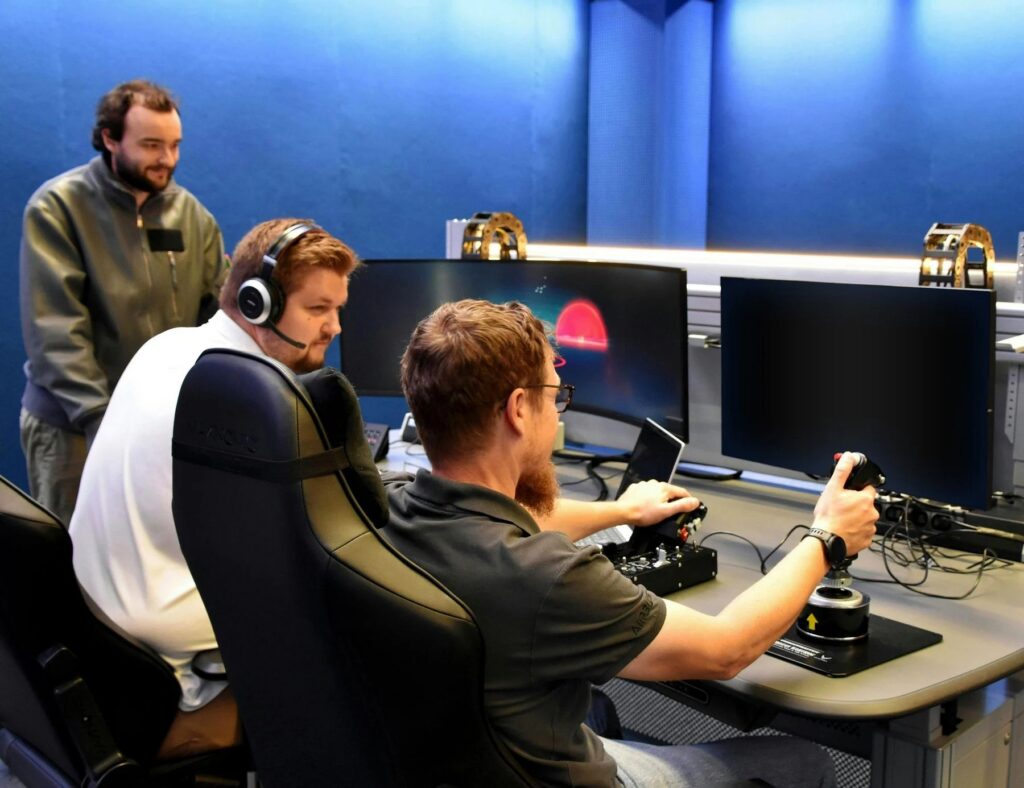
René Birkholz, business developer for Future Air Power at Airbus Defence and Space, stated the virtual environment allows armed forces to test tactics, techniques, and procedures that they may not want to expose during live exercises.
“Having numerous physical aircraft in the air can become prohibitively expensive. The SDL, however, populates the airspace with allies and adversaries at a fraction of the cost,” he explained.
A Broader Role
Beyond military training, the SDL can be applied across the weapon-system development process to test and refine emerging capabilities.
Airbus will use the platform to simulate integrated, multi-domain air operations involving air, land, maritime, space, and cyber forces.
These simulations place current or future fighters in realistic Red vs. Blue scenarios alongside supporting assets such as CCAs, refueling tankers, and ground-based air defenses.
By running thousands of accelerated simulations, the SDL can compare configurations and determine which performs best across scenarios.
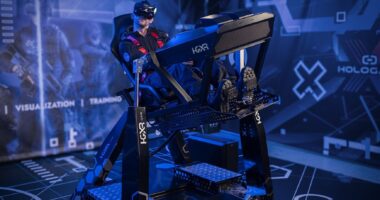
Pilots and battle managers can take part directly through physical role-player stations, facing computer-generated threats while bringing human decision-making into the simulations.