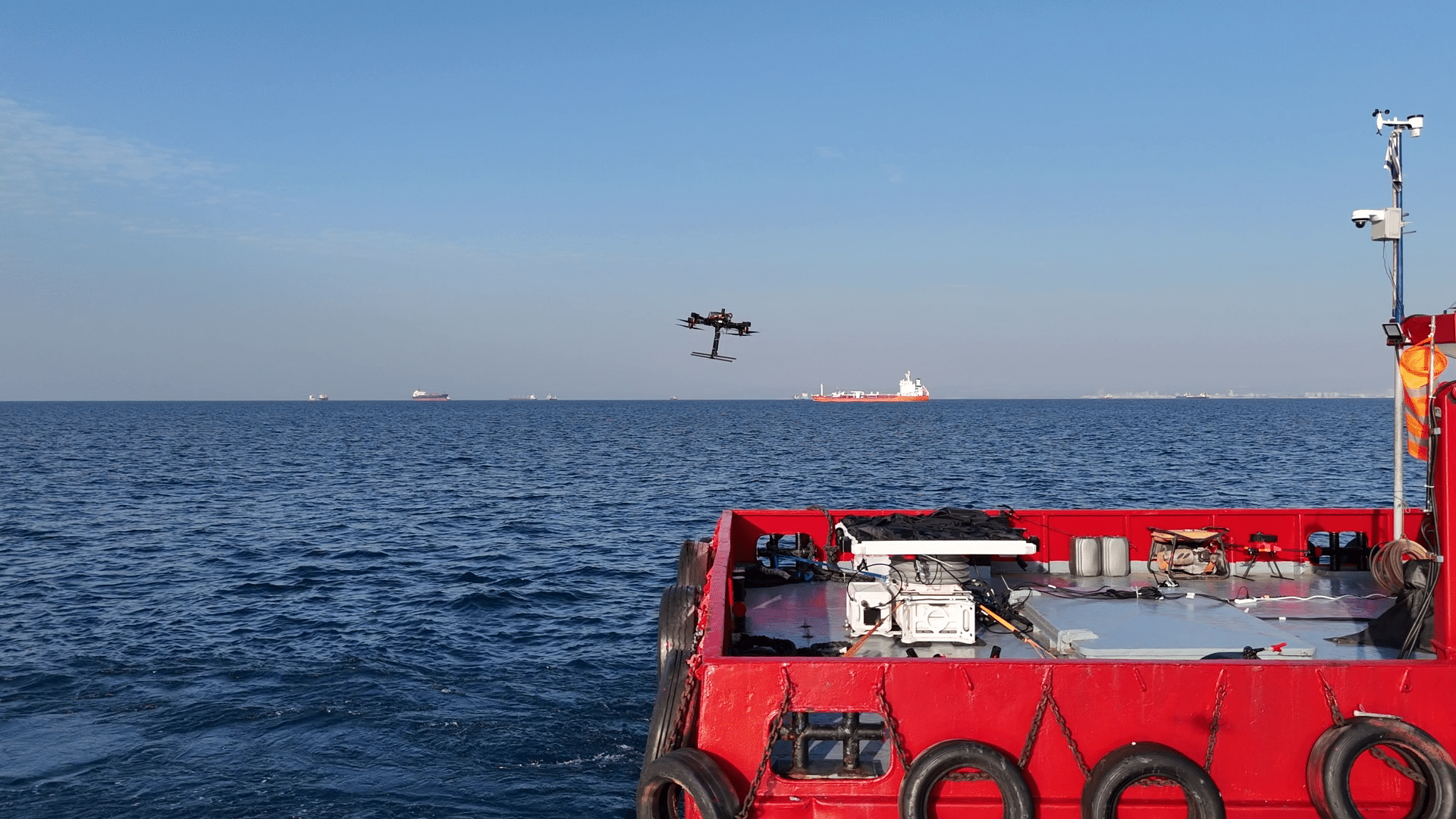
Could drones land and take off autonomously from moving ships at sea? A London-based developer says it has built the first system designed to make that possible.
Backed by over $7.5 million in initial funding, WaiV Robotics has unveiled the first fully automatic landing and takeoff system designed to operate on decks of any size from vessels as small as 10 meters (33 feet) long.
The platform uses AI-driven software and proprietary control algorithms to guide drones onto a gyro-stabilized landing surface, removing the need for a human operator during recovery.
Once aligned, drones are brought down onto a cushioned landing pad, where a patent-pending catch-lock-release mechanism secures the aircraft and prevents it from sliding or bouncing off the deck in rough seas.
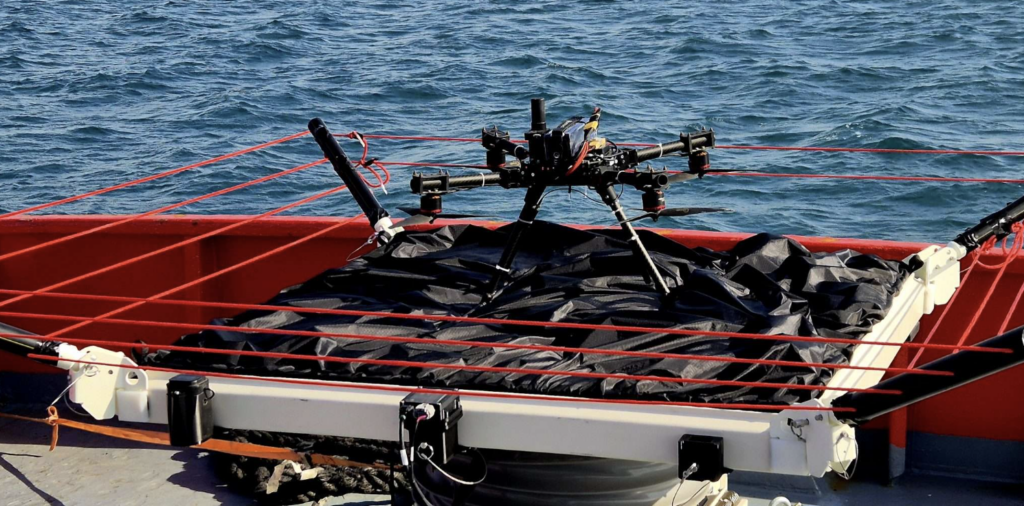
The system is modular and scalable, supporting drones up to 15 kilograms (33 pounds), with planned extensions for platforms as small as 3 kilograms (7 pounds) and systems exceeding 300 kilograms (661 pounds).
“For drones to become a reliable part of offshore operations, the missing piece isn’t the aircraft, it’s the infrastructure around it,” WaiV Robotics Founder Johnny Carni said.
“Our system was designed to remove traditional deployment constraints, allowing fleets to operate as mobile launch and recovery hubs that ensure reliable UAV operations.
Making Rough Sea Operations Stable
Drone operations at sea are complicated by constantly moving decks, shifting wave conditions, and saltwater exposure that make traditional launch and recovery risky.
While some stabilization systems exist, they are typically limited to controlled or calm-water environments, leaving real-world maritime conditions a persistent challenge for the launch and recovery of drones.
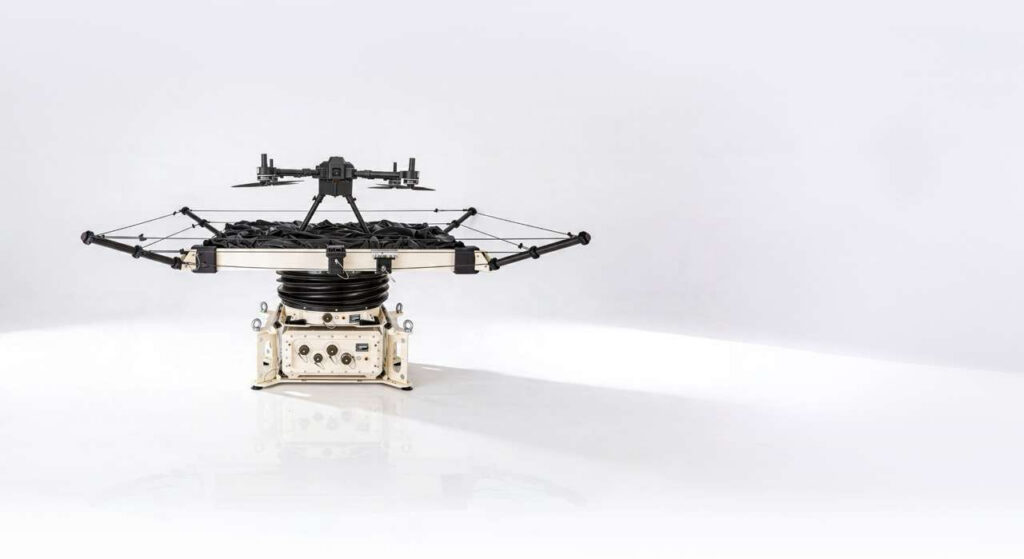
WaiV Robotics said its approach is the first complete attempt in solving this problem, introducing an integrated system that can make operations reliable in difficult conditions without human input.
“Without a dependable way to launch and recover at sea, large-scale deployment simply doesn’t work,” Carni said. “Our goal is to remove that constraint and make drone operations viable from virtually any vessel.”