

Thales is bringing a sleek, AI-powered sonar to the undersea battlefield.
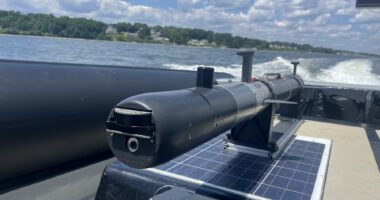
The system, called Sonar 76Nano, is designed to deliver high-end underwater detection across unmanned vehicles, seabed sensors, and crewed platforms, giving naval forces more flexibility.
Developed in just 10 months, Sonar 76Nano compresses the proven acoustic performance of Thales’ flagship Sonar 2076 into a modular, rapidly deployable system built for modern naval operations.

Its AI-enhanced processing reportedly accelerates target detection and identification, improving accuracy in cluttered and contested undersea environments.
Built as a digital-native capability, Sonar 76Nano integrates with existing UK and NATO defense networks, supporting distributed sensing and seamless interoperability between manned and unmanned platforms.
Undersea Warfare, Distributed
Sonar 76Nano is set to equip smaller manned and unmanned platforms with advanced underwater detection capabilities previously reserved for high-value vessels.
By spreading sonar coverage across more assets, navies can move beyond concentrating capability on a few expensive ships while also establishing a layered, networked undersea defense.
The system supports the UK Royal Navy’s Atlantic Bastion vision, emphasizing integrated, multi-layered protection across the North Atlantic and beyond.

First Public Look
Sonar 76Nano will make its public debut on December 17 during a Royal Navy demonstration, giving personnel and defense specialists hands-on access to the prototype.
The upcoming demo is also expected to offer a window into how focused defense initiatives drive rapid innovation, supporting secure supply chains, high-value UK jobs, and export readiness.
“Sonar 76Nano is a landmark innovation and a vivid demonstration of what focused ingenuity and collaboration can achieve with tight deadlines,” said Paul Armstrong, Managing Director of Underwater Systems at Thales UK.
“As we present this innovation to the Royal Navy, we reaffirm our commitment to keeping the UK at the forefront of global maritime security.”