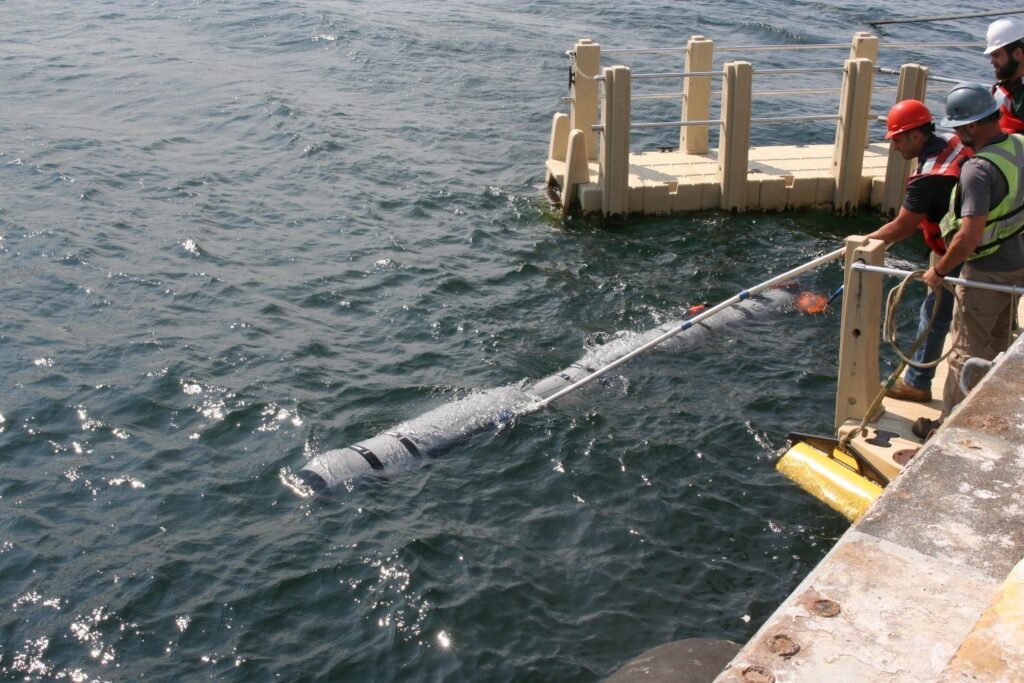
Huntington Ingalls Industries’ (HII) REMUS 620 unmanned undersea vehicle (UUV) has achieved a major milestone, successfully launching from and returning to a submarine torpedo tube for the first time.
In collaboration with the US Navy, the test saw the REMUS 620 propel itself from a shock and fire enclosure capsule fitted inside a Virginia-class submarine. It then autonomously navigated back to dock with the capsule, completing a full launch and recovery cycle.
The feat comes less than seven months after HII integrated the UUV into Woods Hole Oceanographic Institution’s (WHOI) Yellow Moray Torpedo Tube Launch and Recovery system, advancing the navy’s ability to deploy and retrieve underwater drones directly from submarines.
“This successful docking validates the research and development investments and efforts of HII; specifically the REMUS 620 engineers working in close cooperation with our WHOI teammates,” said HII Unmanned Systems President Duane Fotheringham.
WHOI Senior Program Manager Carl Hartsfield also noted the accelerated schedule behind the milestone, saying: “Our teams rapidly conducted testing runs, quickly evaluated the data, and made substantive adjustments to the vehicle.”
Range Meets Versatility
HII described the REMUS 620 as the “longest-reaching UUV in its class,” capable of operating for 110 hours and covering up to 275 nautical miles (316 miles/509 kilometers) on a single mission.
Its modular design allows multiple REMUS vehicles to work together and launch from various platforms, including helicopters, amphibious ships, and submarines.
It can also act as a launch pad for smaller unmanned systems, expanding its operational flexibility.
Depending on mission requirements, the REMUS 620 can carry payloads for mine countermeasures, intelligence gathering, surveillance, and electronic warfare.
“The REMUS UUV technology platform delivers critical advantages across modern naval operations,” HII stated on its website.