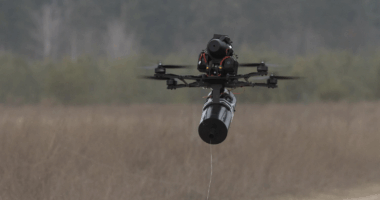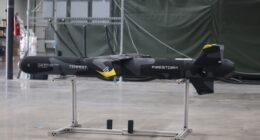


A new loitering munition from FlyFocus combines long-range reach with advanced targeting capabilities to hunt emerging battlefield threats.
Known as TASACK, the 15-kilogram (33-pound) platform has a top speed of 300 kilometers (186 miles) per hour and a maximum range of 110 kilometers (68 miles).
It also carries up to 5 kilograms (11 pounds) of payload and maintains a datalink connection across 80 kilometers (50 miles).
Depending on mission requirements, its modular airframe supports different warhead configurations, while troops can prepare the system for launch within five to seven minutes.
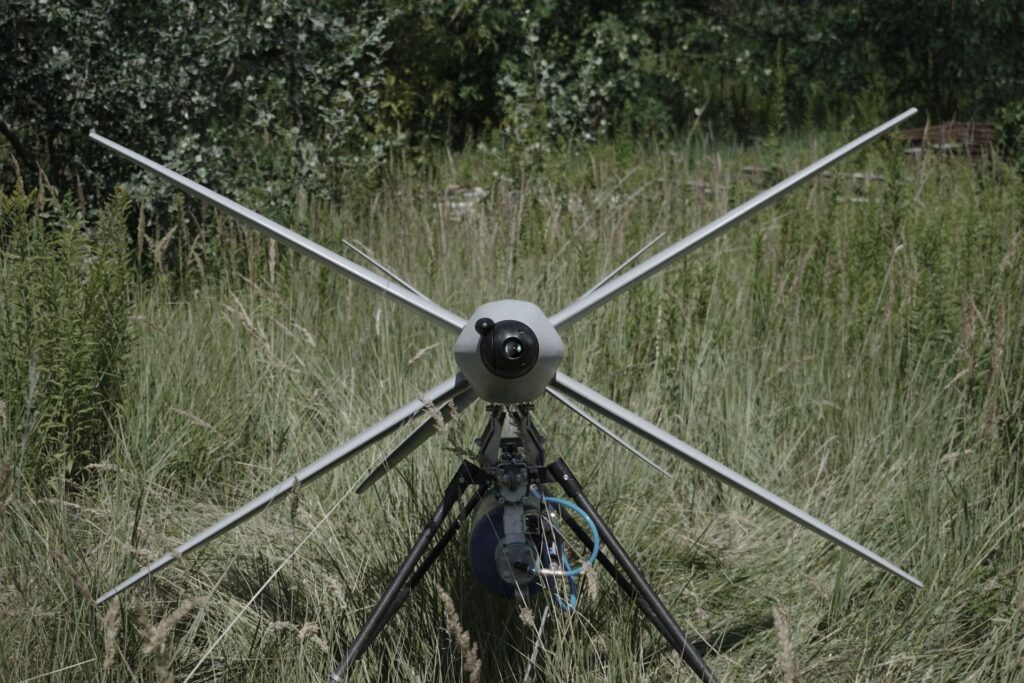
For navigation, TASACK combines an enhanced Global Navigation Satellite System (GNSS) with inertial guidance. Radio navigation is also available as an option.
A point-and-click interface is intended to simplify operation and reduce the need for extensive pilot training.
“TASACK has been designed around what we believe matters most for this class of system: precision, simplicity and the ability to manufacture at meaningful scale,” said Igor Skawiński, chief executive officer and co-founder of FlyFocus.
“Modern militaries need sophisticated capabilities, but they also need systems that can be produced affordably, deployed quickly, and adapted as battlefield conditions change. Our objective with TASACK is to bring those requirements together in one platform.”
Flexible Attack Profile
A stabilized daylight or infrared gimbal enables visual targeting and allows operators to attack along a flat trajectory or conduct a near-vertical top strike.
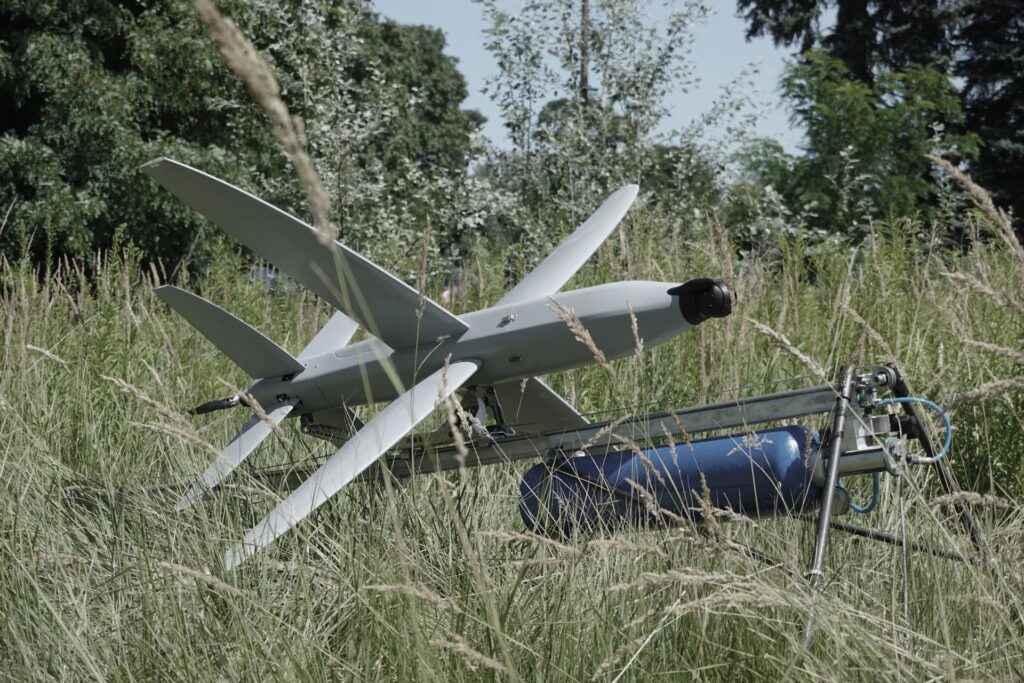
The system can observe and track targets before an operator selects the preferred approach for the final strike.
FlyFocus claims a visual targeting accuracy of about 1 meter (3.3 feet) CEP50, meaning half of all impacts are expected to fall within that distance of the intended target.
Production Timeline
According to the company, most of the system’s components are manufactured in Poland, including the gimbal used for target identification and tracking.
FlyFocus is showcasing TASACK at MSPO 2026 alongside its wider portfolio of autonomous systems and avionics.
The loitering munition is scheduled to enter production in early 2027.