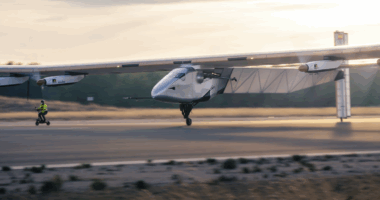
German defense firms Diehl Defence and POLARIS are teaming up to create a new kind of missile-launch platform that doesn’t need a pilot.
Known as the Airborne Launching and Attack System (AirLAS), the concept pairs Diehl’s combat-proven IRIS-T air-to-air missile with a reusable unmanned carrier drone developed by POLARIS.
The goal: to give armed forces a cost-effective way to launch precision weapons from the air without relying on manned aircraft.

AirLAS promises extended missile range and flexible deployment, capable of operating from land, sea, or as part of larger combat systems.
Diehl also sees the pairing as a solution to the evolving demands of modern ground-based air defense, where mobility, reach, and rapid launch options are becoming more critical.
A Bridge to Future Combat Systems
AirLAS is not just a one-off concept. The companies are positioning it as a launchpad for future defense technologies, with potential applications that go far beyond today’s battlefield.
The system could integrate into Europe’s Future Combat Air System (FCAS) or serve as a launch platform for other long-range or hypersonic weapons.
Diehl and POLARIS plan to conduct first flight tests by the end of 2025, potentially marking a key step toward operational deployment.
“The resulting Airborne Launching and Attack System creates a new dynamic and provides the armed forces with a full-scale expansion of capabilities,” Diehl noted.