
The US Army’s M1A2 Abrams main battle tanks and Stryker 8×8 armored fighting vehicles are set to gain new firepower options to defeat modern threats, thanks to the PERCH 2.0 system.
Short for Precision Effects & Reconnaissance, Canister-Housed, PERCH 2.0 is a bolt-on launcher that requires no permanent modifications to a vehicle’s hull.
Developed by General Dynamics Land Systems (GDLS) and AeroVironment, the system allows crews to launch Switchblade loitering munitions from beneath the vehicle’s armor without exposing themselves.
For reconnaissance and target tracking, PERCH 2.0 features gimbaled electro-optical and infrared sensors that provide real-time video feeds.
It also incorporates a redesigned canister-based reloading mechanism informed by data from 2025 trials at Fort Hood, Texas.
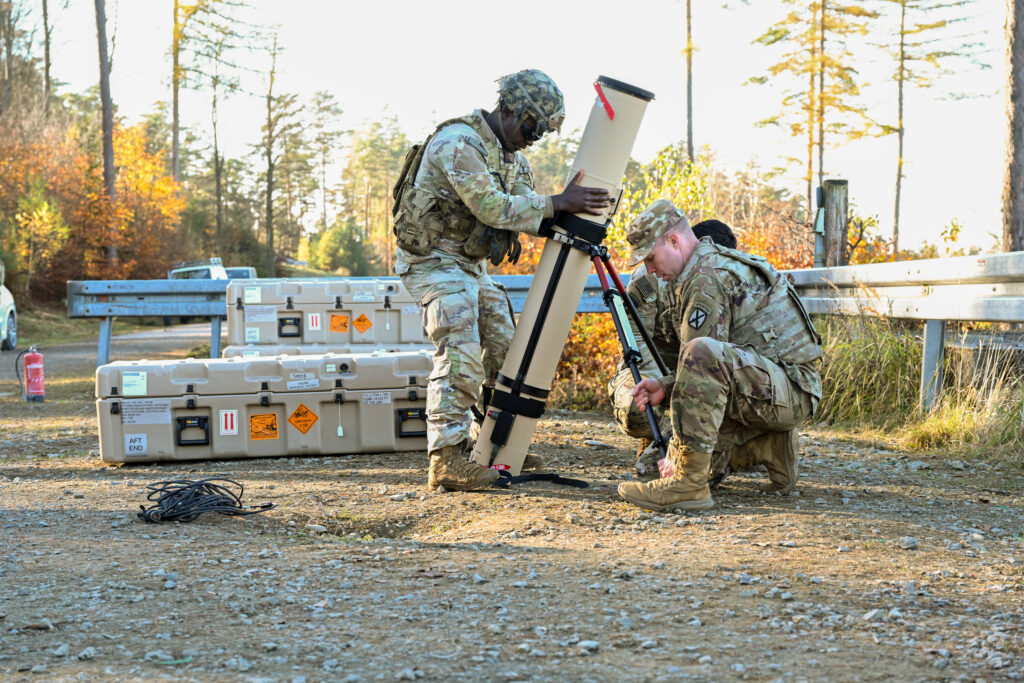
Once airborne, the loitering munitions can support reconnaissance, obstacle detection, and ridgeline scouting before transitioning to precision strikes.
The system is also designed to let vehicles engage targets beyond line of sight and beyond the direct-fire range of their conventional 120mm main guns.
Four Units Set for Delivery
According to Breaking Defense, GDLS plans to deliver four PERCH 2.0 prototypes to the US Army’s 1st Brigade, 1st Cavalry Division, at Fort Hood by the end of October.
Soldiers will then install the systems on Abrams tanks for field experimentation.
The effort builds on the original PERCH system. GDLS used feedback from the US Army and internal research and development funding to refine the launcher into PERCH 2.0.
The US Army subsequently ordered three prototypes through its Abrams System Technical Support contract, adding the PERCH 2.0 purchases in August.