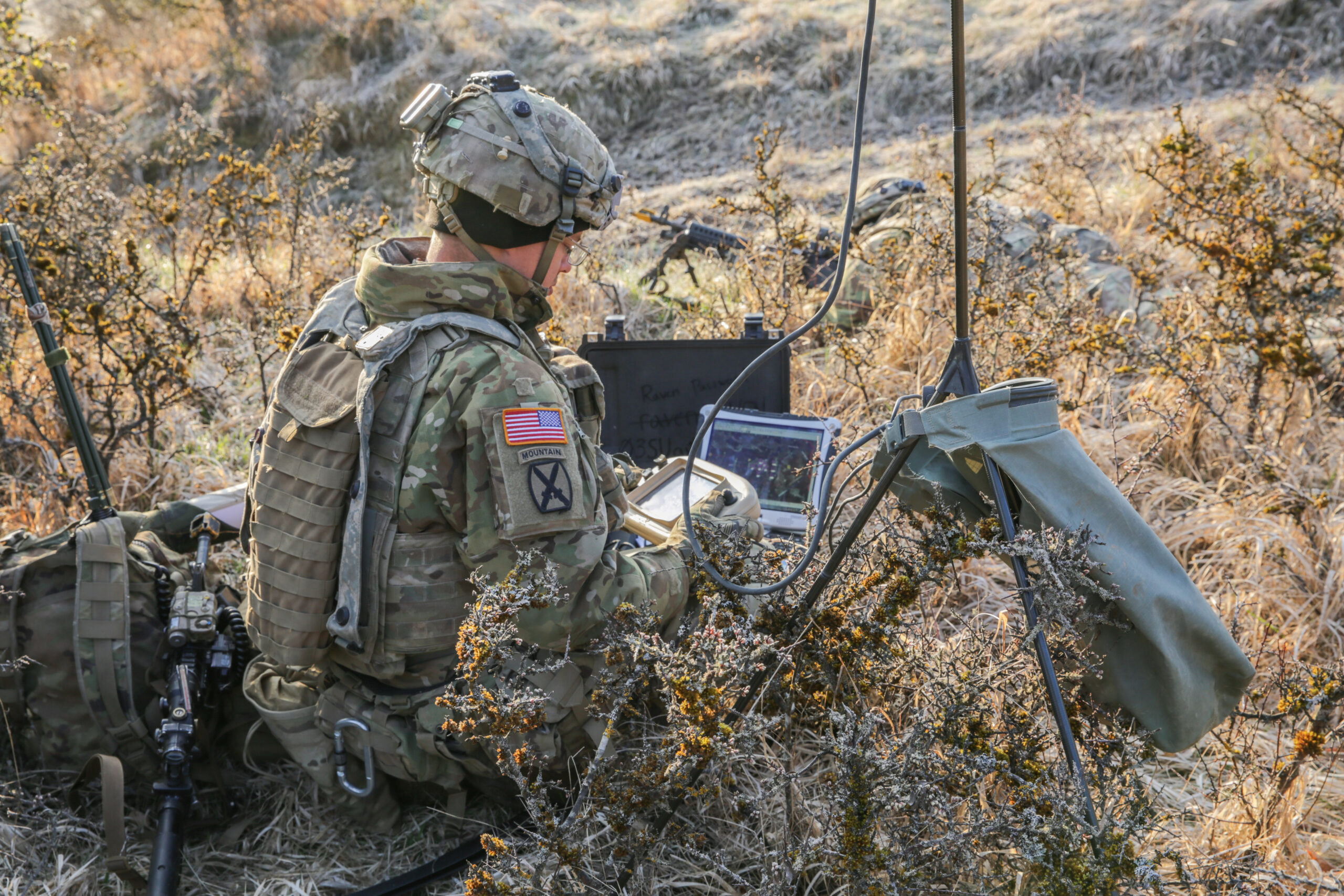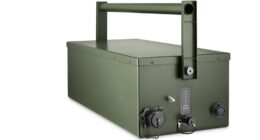

Ukrainian startup HIMERA has raised $5 million to scale up tactical radios built to keep troops talking under heavy Russian jamming.
The strategic round was led by Gardar, a Nordic venture fund that backs early-stage defense tech companies rooted in Ukraine.
Existing investors Varangians, Bulava, and Green Flag VC also took part, joined by newcomers Superangel and Next Front Ventures.
HIMERA said the money will speed up new product development, expand its business in Ukraine and abroad, and scale its systems for Ukraine’s Defense Forces.
Hard to Find, Hard to Jam
On a battlefield packed with electronic warfare, a radio signal that can be detected can also be jammed or intercepted.
HIMERA builds its kit around one goal: a low probability of detection, interception, and suppression.
Its G1 PRO handheld radio uses frequency hopping, which rapidly switches the operating frequency in a pseudo-random pattern so the signal is harder to pin down.
Traffic is protected with AES-256 encryption, and the radio carries voice, GPS coordinates, text messages, and other data, according to the company.
The radios also form a mesh network, so each device can relay messages through other nodes instead of depending on a single link.
Point to point, a G1 PRO covers up to 2 kilometers (1.2 miles) in open terrain and 1 kilometer (0.6 miles) in towns.
Raising a B1 autonomous repeater to height can as much as double that reach, while the R1 IP repeater stretches the network further still.
Testing at the Front
Earlier this month, HIMERA tested a network across the Dnipro River with a unit in the Zaporizhzhia direction, aiming to cover ground left by the destroyed Kakhovka Reservoir.
Two G1 PRO radios linked through an R1 repeater held a connection over 44 kilometers (27 miles), the longest of the setups tried.
At the ARTEX 2026 army technology trials, the system kept repeaters connected over about 11 kilometers (6.8 miles) and was integrated into a system for passing coordinates for artillery strikes.
“This investment allows us to advance technologies that help Ukrainian defenders carry out their missions more effectively,” said co-founder and CEO Misha Rudominski.
HIMERA is also reaching into orbit, having launched the OBRIA NANO test satellite with Denmark’s GomSpace in October as a first step toward an independent Ukrainian satellite network.
Rudominski told Defender Media in late 2025 that the company was working toward a single secure network in which every device on the battlefield sends and receives data within one system.