

Lithuania is reinforcing its counter-drone capabilities with a new autonomous interceptor designed to hunt down Shahed-type drones and other aerial threats in high-stress environments.
Built by Granta Autonomy, “Black Wasp” combines vertical takeoff and landing (VTOL) capability with the company’s AI-powered flight control system for precise target tracking and terminal guidance.
It can carry out high-speed engagements against loitering munitions and strike platforms, limiting the time available for targets to react.
Even in GPS-denied environments, it can complete missions using computer vision algorithms to identify, track, and lock onto confirmed threats.
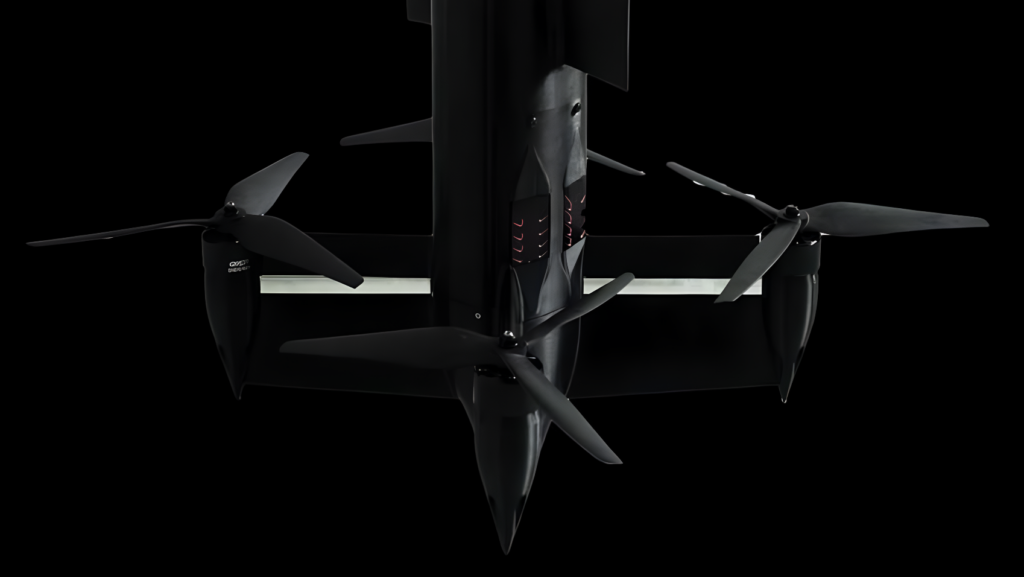
Black Wasp can be launched directly from frontline positions without requiring dedicated infrastructure. After a vertical takeoff, it transitions to high-speed forward flight to rapidly intercept detected targets.
According to the company, the system is compatible with most NATO radar systems, allowing it to receive real-time mission updates and relay 3D target coordinates to human operators.
Numbers Driving Black Wasp’s Sting
Black Wasp cruises at 160 kilometers (99 miles) per hour for up to 15 minutes and can sprint at speeds of 320 kilometers (199 miles) per hour for up to six minutes.
It operates at ranges of up to 20 kilometers (12 miles) and altitudes of up to 7,000 meters (22,966 feet) above mean sea level.
The interceptor carries a 500-gram (18-ounce) warhead and is equipped with daylight and thermal electro-optical cameras for target acquisition.
“The Black Wasp is a direct result of our battlefield-tested philosophy and engineering agility,” said Granta CEO Gediminas Guoba, as quoted by European Security & Defence.
“We designed our technology to adapt to the evolving demands of modern conflict and recognized the urgent need for a cost-effective, automated countermeasure against long-range strike drones, like the Shahed.”