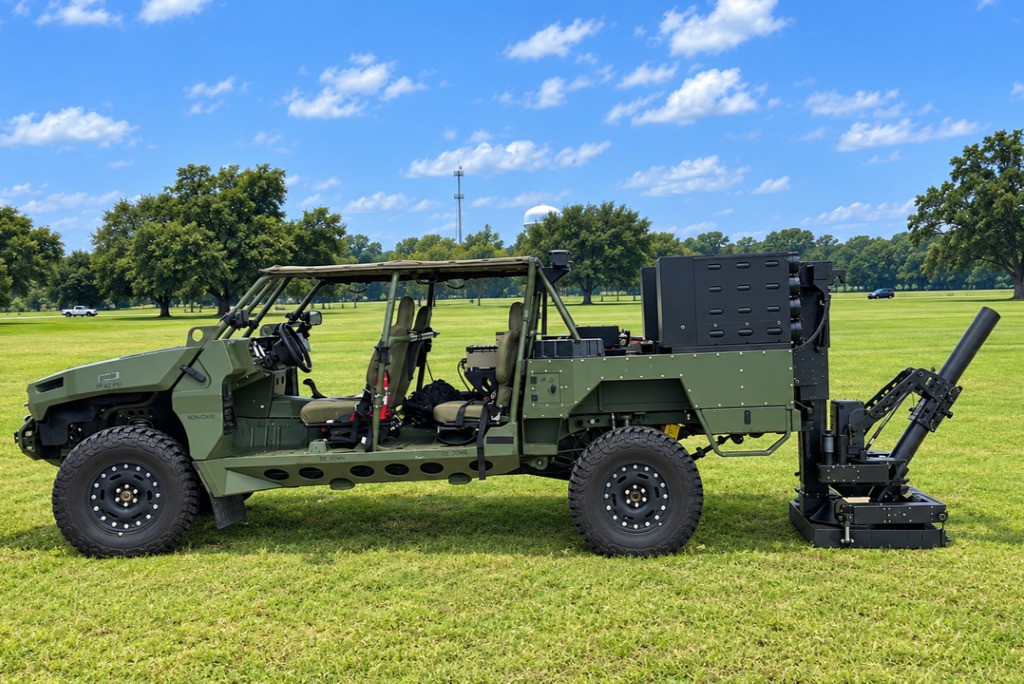

Global Military Products has showcased its new all-electric Scorpion Medium 120mm mobile mortar system, offering the US Army a heavier firepower option for its Infantry Squad Vehicles (ISVs).
The weapon weighs 1,400 pounds (635 kilograms), carries 16 rounds, and is reportedly compatible with US government fire-control requirements.
It combines autonomous targeting and auto-lay capabilities with a single-button system that handles emplacement and displacement in roughly 10 seconds.
According to the company, this Scorpion Medium provides about 25 percent greater standoff range and increased lethality per round.
A patented, larger non-seating baseplate also allows the mortar to fire across various terrain, including concrete, pavement, and other hard surfaces.
“Operationally, it provides soldiers with a new capability — the first and only 120mm solution on an army ISV that is all-electric and easy to operate,” said James Knight, director of business development at Global Military Products.
“And because of the commonality with the Scorpion Light, which is already under contract, the army can leverage architecture investments for quicker, less costly integration of US fire control while securing a much-needed capability for light infantry units.”
The Scorpion Medium made its public appearance with the 75th Ranger Regiment at the Army Maneuver Warfighter Conference in Fort Benning, Georgia.
Scorpion Light Sets the Stage
Jointly developed with NTGS, the Scorpion Medium retains the same architecture and capabilities as the Scorpion Light variant, helping simplify training and logistics.
Global Military Products previously landed a $12.9-million contract with the US Army to integrate the Scorpion Light 81mm mortar onto the utility variants of its ISV fleet.
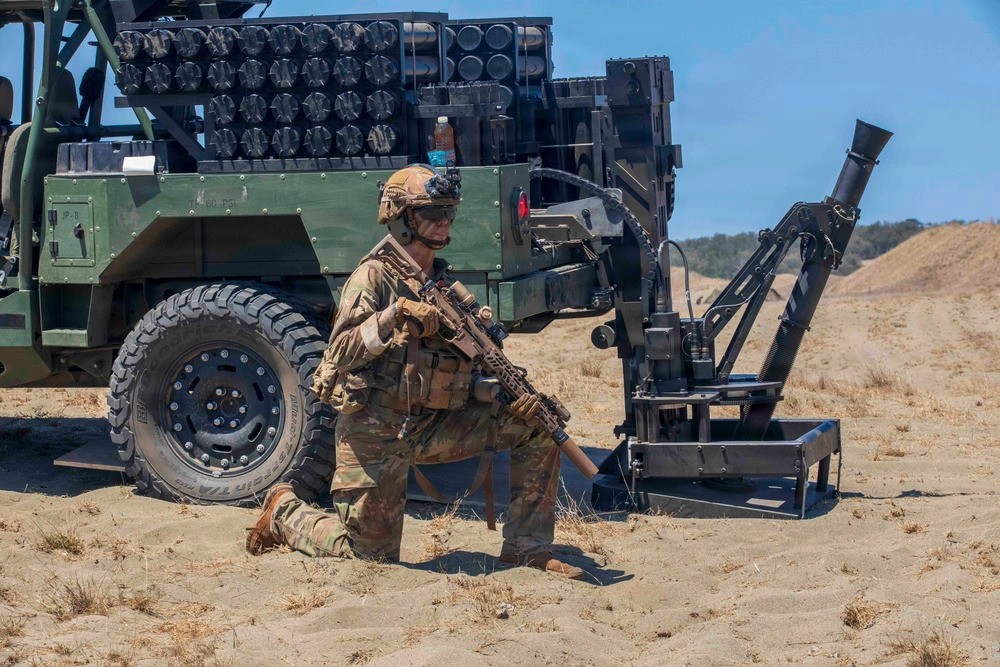
Under the initiative, the Scorpion Light will incorporate US Army digital fire-control technologies, government-furnished M253 mortar barrels, and the Nett Warrior communications network.
Together, these capabilities are expected to support faster targeting, digital fire missions, and rapid re-aiming with minimal crew intervention while shortening the sensor-to-shooter kill chain.