
Small drones will soon fill Ukrainian skies to create a first-of-its-kind “drone wall” system built to shield urban infrastructure from Russian strikes.
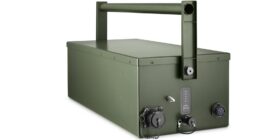
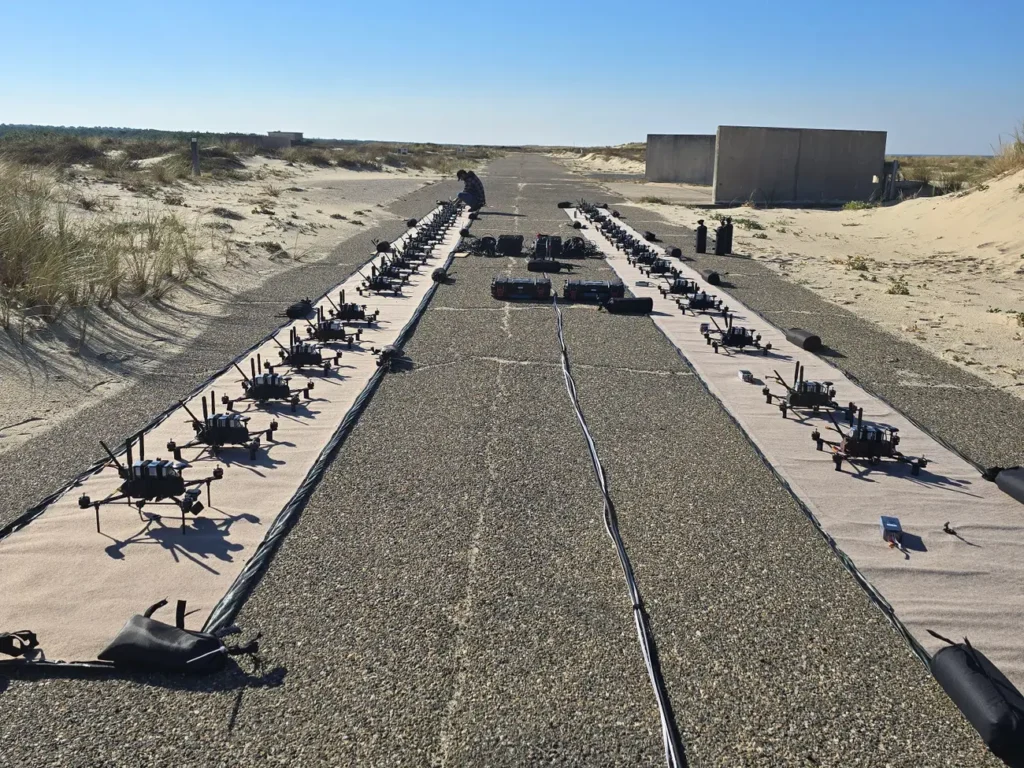
Developed by Atreyd, the wall will consist of battery-powered first-person-view drones that deploy from launch platforms once their radar network detects a potential threat.
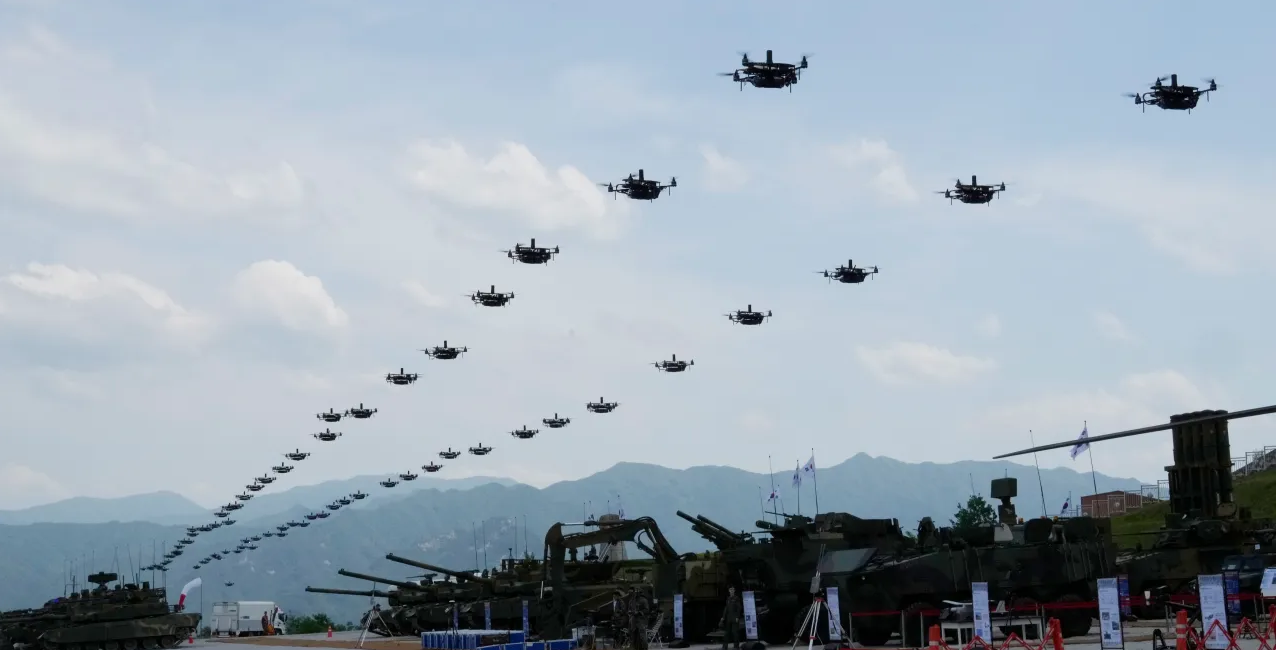
Once airborne, the drones form a curtain-like barrier, each carrying a small explosive payload. As enemy munitions approach, the drones detonate in mid-air to intercept the attack.
Artificial intelligence underpins the entire formation, allowing the drone wall to reposition itself and adapt as threats change direction.
It can also operate without GPS, relying on pre-loaded 3D maps to navigate contested airspace.
“We consider ourselves as a last layer of defense,” the company’s founder said, as quoted by Business Insider.
One Soldier, 100 Drones
The entire drone wall can operate at high altitudes and uses advanced identification tools to prevent friendly-fire incidents.
While designed for autonomous operations, a human operator can override everything through a kill switch.
According to the developer, a single soldier can control up to 100 drones without being a certified drone pilot, needing only training on system operation and proper activation of the kill switch.
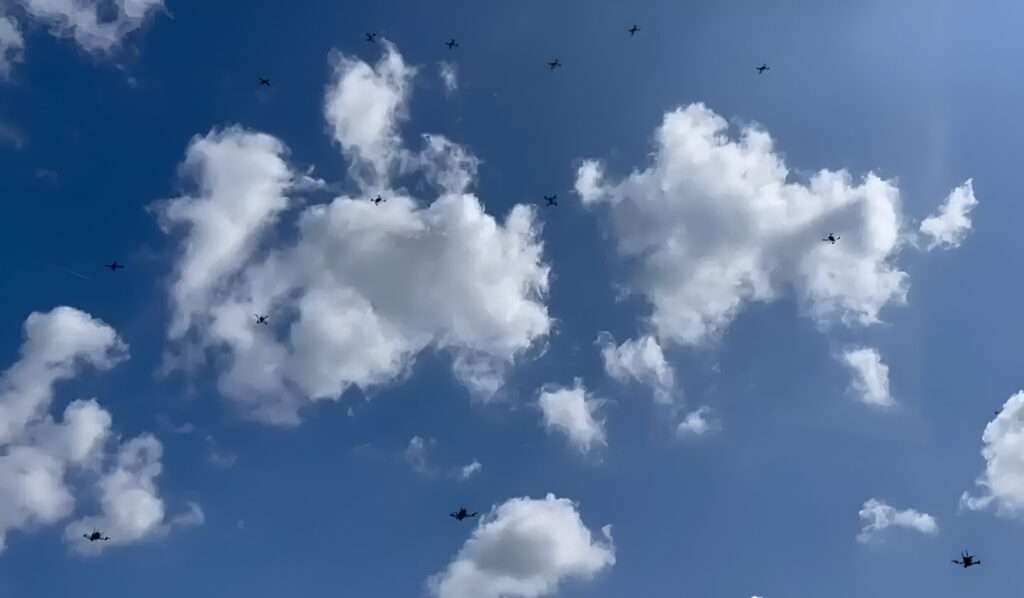
This capability could dramatically shift battlefield dynamics, giving small units the ability to control airspace and counter threats that would normally require an entire drone squad.
Atreyd said the drone wall posted a “100% success rate” during testing, though real-world results will only emerge once it sees frontline action.
En Route to the Battlefield
Initial units of Atreyd’s drone wall are already on their way to Ukraine, where the system is expected to be operational within a few weeks.
Exact deployment locations were not disclosed, but the company said the drones will be permanently stationed at their first site before expanding to other areas.
Atreyd has production lines in France and Ukraine and plans to expand to the US. An undisclosed NATO member state has also reportedly expressed interest in the system and its launch platforms.
If fully deployed, the system would mark the first time an “airborne minefield” has been used in any conflict.