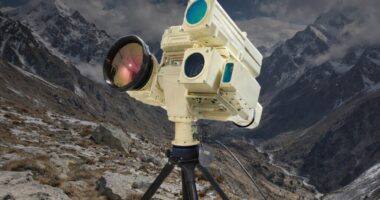


Teledyne FLIR has given its cutting-edge Ranger radar a serious boost, supercharging detection speed, range, and precision to support critical missions.
The upgrades target the R8-3DX and R20SS variants, widely used for border security, force protection, and counter-drone operations.
The R8-3DX now scans 360 degrees at up to 60 revolutions per minute (RPM), while the R20SS hits 30 RPM, cutting response times and shrinking the “blind spot” above the radar.

Advanced algorithms and AI-assisted processing also sharpen detection of slow-moving threats, filter out false alarms, and improve target identification.
“These enhancements represent a major leap forward in radar performance,” said Pierre Poitevin, vice president of Radar Systems at Teledyne FLIR.
“By increasing scan speed and vertical coverage without sacrificing accuracy, we’re giving customers the confidence and capability they need to detect targets faster.”
Shaping Next-Gen Radar
The man-portable R8-3DX can track over 500 drones simultaneously, while effectively ignoring birds and other non-threat objects.
It scans its coverage area four times per second, operating day or night in nearly any environment.

Meanwhile, the ground-based R20SS monitors people, vehicles, and boats up to 60 kilometers (37 miles) away, keeping tabs on up to 512 moving targets simultaneously.
The latest enhancements are expected to deliver faster alerts, smoother updates, and more reliable tracking, giving operators the edge to intercept threats before they reach critical areas.