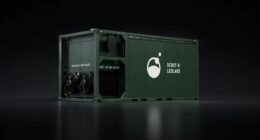

Israel Aerospace Industries (IAI) is aiming to speed up data processing and coordination across multi-domain operations with a new decentralized battle management system for future combat platforms.
Called OPAL Next Generation (OPAL-NG), it creates a shared operational picture that enables real-time exchange of data, voice communications, imagery, video, and mission-level information across connected assets.
By processing large volumes of multi-source data, it is designed to shorten the sensor-to-shooter cycle and support faster targeting decisions and mission execution.
The system also features an open-architecture design, allowing users to integrate existing components, datalinks, and software-defined radios.

“Future combat will be defined by interoperability… OPAL-NG reflects our long-term investment in advanced battle management solutions that connect platforms, systems, and operators into a single operational framework,” said Boaz Levy, chairman of the board at IAI.
“By introducing AI-enabled processing and enhanced collaboration between manned and unmanned systems, we are enabling faster, more informed decision-making in increasingly complex operational environments.”
The solution was unveiled at the ILA Berlin 2026 event.
Built for Sixth-Gen Platforms
Building on the core capabilities of the OPAL system, OPAL-NG enables unified multi-domain situational awareness across air, land, and naval forces.
It integrates artificial intelligence to support data processing, information prioritization, and decision-making for manned-unmanned teaming and Collaborative Combat Aircraft missions.

According to IAI, OPAL-NG is intended for sixth-generation aircraft, while also ensuring interoperability with existing NATO standards, including Link 16.
While no sixth-generation platforms are in service yet, countries including the US, UK, Italy, Japan, and reportedly China are pursuing programs to develop the world’s first aircraft of this type.