

Researchers at the University of California (UC) San Diego are advancing “smart” red blood cells that could reduce the effects of intense physical activity, improve endurance, and support overall health.
The three-year project brings UC San Diego together with Northeastern University, the University of Pennsylvania, and the Massachusetts Institute of Technology.
The team will use gene-editing techniques to create red blood cells that can detect physical exertion and respond by producing proteins that improve oxygen delivery to tissues.

Researchers will then use a specialized bioreactor known as a hollow fiber reactor to test and optimize the engineered cells.
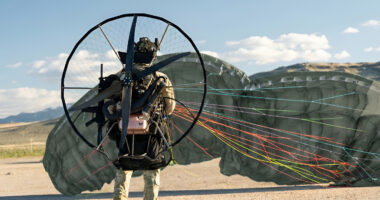
The project will not involve human testing, but the team will explore the technology’s potential to improve the performance of military personnel operating in harsh environments.
“This project has the potential to revolutionize the field of red blood cell engineering,” said Hojun Li, a co-investigator and member of the UC San Diego Moores Cancer Center.
“While our focus in this current project is improving performance, if we achieve these goals, I’m excited to explore… where both early detection and treatment of microscopic levels of disease could potentially be achieved by future iterations of ‘smart’ red blood cells.”
DARPA’s $11.3M Bet
The US Defense Advanced Research Projects Agency (DARPA) is supporting the project through a contract valued at up to $11.3 million.
The effort aligns with the agency’s “moonshot”, a research funding model for high-risk, high-reward research aimed at achieving ambitious technological breakthroughs.
“We are thrilled to receive this award from DARPA and to bring together a world-class team to work on this groundbreaking project,” said Alejandro Chavez, principal investigator and associate professor of pediatrics.
“Blood cell engineering is still an emerging field, but our team is committed to exploring this technology and maximizing its potential for transforming human performance.”