
Chinese troops could soon gain an unusual new battlefield companion: a robot dog that breaks from conventional quadrupedal designs by combining legs with wheels.
Built by Hangzhou-based Unitree, the Super Athlete AS2-W unmanned ground vehicle (UGV) is designed to move quickly and adapt to challenging terrain.
It merges the terrain adaptability of walking robots with the speed and efficiency of wheeled platforms.
According to the company, the AS2-W can carry mission payloads of up to 150 kilograms (331 pounds) while stationary, despite its overall weight of just 25 kilograms (55 pounds).
It can climb steps as high as 80 centimeters (31 inches), navigate slopes of up to 45 degrees, and travel up to 30 kilometers (19 miles) on a single charge, or 25 kilometers (16 miles) while carrying a 16-kilogram (35-pound) payload.
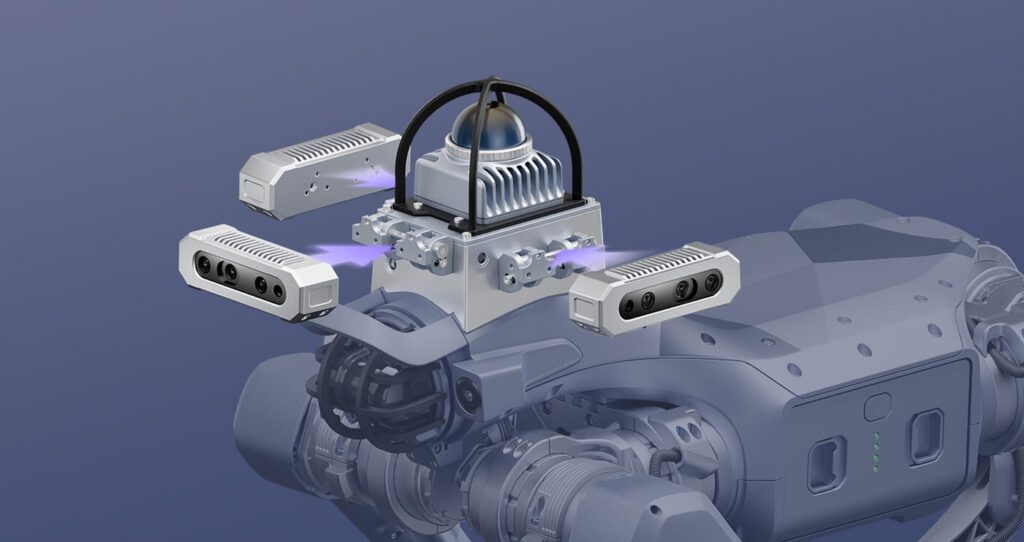
The UGV also features a dual-core AI computing module for real-time data processing and an ISS 3.0 autonomous navigation system capable of centimeter-level positioning.
Interest From the Army
Although originally developed for off-road civilian applications, the People’s Liberation Army has already begun evaluating the AS2-W for military use.
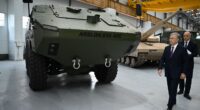
Last June, the platform took part in live-fire drills with Mongolian troops, where several AS2-W units were fitted with infantry weapons and deployed alongside armored vehicles during reconnaissance and assault missions.
The exercise offered an early glimpse of how autonomous robot dogs could operate alongside conventional military platforms on the battlefield.