
A new supercomputer with more than 186,000 processing cores is being positioned to handle advanced simulation and design workloads that would be prohibitively expensive or impossible to replicate physically.
Developed by the US Air Force Research Laboratory (AFRL), “Flyer” is aimed at accelerating research into hypersonic weapons, AI model development, and next-generation military aircraft design.
Its core specifications include 800 terabytes of RAM and up to 18 petabytes of storage. AFRL officials said the system can complete in a single day what standard laptops would take around 500 years to process.
Officials also noted that Flyer’s memory capacity is equivalent to more than 2 million conventional devices, with the system able to store an estimated 3.6 billion photos and hundreds of years of high-definition video.
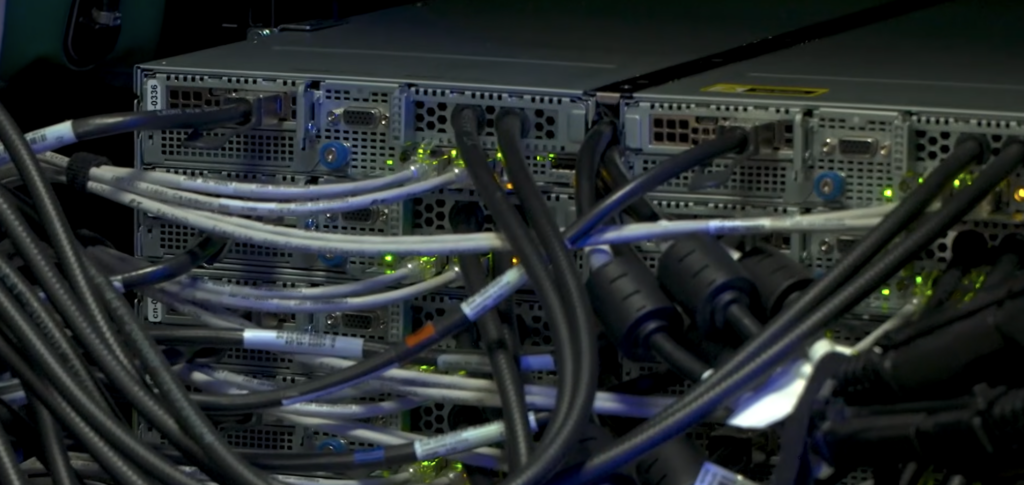
The system is designed to support large-scale digital engineering workflows, including aerodynamic simulations, AI training, and virtual flight testing, potentially reducing reliance on physical prototypes and hardware testing.
“The best way to predict the future is to invent it,” said AFRL Commander Brig. Gen. Douglas Wickert, as quoted by Springfield News-Sun. “That’s what Flyer will help Air Force researchers do.”
‘Most Powerful’ Research Computers in the US
Flyer forms part of a wider modernization push under the US Department of Defense’s High Performance Computing Modernization Program.
Valued at more than $20 million, the system was introduced alongside its classified counterpart, Raven, under AFRL’s TI-23 supercomputing initiative.
Together, Flyer and Raven are expected to deliver around 14 petaflops of computing power. One petaflop equals roughly one quadrillion calculations per second, placing the TI-23 effort among the most powerful military research computing initiatives in the US.
A spokesperson for AFRL confirmed that Raven has already begun operational use.