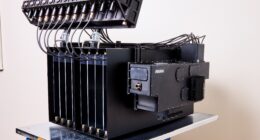


The Naval Postgraduate School (NPS) is bringing powerful new computing muscle to the US military with NVIDIA’s first DGX GB300 AI Supercomputer.
The device merges secure computing, storage, networking, and software into a fully integrated, scalable platform that can be deployed within existing infrastructure.
Powered by 36 NVIDIA Grace central processing units and 72 NVIDIA Blackwell Ultra graphics processing units, the supercomputer is designed to process massive AI workloads in parallel.
The architecture supports model development, large-scale data analysis, and other compute-intensive tasks across applications such as weather and ocean modeling, operations research, cybersecurity, disaster resilience, and response planning.
“As this capability matures, it will allow student and faculty researchers at NPS to identify patterns faster, evaluate alternatives more rapidly, and generate deeper insights,” said Trenton Hancock, chief information officer at NPS.
“The real value is accelerating the transformation of data into operationally relevant effects, reducing the time required to learn, adapt, and make better decisions in support of naval forces.”
AI Backbone for Defense
The deployment builds on ongoing collaborative AI research under a Cooperative Research and Development Agreement between NPS and NVIDIA.
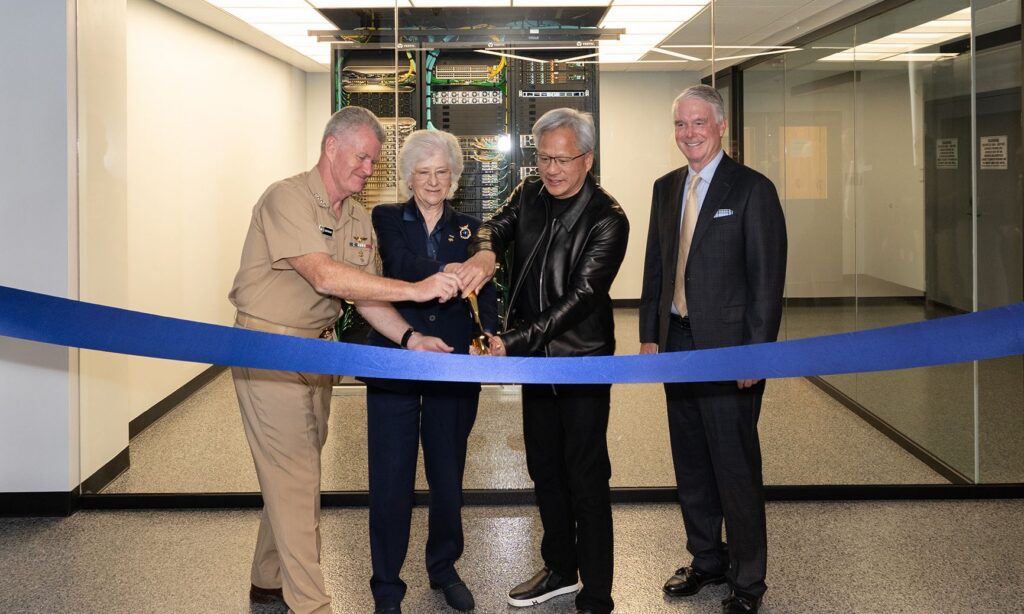
NPS officially unveiled the DGX GB300 during a ribbon-cutting ceremony this month attended by NVIDIA founder and CEO Jensen Huang, Commander of US Pacific Command Adm. Samuel J. Paparo, and NPS President retired Vice Adm. Ann Rondeau.
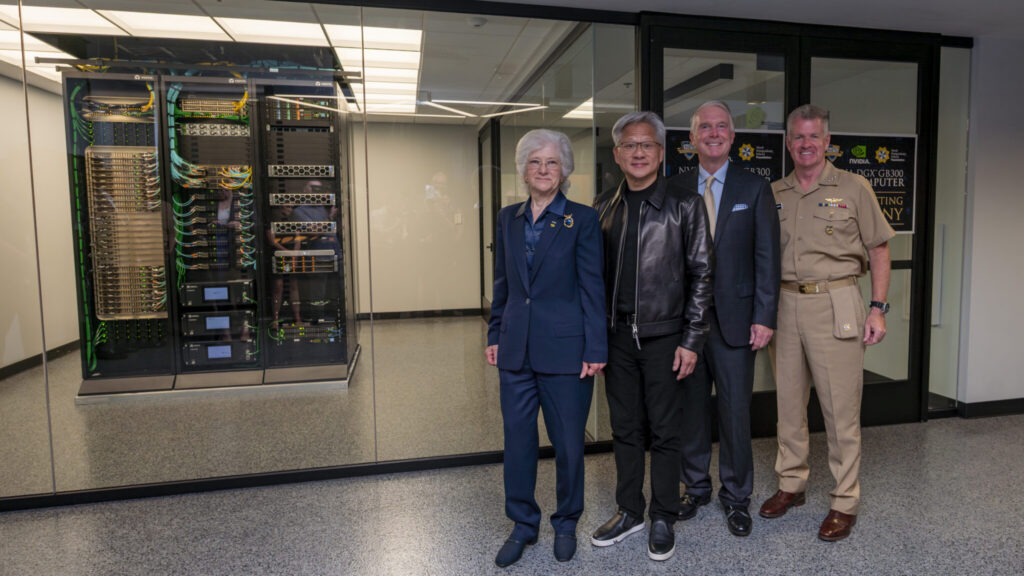
Huang said artificial intelligence will become a backbone of America’s defense.
“By supporting the NPS… we are empowering them to train on it, build with it, and lead America’s fighting force with the decisive advantages our sailors, marines and joint force deserve,” he stressed.
With the system now commissioned, NPS will shift its focus from installation to operational deployment.